


'Meagre' fine: Pilots’ body flays DGCA over Rs 22.20-cr penalty on IndiGo
FIP calls fine ‘very meagre’, questions scope of probe into December flight disruptions that hit over three lakh travellers
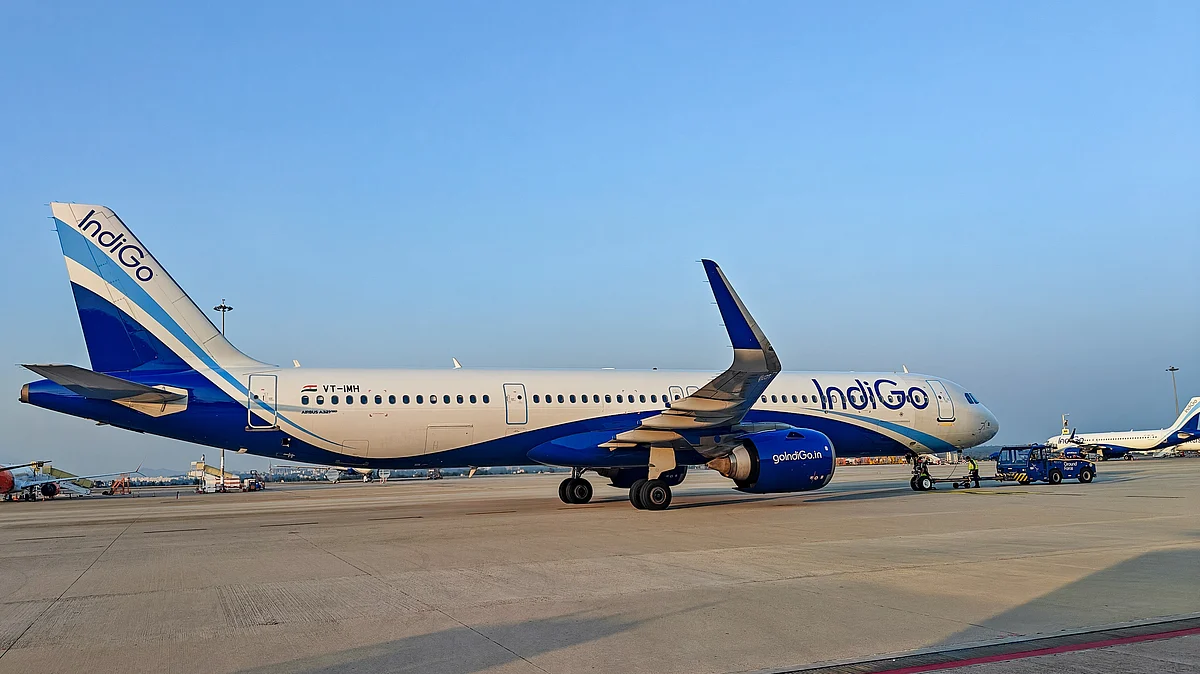


The Federation of Indian Pilots (FIP) on Monday criticised the aviation regulator for imposing what it described as a “very meagre” penalty of Rs 22.20 crore on IndiGo over large-scale flight disruptions in December, asserting that passenger and aircraft safety cannot be “traded off” against financial fines.
The pilots’ body also questioned the limited time period examined by the Directorate General of Civil Aviation (DGCA) during its probe, arguing that the scale and duration of the disruption warranted far stricter regulatory action.
On Saturday, the DGCA announced enforcement measures against IndiGo after a detailed investigation into widespread cancellations and delays earlier this month. The regulator imposed penalties totalling Rs 22.20 crore on the airline, issued warnings to IndiGo CEO Pieter Elbers and chief operating officer Isidre Proqueras, and ordered the removal of Senior Vice President for Operations Control Centre (OCC) Jason Herter from his current role for non-compliance.
According to the DGCA, between December 3 and 5, a total of 2,507 flights were cancelled and 1,852 flights delayed, affecting more than three lakh passengers across airports nationwide.
Of the total penalty, Rs 20.40 crore was imposed for non-compliance over 68 days from December 5, 2025, to February 10, 2026, translating into a fine of Rs 30 lakh per day. The regulator cited over-optimisation of operations, inadequate regulatory preparedness and deficiencies in system software support as key factors behind the disruptions.
FIP president G S Randhawa told PTI that the regulator’s action did not reflect the gravity of what he termed a “national crisis”.
“It is a joke. What is the concrete action taken here? They have not punished anyone. The civil aviation minister said on the floor of Parliament that very strict action would be taken. Does very strict action mean only a warning?” Randhawa asked.
He said that warnings are usually issued for minor lapses, not for disruptions of such magnitude. “Here, thousands of flights were cancelled and lakhs of passengers suffered. And the outcome is a warning and the shifting of one OCC head,” he said.
Randhawa further questioned why the DGCA probe focused only on the period between December 3 and 5, when, according to the pilots’ body, cancellations began on December 2 and continued until December 15, followed by prolonged delays thereafter.
“This selective period is also questionable,” he said, adding that the full extent of operational disruption had not been adequately captured.
The FIP also drew comparisons with international regulatory practices, citing the United States Department of Transportation, which imposed a USD 140 million penalty on Southwest Airlines for consumer protection violations during the Christmas travel period in December 2022, with the amount distributed to affected passengers.
The pilots’ body alleged that the DGCA report failed to clearly explain why flights were cancelled despite the availability of aircraft, pilots and cabin crew.
“If aircraft were on the ground, pilots were available and cabin crew was present, why were flights not dispatched?” Randhawa asked.
He also raised concerns over the handling of Flight Duty Time Limitation (FDTL) norms, which prescribe stricter duty hours and rest periods for pilots.
“You cannot trade FDTL against a fine. These norms exist for passenger safety and flight safety. How can safety be compromised and settled through penalties?” he said.
In early December, IndiGo cancelled hundreds of flights after it was found to be inadequately prepared to implement the revised FDTL norms. Following the disruptions, the DGCA curtailed the airline’s winter schedule by 10 per cent, amounting to around 220 flights per day, but granted relaxation until February 10 to comply fully with the new norms.
Randhawa questioned why the dispensation was not withdrawn despite the scale of non-compliance.
“If the winter schedule was already slashed, why was the relaxation till February 10 allowed to continue?” he asked.
After the disruptions, the DGCA constituted a four-member committee headed by Joint Director General Sanjay K Brahmane to conduct a comprehensive review of the circumstances leading to the cancellations and delays. The panel submitted its report on December 27.
IndiGo, the country’s largest airline, operates around 2,300 flights daily and carries close to 3.8 lakh passengers each day. The December disruptions marked one of the most severe operational crises in Indian aviation in recent years, drawing sharp criticism from passengers, unions and industry observers alike.
Join our official telegram channel (@nationalherald) and stay updated with the latest headlines