


Mining, malls and safaris: the many battles over the Aravalli hills
As SC accepts elevation-based definition of Aravallis, past judicial interventions underline fragile future of India’s oldest mountain range
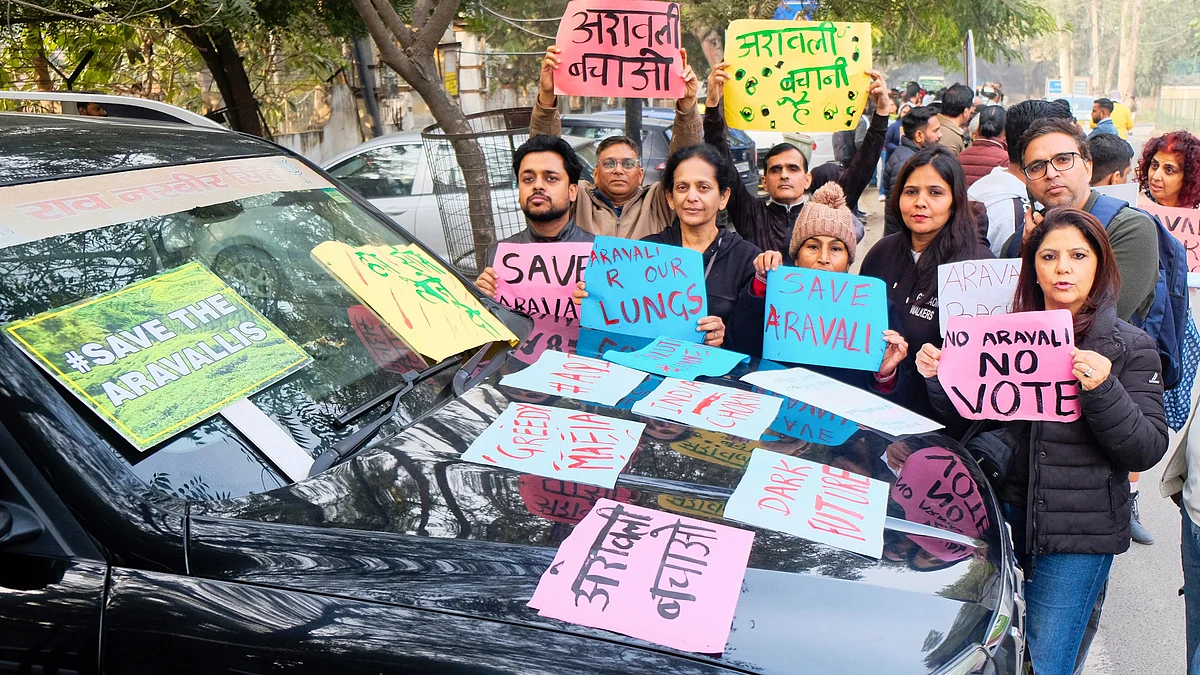


The Aravalli hills, among the world’s oldest mountain ranges, are once again at the centre of a legal and environmental debate after the Supreme Court accepted a uniform, elevation-based definition proposed by a Centre-appointed expert committee. Under the new criterion, landforms in notified Aravalli districts with an elevation of 100 metres or more from the local relief qualify as part of the Aravalli range.
While the government has clarified that the definition does not weaken protections against mining or construction, environmental activists fear that hills and forested areas falling below the 100-metre threshold could lose legal safeguards, threatening ecological continuity across Haryana, Rajasthan and the Delhi-NCR region.
Concerns over the Aravallis are not new. Courts have repeatedly intervened over the years to halt projects, mining activity, and encroachments that risk degrading the fragile ecosystem.
In October this year, the Supreme Court directed the Haryana government not to proceed with work on a proposed jungle safari project in the Aravalli region. The project, planned over more than 10,000 acres and billed as the world’s largest zoo safari, was challenged by retired Indian Forest Service officers and an environmental group called People for Aravallis, who argued that it prioritised commercial tourism over ecological restoration.
Earlier, in May, the apex court issued show-cause notices to senior Delhi government officials and a private developer for allegedly violating its 1996 order in the MC Mehta vs Union of India case.
The case relates to unauthorised construction in the “morphological ridge” area of Vasant Kunj — part of Delhi’s Ridge, a vital green lung and an extension of the Aravalli range.
The National Green Tribunal (NGT) has also played a key role. In one case concerning illegal sand and stone mining in Haryana’s Aravalli districts, the NGT directed the state pollution control board to submit an action plan for using environmental compensation collected from offenders to reclaim and rehabilitate mined land. An RTI response revealed that nearly Rs 25 crore had been collected as penalties between 2010 and 2022.
High courts, too, have intervened. In 2022, the Punjab and Haryana High Court issued notice to the Centre and Haryana government over a plea seeking restoration of forested land in Mangar Bani village — an ecologically sensitive grove under the Aravallis that had gradually passed into private ownership despite its classification as uncultivable forest land.
In earlier rulings, courts have ordered a complete ban on construction in the Aravallis without prior approval, warned Haryana against amending laws to permit real estate activity, including construction of malls, and expressed shock over the disappearance of 31 hills in Rajasthan due to mining. In 2021, the Supreme Court refused to stay its order for the removal of around 10,000 encroachments in the Aravalli forest area near Faridabad’s Khori village, emphasising that forest land must be reclaimed.
Together, these interventions highlight the judiciary’s long-standing role in protecting the Aravallis — a natural barrier against desertification, a groundwater recharge zone, and a critical buffer for air quality in Delhi-NCR — amid continuing development pressures.
Also Read: Not just the Himalayas, the Aravallis too
Join our official telegram channel (@nationalherald) and stay updated with the latest headlines