


'More autonomy, grants to hill tribes will restore peace in Manipur'
In an interview with Nandita Haksar, Manipur MLA Ram Muivah blames all sides for the state's drug trade and links Kuki militants from Myanmar to Ukhrul violence


Ramnganing alias Ram Muivah, a Tangkhul Naga, served in the Indian Administrative Service (IAS) for over 35 years, retiring as secretary Northeast Council in 2019. In 2022, he was elected an MLA on a Naga People’s Front ticket.
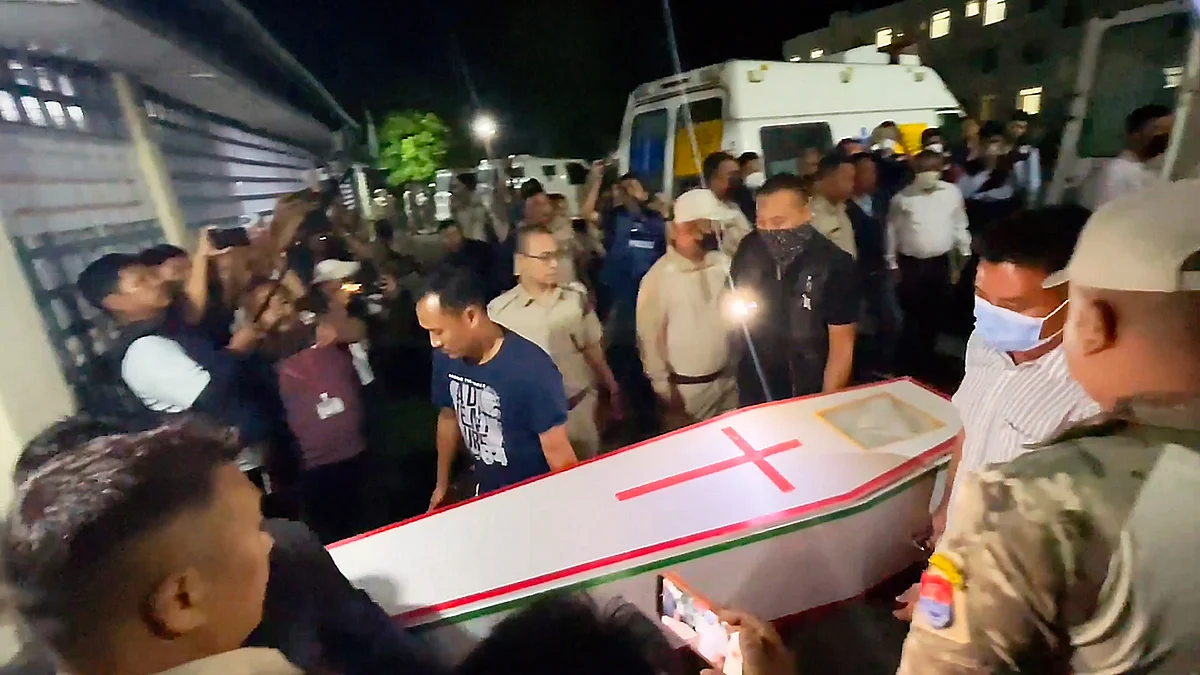
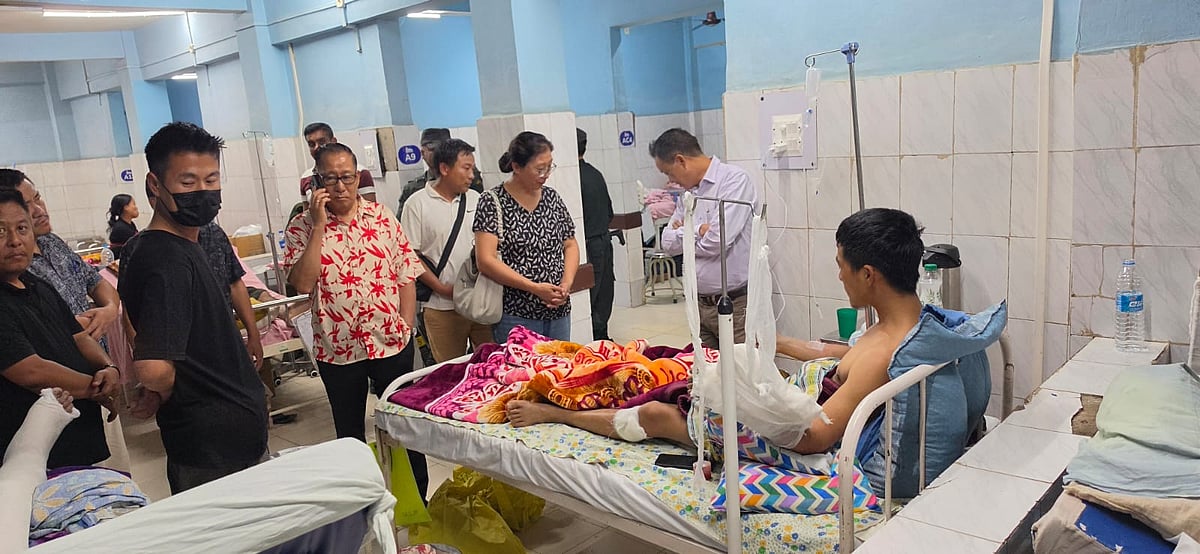
The Nagas had remained neutral in Ukhrul district in 2023 when the Meitei and Kuki-Zo communities clashed. However, Ukhrul and Kamjong districts today are at the centre of much of the violence being reported from Manipur. In this online interview with lawyer-activist Nandita Haksar, Muivah explains what triggered the recent ambush and clashes in Ukhrul and how Nagas have been drawn into the conflict. Excerpts:
Both the tribal communities, Nagas and the Kuki-Zo, have complained that hill districts have been discriminated against by successive governments in Manipur and at the Centre. Do you agree?
To put the issue in perspective, all hill tribes in Northeast India have enjoyed statehood, starting with Nagaland in 1963, Meghalaya in 1972, Sikkim in 1975, and Arunachal Pradesh and Mizoram in 1987, respectively. Other tribals, including plains tribals in Assam like the Bodos, Karbis and Dimasa and hill tribes in Tripura have had the benefit of Territorial Councils under the Sixth Schedule of the Constitution. Sadly, the hill tribes in Manipur are denied even local autonomy. The so-called Autonomous District Council in Manipur is a Local Act and toothless.
Recently, a retired chief commissioner of Income Tax submitted his findings to the chief minister regarding huge disparity in the budgetary allocation and investments between valley and hill districts; inter alia, the capital expenditure for the valley area in 2024-25 was Rs 5,215 crore, while in the hills it was just Rs 378 crore, constituting 93 per cent and 7 per cent of the total respectively. The revenue expenditure during the same period was Rs 22,632 crore in the valley and Rs 4,041 crore in the hills, constituting 85 per cent and 15 per cent respectively.

Also Read: It’s not simply ‘ethnic violence’
To be brutally honest, the root cause of violence in Manipur, apart from demographic imbalance and drug trafficking, is the absence of power sharing and a spirit of accommodation.
There are examples of mixed populations living peacefully together and prospering. In Meghalaya, since its statehood (1972) there have been eight chief ministers, of whom four came from Garo and four from Khasi communities while the deputy CM comes from a small tribe, Jaintia. In Sikkim, the Rajya Sabha MP is always from minority communities like Bhutias and Lepchas. Similarly, the President of Singapore is always from a minority community, Malay or Tamilian. It will be wise for Manipur to replicate the good practices of these states and countries.
There were allegations from the beginning of this year that security forces, especially the Assam Rifles, did not protect Tangkhul Naga civilians from attacks by Kuki militants, even when Assam Rifles posts were nearby. How far are these allegations correct?
I have received complaints that the Assam Rifles and Army transported Kuki militants from Myanmar into Ukhrul district, and recently when the KNA-B (Kuki National Army-Burma) militants from Myanmar attacked the bordering villages of Choro, Wanglee and Namlee, the houses kept burning from 4.00 am to 7.00 am on 7 May, but the Assam Rifles post at Aloyo, a few hundred meters from Choro, did not bother to intervene.
I accompanied the Manipur home minister to this border area on 9 May. Wherever we went, women, with tears and deep anger, demanded that Assam Rifles be replaced by state forces in border areas. The bullets used by the Kuki militants recovered from the scene of action indicated they were issued by Indian Ordnance factories; they were all military grade and not available in the open market. Who supplied the arms and ammunition? The arms they used are mostly LMG, SLR and binocular-fitted, as used by Indian soldiers.
Also Read: Why peace still eludes Manipur
The vehicle of the SP of Ukhrul was badly damaged by the Kukis of Mongkot Chepu on NH-202 right under the nose of the Indian military, who are guarding Mongkot Chepu 24x7, and they did not bother to intervene and rescue the SP, who incidentally is a lady. Again, the DC of Ukhrul, the head of the district administration, was prevented by the Kukis of Mongkot Chepu village of Myanmar right under the nose of the Indian military, and he was sent back to Imphal, from where he took a chopper to reach Ukhrul district headquarters.
I also saw on social media army personnel openly burning houses of Nagas in Litan in February together with Kuki militants. I have brought these allegations to the notice of Indian Army officers in Manipur.
Nagas were neutral during the Meitei-Kuki violence. Why have they now been dragged into this round of violence?
Kuki chiefs and pastors have told me that being a minority in Ukhrul, with Kukis representing less than 1 per cent of the population, they are not interested in fighting Tangkhul Nagas. They, however, reported that all the burning of houses and killing of innocent people were done by internally displaced persons (IDPs), many of them from Myanmar, and the Kuki militants taking shelter in the designated SoO camp at Mt Sinai, which should be relocated to Churachandpur.
Why is there a growth of Kuki settlements in Naga-inhabited areas? Are they from Myanmar or from India?
It is quite possible that some of the Kuki-speaking people migrated from Myanmar due to economic reasons, disturbances and discrimination. I have received a report that Kukis from Myanmar are employed as poppy cultivators in Ukhrul and Kamjong districts. It is also reported that these Myanmar poppy cultivators paid annual tax in kind in the form of 1 kg of poppy to the Kuki village chief and another 1 kg to the 'Kuki war chest', and the rest of the product belongs to the poppy cultivator.
Should there be a distinction between people from Myanmar escaping army rule and persecution and the illegal migrants who are coming with the express purpose of settling in India?
The government of Manipur has given necessary assistance to genuine refugees from Myanmar. On my recent tour of the border area with the home minister, we met the refugees, about 300 of them sheltering in Namlee Tangkhul village with the knowledge of the state government.
I believe you visited three Naga villages on the Indo-Myanmar border in Kamjong district which were attacked by Kuki militants from Myanmar along with, it is alleged, the Burmese PDF. Is this particular attack different from previous Kuki-Naga conflicts?
The border villages were indeed attacked by Kuki militants from Myanmar. It is, however, difficult to gauge the motive of this attack. We suspect they attacked the Naga villages to disturb the border trade booming in Kamjong in the last few years. Kamjong district was the highest revenue generator for Manipur, mainly from border trade in items such as Areca nut, timber, livestock, etc. We suspect Kuki militants wanted to discourage the trade and if possible, divert it to Churachandpur, a Kuki-Zo dominated district.
Studies on ground by journalists and academics confirm there is a growth in drug trafficking in border villages. But these studies also show that all communities are involved in trafficking. How fair is it then to call Kukis narco-terrorists?
It is true that newspapers often report that Kuki men and women are caught trafficking drugs in Manipur, Assam, Mizoram and Nagaland. Poppy cultivation in Ukhrul and Kamjong has destroyed the environment and forest. All those virgin forests, which I grew up admiring, are now denuded because of illegal poppy cultivation. It is also true that poppy is being cultivated not only by Kukis but all communities. There have also been instances of both Indian army and Manipur state forces caught red-handed trafficking drugs, but I am yet to come across a conviction of these arrested officers.
The India-Myanmar border was demarcated by the British without consulting those living along it. And now the Indian government wants to build a wall. Do you think that will help bring peace to Manipur?
The artificial political boundary put up by the British divided people and was a tragedy for Naga people, and we are still suffering. Nagas in Myanmar and India would like to live together under one administration and ideally, we should knock down walls as they knocked down the Berlin Wall between West and East Germany.
However, we are not living in an ideal world, so perhaps in some districts where there is huge infiltration of illegal migrants, like in Churachandpur, Chandel and Tengnoupal, the 'security fencing' is required. However, in the case of Ukhrul district, there is no need for fencing because Nagas live on both sides of the boundary and migration is considered disgraceful in Naga culture. Hence, security fencing may not be advisable for Ukhrul district.
When we say Kuki, we include many communities, and some like Thadous have said they do not want to be classified as Kukis. So please explain which Kukis have been attacking Tangkhuls. This is all the more confusing because Tangkhuls were sheltering Kuki-Zo in 2023, and are doing so even now amidst this violence. So how do we explain the Naga Kuki conflict?
What I understand is that Kuki is a generic name and Thadous are one of the major tribes under the generic name Kuki. However, of late, some Thadou intellectuals have asserted that they don’t wish to be included under the generic name Kuki. I believe the recent attacks on Tangkhuls were by both Thadou and Kuki tribes. As I said earlier, neither the common Kuki nor Tangkhul is interested in violence. It is the Kuki militants and IDPs who are mostly from Myanmar taking shelter in the SoO camp at Mt Sinai who are creating havoc for their vested interest.
Do you have a road map for peace in Manipur?
We should stop tackling only the symptoms, is high time we tackled the root cause, which is the absence of power-sharing and the absence of a spirit of accommodation. We should replicate the good practices and success stories of our neighbours like Meghalaya, or a country like Singapore; that is the only way forward for Manipur.
This interview was first published in Force magazine
Nandita Haksar is a human rights lawyer and an author, most recently of Shooting the Sun: Why Manipur was Engulfed by Violence and the Government Remained Silent. More of her writings here
Join our official telegram channel (@nationalherald) and stay updated with the latest headlines