


Not accurate: India rejects Lutnick's remarks on Modi calling Trump
New Delhi now monitoring far more consequential threat: US Bill that could authorise tariffs of up to 500 per cent on Indian goods
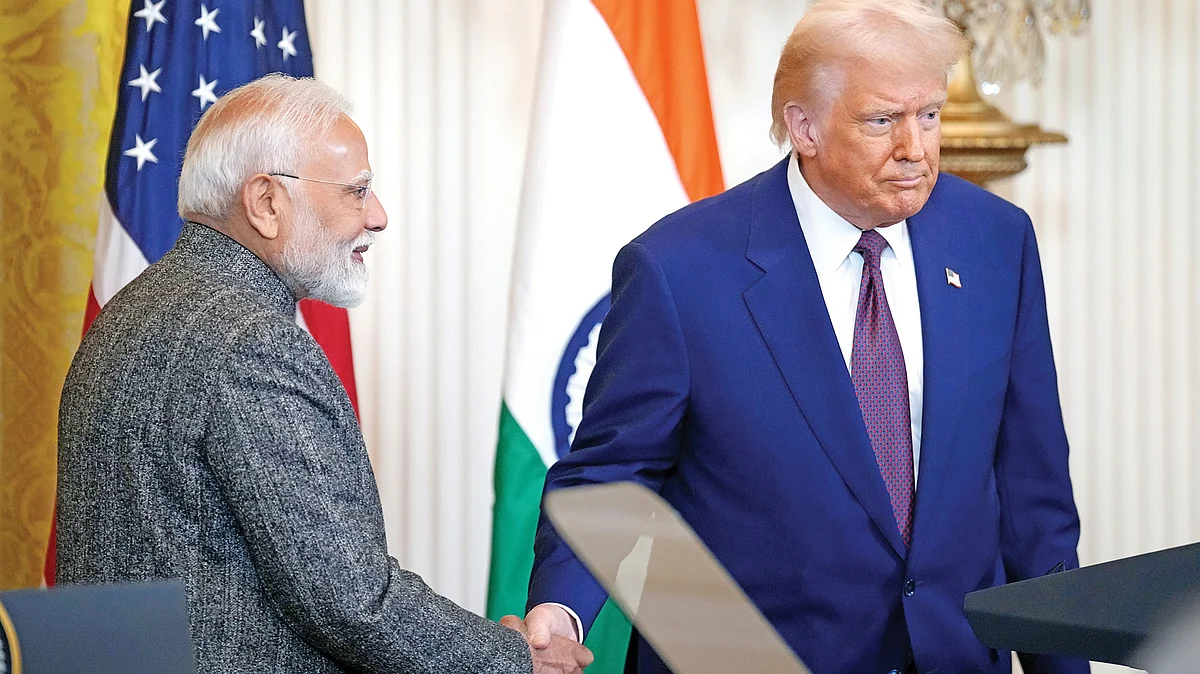


India on Friday rejected as “inaccurate” US commerce secretary Howard Lutnick’s suggestion that a proposed trade deal with the United States stalled last year because Prime Minister Narendra Modi did not phone US President Donald Trump, while highlighting that New Delhi is carefully monitoring a separate but far more consequential threat: a US Bill that could authorise tariffs of up to 500 per cent on Indian goods.
New Delhi also reaffirmed that it remains committed to sealing a “mutually beneficial” trade deal between the two “complementary economies,” noting that Modi and Trump had spoken by phone on eight occasions in 2025, spanning various aspects of bilateral ties — which undercuts the claim that a single missed opportunity scuttled an agreement.
The negotiations for a bilateral trade agreement have been overshadowed not just by diplomatic wrangling but by escalating tariff measures. Talks were already derailed after the Trump administration slapped sweeping duties on Indian exports — doubling tariffs to about 50 per cent, including an additional 25 per cent penalty tied to India’s Russian oil purchases — and now faces a new legislative push that could see duties soar to as much as 500 per cent against countries, including India, that import Russian petroleum products.
The fresh row between the two nations has emerged at a time when their relationship is widely seen to be under strain, possibly in its most difficult phase in decades, with trade tensions layered over geopolitical disagreements.
In his controversial interview on Thursday, Lutnick had attempted to explain why the India–US trade deal has yet to materialise. He recounted that the decision to pursue the pact was made after Modi and Trump met in the White House on 13 February 2025.
External affairs ministry spokesperson Randhir Jaiswal rejected Lutnick’s framing. “We have seen the remarks. India and the US were committed to negotiating a bilateral trade agreement as far back as 13 February last year,” he said at his weekly briefing on Friday.
“Since then, the two sides have held multiple rounds of negotiation to arrive at a balanced and mutually beneficial trade agreement,” he continued. “On several occasions, we have been close to a deal. The characterisation of these discussions in the reported remarks is not accurate.”
Jaiswal added that India “remained interested in a mutually beneficial trade deal between the two complementary economies” and was “looking forward to concluding it”. He also noted that “the prime minister and President Trump have also spoken on the phone on eight occasions during 2025, covering different aspects of our wide-ranging partnership”.
People familiar with the negotiations disputed the idea that a last-minute phone call could have clinched the pact, saying there was never a moment when such theatrics would have meaningfully altered the outcome, according to a PTI report.
Lutnick had claimed that after negotiations with the UK, the US was poised to wrap up a similar pact with India. “And we were talking (with) India, and we told India, ‘You have three Fridays’. Well, they have to get it done,” he said, describing Trump as the man who “does the deal”.
“So I said, ‘You got to have Modi, it’s all set up, you have to have Modi call the president. They (India) were uncomfortable doing it, so Modi didn’t call’.” After that Friday passed, the US instead announced new trade agreements with Indonesia, the Philippines and Vietnam, part of a flurry of pacts signed in July.
Against that backdrop, the looming 500 per cent tariff threat has sent shockwaves through markets and policymakers alike. The Sanctioning Russia Act of 2025, backed by Trump and bipartisan congressional sponsors, would give the president authority to slap punitive duties of up to 500 per cent on imports from countries that knowingly buy Russian crude or petroleum products — a provision aimed at curbing financing for Russia’s war effort but one that could dramatically raise costs for Indian exporters and further complicate an already fraught trade landscape.
India is already seeing market impacts: shares of export-heavy companies slid sharply as investors reacted to the possibility of tariffs that could dwarf current duties.
Apart from trade, ties remain strained on other fronts, including lingering tensions over Trump’s repeated assertions of having stopped the India–Pakistan conflict and Washington’s revised immigration policies — underscoring that a trade deal now sits against a backdrop of multifaceted disagreements between the two democracies.
With PTI inputs
Join our official telegram channel (@nationalherald) and stay updated with the latest headlines