


Parliament must discuss the war on Iran
Too many unanswered questions on India’s foreign policy, energy policy, security policy—and on the safety of ~10 million Indian citizens in war-torn West Asia
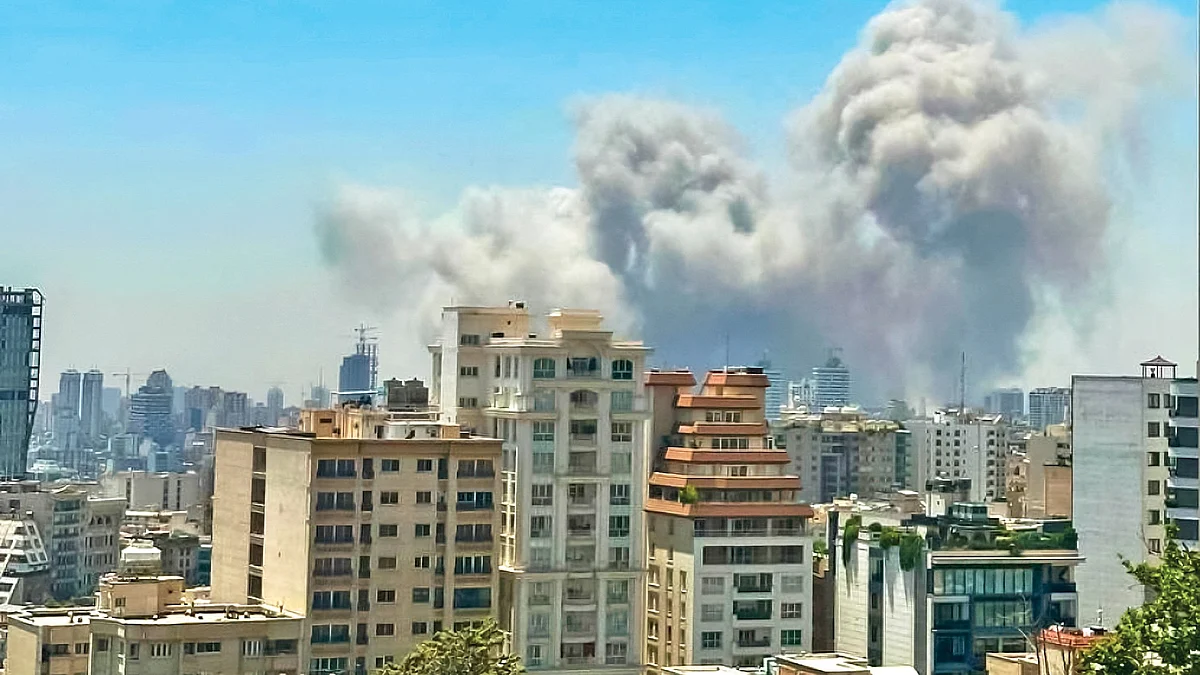


Since Parliament reconvened on March 9, Opposition legislators have asked for a discussion on the US-Israeli war on Iran. As expected, the Modi administration refused, on the grounds that external affairs minister S. Jaishankar had briefed both houses.
Jaishankar’s statement, however, did not answer the questions that have been raised over the past ten days; indeed, it raises a series of fresh questions that range from India’s foreign policy to its energy policy to its security policy, especially the safety of its citizens.
Jaishankar asserted that the Modi administration acted, as always, in the national interest. The question is, what was the Prime Minister’s analysis of the national interest? Since Mr. Jaishankar did not share it, we can only speculate, but there are sufficient dots to arrive at a broad conclusion.
First, by Jaishankar’s own admission, Modi chose to visit Israel despite knowing the war was imminent; the external affairs ministry warned Indian citizens to exit West Asia on February 23, Mr. Modi visited Israel three days later. Did he not realise that his visit would be seen as endorsement of what is widely recognised as a war of aggression?
This question is compounded by the joint statement issued after Modi’s visit, which made absolutely no reference to the then ongoing negotiations between the US and Iran, mediated by Oman.
According to foreign secretary Vikram Misri’s press briefing, the Iran issue did come up in Modi’s talks with Mr. Netanyahu and Modi offered any help that India could give for a peaceful resolution. But Modi did not make a public statement of support for the negotiations, which would have been apposite. Without it, his belated call for dialogue, made after the war had started, rings hollow.
Perhaps Modi thought the war would be over in days, as President Trump initially asserted. Instead, it is continuing; indeed, it is intensifying and widening.
The longer it lasts, the greater will be the threat to Indian migrant workers in West Asia, who number close to 10 million. Indian students in Iran have already sent SOS messages seeking evacuation, as have Indian citizens in Israel. What is being done to help them, and what are our plans for evacuation or safe stay of migrant workers? Surely this information should be shared. Similarly, given our acute problems of energy security, surely details of what stocks we have and plans to replenish them should be shared.
The safety of migrant workers is not just an issue of concern for Indians. Afghans, Pakistanis, Bangladeshis and Nepalis make up the vast bulk of migrant workers in West Asia. Given this shared concern, it would surely be helpful for the five South Asian governments to discuss pooling resources to plan for their workers’ safety.
We have a different shared concern with Sri Lanka. The US torpedoing of an Iranian ship in the Indian Ocean, the IRIS Dena, raises proximate challenges for Indian and Sri Lankan security. Were our two countries’ administrations or navies warned by the Trump administration or the US Indo-Pacific Command of the attack so close to our respective coasts? If they were, did they choose to turn a blind eye? If they were not, what does this tell us about the US’ attitude to Indian and/or Sri Lankan security? More significantly still, what does it tell us about the Indian navy’s goal of being a net security provider in the Indian Ocean? Have we given up that ambition?
Expanding beyond South Asia, this war has caused consternation and alarm in all of Asia. ASEAN issued a statement calling for an immediate ceasefire, return to negotiations, adherence to the UN Charter and protection of civilians and civilian infrastructure. Has Mr. Jaishankar engaged with them, and with East Asian countries, to consider a common Asian position?
And then there is the Global South. Several of its countries, from South Africa to Colombia, have voiced alarm at growing unilateralism with impunity. Four West Asian countries are members of BRICS – Egypt, Iran, Saudi Arabia and the United Arab Emirates – yet the BRICS countries have not held a meeting on the war. India is the current chair; could BRICS be a forum for mediation?
Finally, the elephant in the room. This war, like the 2003 Iraq war, has driven a truck through the multilateral order. Most UN member-states, the Europeans included, acknowledge that it is ‘outside the framework of international law’.
Some Scandinavian countries, such as Finland, have begun thinking ahead on how to shore up multilateralism for the future. Thus far, the Modi administration has chosen to emphasise multipolarity and prioritise bilateral relations over multilateral ones. Does the Modi administration still believe bilateralism is its best policy or will it rethink its disdain for multilateralism?
These are some of the questions that the Opposition is not only entitled to ask but has the duty to ask.
Its legislators comprise around 43 percent of the Lok Sabha, representing a large section of the electorate, many of whom are either workers in West Asia or their families and who, along with the rest of Indian citizens, deserve to know what steps our administration is taking to safeguard them abroad and our shores at home, not only in this moment but for time to come.
We may still hope that the war will end soon; as it intensifies and widens, domestic pressure in the US and international pressure from the rest of the world to end it is rising and will continue to rise. But the questions that it has raised will not go away. And historians of foreign and security policy will note how the Modi administration once again missed the opportunity to strengthen India through forging common positions on shared concerns in its neighborhood and beyond.
Radha Kumar is a historian and policy analyst
Join our official telegram channel (@nationalherald) and stay updated with the latest headlines