


Prof. K.N. Panikkar: Historian, educator and beacon of secular thought
From classroom to public debate, the Marxist historian leaves behind a legacy of fearless inquiry and commitment to justice
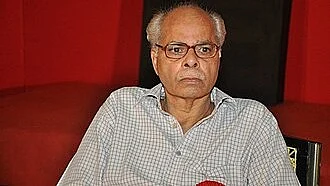


The passing away of Professor K.N. Panikkar is a big loss to Indian historiography, pedagogy, and public discourse. Born on 26 April 1936 in Guruvayur, Kerala, he was one of India’s most influential Marxist historians and a steadfast public intellectual. His rigorous scholarship illuminated the intersections of culture, colonialism, ideology, and popular consciousness, while his commitment to secularism and evidence-based inquiry resisted distortions of the nation’s past.
Panikkar completed his undergraduate studies in Kerala before earning his Master’s and doctorate from Rajasthan University. It was there that he met and later married his college mate Usha Bhargava (who predeceased him). The couple had two daughters.
After establishing himself as an exceptional teacher at Delhi University, Panikkar joined Jawaharlal Nehru University’s Centre for Historical Studies in 1972. Alongside luminaries such as Bipan Chandra, Sabyasachi Bhattacharya, and S. Gopal, he helped build one of the most dynamic departments of modern Indian history in post-independence India.
Panikkar was renowned for his pedagogical brilliance, making intricate subjects vivid and accessible. His pioneering course on the 'History of Ideas in 19th-century India' redirected attention from prevailing economic and political emphases toward culture’s pivotal role in shaping human action and large-scale political movements.
Panikkar’s work critiqued colonial historiography’s reductive views of indigenous culture, instead highlighting how 19th-century Indian intellectuals forged modern paradigms without Western endorsement. Figures like Akshay Kumar Dutt and Lokahitawadi exemplified an autonomous modernity, while his explorations of traditional systems such as Ayurveda under colonial rule exposed the resilience and complexity of Indian knowledge traditions.
His key publications include British Diplomacy in North India (1968), Culture and Consciousness in Modern India (1970), National and Left Movements in India (1980), and the landmark Against Lord and State: Religion and Peasant Uprisings in Malabar, 1836–1921 (1989). In this influential study, he reframed the Malabar rebellion — often mischaracterised as the Moplah Rebellion — as a layered struggle involving anti-imperialist resistance, agrarian revolt, and elements of freedom fighting.
He also edited significant documentary collections, including Peasant Protest and Revolts in Malabar (1990) and contributions to Towards Freedom, 1940: A Documentary History of the Freedom Struggle. His writings on communalism, notably in Communalism in India: History, Politics and Culture (1991), provided incisive critiques of sectarianism and advocated for a pluralistic, secular historical vision.
As a committed Marxist, Panikkar fearlessly addressed themes beyond orthodox frameworks, underscoring culture’s centrality in forging social consciousness and political change.
Panikkar’s impact reached far beyond research. He served as founding vice-chancellor of Sree Sankaracharya University of Sanskrit in Kalady, advancing humanities scholarship; vice-chairman of the Kerala State Higher Education Council; and founding president of the Kerala History Congress. As a former president of the Indian History Congress, he defended scientific historiography against politicisation.
In the classroom, he cultivated intellectual openness, transforming sessions into vibrant arenas of debate where dissenting perspectives were encouraged and often celebrated, nurturing generations of historians with rigour and independence.
Beyond academia, Panikkar emerged as a formidable public intellectual whose interventions in debates on education, culture, and politics championed secularism and critical inquiry.
He viewed history not as a detached pursuit but as a vital instrument for confronting injustice and safeguarding democratic ideals. Amid rising communal tensions, he consistently challenged majoritarian narratives that sought to supplant evidence with myth.
A notable instance of his outreach occurred in the late 1980s, when he delivered the prestigious Heras Memorial Lecture at St Xavier’s College, Bombay (now Mumbai). Speaking on the Malabar Rebellion of 1921, he contextualised it as a multifaceted resistance against British colonial rule in southern India, emphasising its socio-economic and anti-imperialist dimensions rather than reductive communal framings. Such engagements exemplified his dedication to disseminating nuanced historical understanding to wider audiences.
Following the 2002 Gujarat riots, Panikkar co-founded ANHAD (Act Now for Harmony and Democracy) with activists including Harsh Mander and Shabnam Hashmi, forging connections between scholarly analysis and grassroots activism to promote communal harmony and counter divisive ideologies.
His Thiruvananthapuram home became a refuge for students, intellectuals, and activists grappling with India’s democratic challenges. For Panikkar, comprehending the past was essential to grasping the present—and acting on that insight constituted a civic imperative.
In an age of intensified politicisation of historical narratives, Panikkar embodied the historian’s responsibility to preserve scholarly autonomy, prioritise evidence and foster intellectual openness. His writings, teaching, and moral courage continue to inspire commitments to rigorous inquiry, cultural nuance and India’s pluralistic heritage.
Professor K.N. Panikkar’s departure creates an irreplaceable gap in Indian intellectual life. Yet his enduring ideas and example ensure that future generations will engage critically and inclusively with the nation’s multifaceted history.
Hasnain Naqvi is a former member of the history faculty at St Xavier’s College, Mumbai. More of his writing may be read here
Join our official telegram channel (@nationalherald) and stay updated with the latest headlines