


Recognition, yes, but redistribution?
Maharashtra has passed a new law to recognise women farmers but has it done enough to really empower them?


Savita Patil, a marginal farmer in Nimkhedi village of Maharashtra’s Dhule district, couldn’t enrol herself on Maha-DBT, the Maharashtra government’s portal for schemes and subsidies. With her husband, Savita Patil grows cotton and maize on their two-acre farm. But she couldn’t even register her name on the portal. The 37-year-old was not a farmer in official records.
Savita Patil’s is not an isolated case.
For generations, women have tilled fields, transplanted paddy, harvested cotton, milked cattle, managed livestock, saved seeds, collected forest produce, grown mushrooms, harvested fish in the ponds and rivers, and sustained their households with labour and supplementary incomes.
Yet, in the eyes of the law, millions of women in rural Maharashtra, indeed across the country, have remained invisible — they are not farmers, but ‘wives’ or ‘agricultural labourers’ because the land they cultivate is usually registered in the name of fathers, husbands or sons.
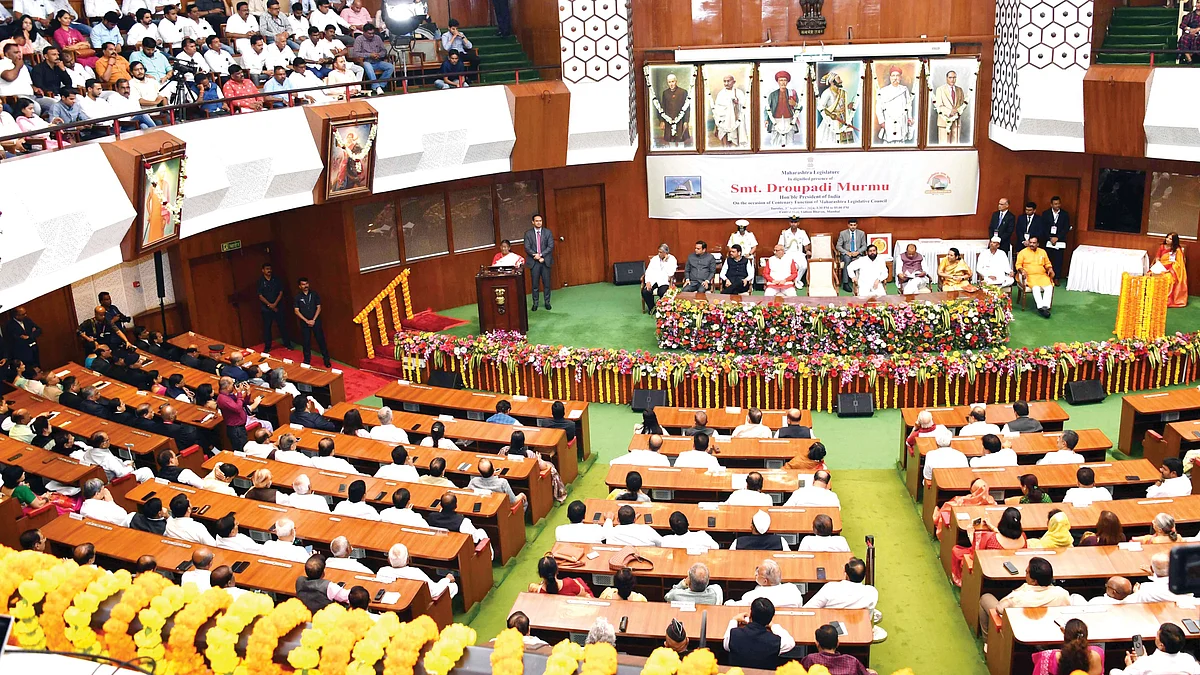
Last week, Maharashtra took a significant step towards correcting this historical anomaly. The state legislature unanimously passed the Maharashtra Women Farmers Empowerment Act, 2026, making it one of the first in the country to enact a law that grants legal recognition to women as ‘farmers’ engaged in agriculture, irrespective of whether or not they own agricultural land.
While the rights debate among women farm activists has centred around land entitlements, this law distinguishes farming from land ownership. The agitation for land entitlements has a long history but those rights are not yet on the horizon. What the new law provides, in the interim, is a template for inclusion of women farmers and labourers in government entitlement programmes.
The new law is the culmination of a three-decade campaign by women’s organisations, researchers and farmer collectives, who argued that Indian agricultural policy has systematically undercounted the contribution of women because it equated farming with ownership of land.

Also Read: Jumping through hoops for debt relief
“This is significant because it redefines who we see as a farmer,” says Professor Nitya Rao, Gender and Development, at the University of East Anglia, UK, and a trustee of the M.S. Swaminathan Research Foundation (MSSRF). “It challenges deeply embedded gender norms that have kept women invisible as ‘farmers’ in policy and practice.” Prof. Rao adds a note of caution: “Recognition must translate into real gains.”
The Bill was in active discussion since September 2025, when the state government signed an MoU with MSSRF. It was in May 2012 that late Dr Swaminathan had introduced a private member’s Bill in the Rajya Sabha — The Women Farmers’ Entitlement Bill, 2011 — asking the government to provide for gender-specific needs like setting up creches or day-care centres for their children and to grant women farmers land entitlements. This legislation heavily draws from that Bill.
The MSSRF drafted a policy note in January as a precursor to the draft Bill. The note was tabled before the legislature in March during the budget session, and it was during the debate that chief minister Devendra Fadnavis announced that this would be moved in the monsoon session. It was passed unanimously.
During consultations with civil society and farmer rights groups in the state, women repeatedly spoke of being excluded from government programmes despite doing most of the farm work.
“What we heard repeatedly was not just exclusion, but persistence [of exclusion],” Dr R.V. Bhavani, senior fellow at MSSRF, told National Herald. “Women farm every day, innovate and sustain their households, yet remain outside formal systems. The challenge now is to ensure that implementation is simple, accessible and widely understood.”
The Act introduces women farmer certificates (WFC), enabling women actively engaged in agriculture and allied activities to obtain official recognition as farmers even if their names do not appear on land records.
In effect, the certificate shifts the basis of recognising a farmer from ownership of land to participation in agricultural work. The law covers not only crop cultivation but a range of other activities — such as livestock rearing, dairy, fisheries, mushroom cultivation, forest-based livelihoods and other allied agricultural occupations that form the backbone of rural households.
The law also mandates creation of a statewide database of women farmers, a Women Farmers Empowerment Cell, assistance officers at district and sub-district levels, a dedicated fund for women farmers and also monitoring mechanisms to ensure their implementation across various departments.
Calling the legislation “long overdue”, Dr Soumya Swaminathan, chairperson of MSSRF, said the proposed WFCs were “a gateway to dignity, visibility and economic opportunity.” Its success, she cautioned, would depend on effective implementation.
For decades, the absence of legal recognition has meant that countless women cultivators found themselves excluded from institutional credit, crop insurance, government subsidies and training programmes simply because they could not prove that they were farmers. The new certificate will hopefully change this, providing them documentary recognition that government agencies can rely on while extending benefits.
One of the least acknowledged transformations in Indian agriculture has been its steady feminisation, first flagged in the Economic Survey of India, 2015-16.
Successive Agriculture Censuses show that women accounted for10.9 per cent of operational holdings in 2000-01, a figure that rose to11.7 per cent in 2005-06, 12.8 per cent in 2010-11, and 13.9 per cent in2015-16. At the same time, the Periodic Labour Force Survey (PLFS) 2023-24 shows that agriculture remains the principal source of employment for rural women, with nearly 77 per cent of employed rural women engaged in agriculture, compared to about half of rural men — a reflection of both women’s centrality to farming and the continuing exodus of men for non-farm work.
The Situation Assessment Survey of Agricultural Households (NSSO, 2019) also points to a slow but significant rise in agricultural households headed by women, a trend driven by male migration, widowhood and demographic change. Together, these trends reveal a paradox: women increasingly sustain India’s farms, but continue to own only a fraction of the land and remain inadequately recognised in agricultural policy.
Researchers describe this shift as the feminisation of agriculture — a process driven by male out-migration, distress-led diversification of rural livelihoods and the growing responsibility of women in cultivation, livestock and farm management.
Yet feminisation has not meant empowerment.
As Vaishali Ghuge, a woman farmer in Dharashiv district said during one of the consultations, “I built everything step by step, but I could not access government schemes and subsidies as I do not own land.”
Even though women’s participation in farming and allied activities has grown, ownership of land, access to institutional finance and decision-making powers are still concentrated in the hands of their menfolk. The new Maharashtra law will rectify this to an extent but it has limitations.
It does not alter land ownership, inheritance or tenancy laws. A woman recognised as a farmer under this Act does not automatically become a landowner, nor does she acquire property rights by virtue of the certificate.
So, the law addresses recognition but falls short of redistribution.
Whether this recognition translates into economic empowerment remains to be seen. Banks will have to decide whether the certificate is sufficient to extend agricultural credit. Insurance companies and other agencies will need to treat certificate holders as eligible beneficiaries. Local officials will have to evolve transparent procedures to identify genuine cultivators without creating another bureaucratic hurdle.
The Devendra Fadnavis government will no doubt use the new law to brandish its pro-women credentials, but the ironic twist is that it came into being in the same week that his government admitted to the deletion of 92 lakh women from its much-trumpeted ‘Ladki Bahin Yojana’. That scheme, notified ahead of the 2024 assembly elections, had helped garner women’s votes but the state government now says it paid Rs 14,000 crore extra to ineligible beneficiaries.
Jaideep Hardikar is a senior Nagpur-based journalist and author of Ramrao: The Story of India’s Farm Crisis. More by him here
Join our official telegram channel (@nationalherald) and stay updated with the latest headlines