


Religion without ethics becomes tool of domination: Karnataka CM Siddaramaiah at Sivagiri
Karnataka CM invokes Sree Narayana Guru’s vision of equality, unity in diversity and social justice at Sivagiri Theerthadanam
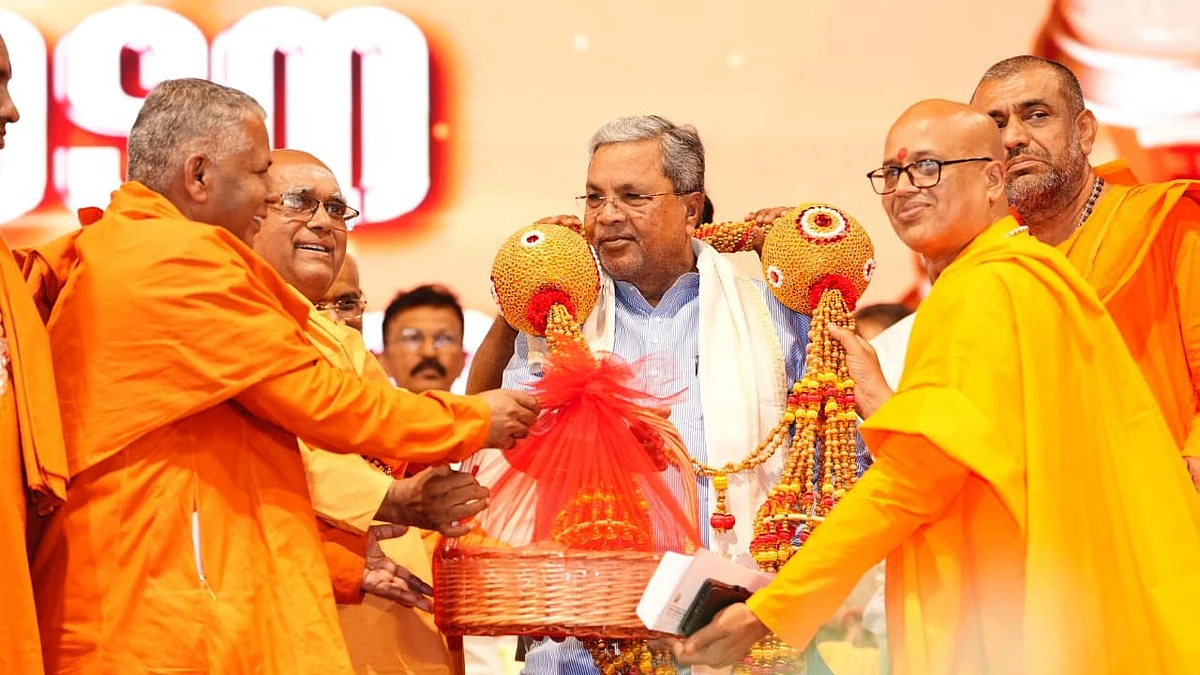


Karnataka Chief Minister Siddaramaiah on Wednesday said that religion, when detached from ethics, turns into a tool of domination, and asserted that Sree Narayana Guru had envisioned an India rooted in unity, equality and moral consciousness.
Addressing the 93rd Sivagiri Theerthadanam festival in Thiruvananthapuram, Siddaramaiah said the Sivagiri movement underscores that spirituality is inseparable from equality, reason and human dignity. He described Narayana Guru not merely as a saint, but as a social movement that challenged caste oppression and communalism.
“Narayana Guru was not merely a saint; he was a movement for equality and morality. Sivagiri must evolve as a movement that eradicates caste oppression and leads society towards social justice,” the chief minister said.
He said Sivagiri Mutt should be seen not just as a pilgrimage centre, but as a “moral university” representing the conscience of India. Calling the Sivagiri pilgrimage a moral journey rather than a geographical one, Siddaramaiah said it reflected India’s foundational anti-communal vision.
“At a time when politics is drifting away from morality and religion is increasingly used as a weapon for power, Sivagiri must serve as a moral movement and inspiration,” he said, adding that the Sivagiri Mutt functioned like a “living Constitution”.
Referring to the theme of the festival — The role of Sivagiri Theerthadanam in modern nation-building — Siddaramaiah said it was an urgent necessity rather than a symbolic exercise, especially in an era of increasing social polarisation.
He said Narayana Guru did not attempt reforms within an unjust system, but instead dismantled its foundations. Quoting the Guru’s proclamation — “One caste for humankind, one religion, one God” — Siddaramaiah said it was a direct challenge to caste-based hierarchy, religious monopoly and social exclusion rooted in Manusmriti.
The chief minister also highlighted Narayana Guru’s emphasis on education and organisation as tools of liberation. He said the Guru believed caste survived through the systematic denial of knowledge, and argued that ignorance was politically manufactured to sustain inequality.
Siddaramaiah said Narayana Guru promoted education, industrial training, skill development and modern agriculture to ensure dignified livelihoods, particularly for backward communities. He noted that the Guru encouraged communities to become producers rather than dependents, leading to the rise of industrial and entrepreneurial groups across coastal Kerala, Tamil Nadu and Karnataka.
“Narayana Guru did not see industry and employment as threats to spirituality. He saw them as instruments of social liberation,” Siddaramaiah said.
With IANS inputs
Join our official telegram channel (@nationalherald) and stay updated with the latest headlines