


Rest in peace Sir Mark Tully, the calm voice that narrated India’s storms
With his death, India loses a voice that insisted its story could only be told with patience, empathy and depth
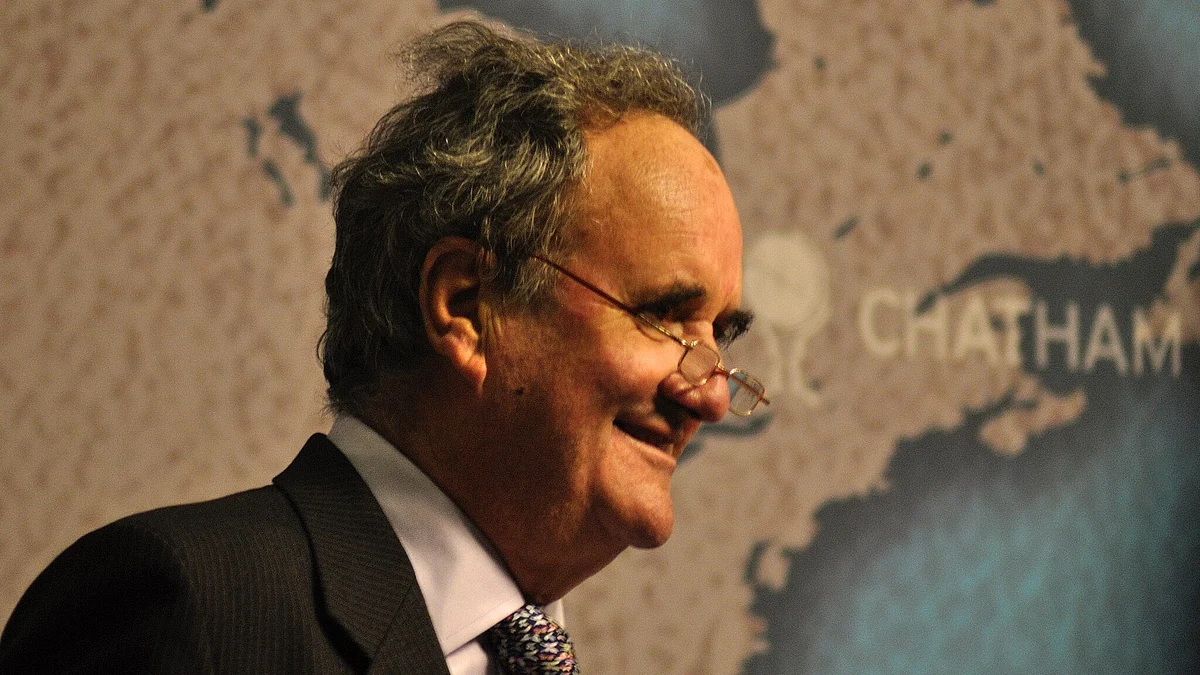


Sir William Mark Tully, the British journalist and writer who became one of the most authoritative and empathetic chroniclers of modern India, died on Sunday, 25 January at the age of 90 in New Delhi. For more than five decades, Tully’s calm, resonant voice on radio shaped how the world understood India and South Asia, earning him the enduring sobriquet 'the voice of India'.
Best known for his long tenure as the New Delhi bureau chief of the BBC, Tully — who made India his home — reported from the frontlines of the subcontinent’s most defining events with rare depth, restraint and moral clarity. His journalism combined rigorous fact-finding with cultural sensitivity, offering global audiences not just news, but context.
Born on 24 October 1935 in Calcutta (now Kolkata) to British parents, Tully spent much of his childhood in India, an experience that forged a lifelong emotional and intellectual bond with the country. He was educated in England at Twyford School and Marlborough College, before studying at Trinity Hall, Cambridge, where he later became an honorary fellow.
Tully joined the BBC in 1964 as a radio producer for the World Service. In 1965, he was posted to India as a correspondent — a decision that would define his career. Over the next three decades, he reported from India, Pakistan, Bangladesh and Sri Lanka, covering conflicts, political upheavals and social transformations at close quarters.
Tully's reportage spanned the 1965 and 1971 Indo-Pak wars, the creation of Bangladesh, the 1984 Bhopal gas disaster, Operation Blue Star at the Golden Temple, the assassination of Indira Gandhi, the anti-Sikh riots that followed, the assassination of Rajiv Gandhi in 1991, and the demolition of the Babri Masjid in 1992. In each case, Tully avoided sensationalism, choosing instead to foreground human consequences and historical continuities.
He served as the BBC’s New Delhi bureau chief from 1974-94, a period widely regarded as the golden age of the corporation’s foreign reporting in South Asia. His dispatches during moments of crisis were marked by composure and authority, earning trust among listeners across continents.
In 1994, Tully resigned as bureau chief, citing frustration with increasing bureaucratisation within the BBC and what he described as a shift towards 'London-centric' decision-making that weakened field reporting. The departure marked the end of an era, but not the end of his engagement with India.
Reinventing himself as a freelance journalist and author, Tully continued to write, broadcast and speak widely. He presented BBC Radio 4’s 'Something Understood' until 2019, exploring questions of faith, ethics and spirituality — themes that increasingly occupied his later work. He remained a regular commentator on Indian politics, religion and society, and a familiar presence at literary festivals and academic forums.
A prolific author, Tully wrote nine influential books that blended reportage with narrative insight. His first major work, Amritsar: Mrs Gandhi’s Last Battle (1985), offered a penetrating account of Operation Blue Star and its aftermath. No Full Stops in India (1988) captured the country’s contradictions with warmth and wit, while India in Slow Motion (2005), co-authored with his partner and journalist Gillian Wright, examined the uneven impact of economic liberalisation. Later works, including Upcountry Tales, reflected his enduring fascination with rural India and its moral resilience.
Tully’s writing consistently argued for inclusivity and warned against the social costs of economic exclusion. “There is no more fertile ground for revolution than the educated unemployed,” he once observed. He lamented that India’s achievements were often under-recognised globally, while praising its pluralism and capacity for coexistence.
In recognition of his contribution to journalism and to fostering understanding between India and the United Kingdom, Tully received numerous honours. He was appointed Officer of the Order of the British Empire (OBE) in 1985 and knighted as a Knight Commander of the Order of the British Empire (KBE) in 2002.
India conferred on him the Padma Shri in 1992 and the Padma Bhushan in 2005. He also received a BAFTA lifetime achievement award, the RedInk Lifetime Achievement Award from the Mumbai Press Club, and the UK–India Lifetime Achievement Award in 2019.
Beyond journalism, Tully was associated with humanitarian causes, serving as Patron of Child in Need India (CINI UK). He advocated for child welfare, social equity and interfaith harmony.
Fluent in Hindi and Urdu, married to Indian journalist Gillian Wright, and based in New Delhi for much of his life, Tully rejected expatriate enclaves, choosing instead to live at the heart of the city he loved. His spiritual journey — from Anglican roots to Methodist lay preaching — informed a worldview that valued faith, humility and continuity.
Sir Mark Tully occupied a rare space as an outsider who became an insider — deeply affectionate towards India, yet unsparing in critique. In an era of accelerated news cycles and shrinking attention spans, his slow, deliberate storytelling stands as a reminder of journalism’s highest calling.
With his death, India loses not just a chronicler of its past, but a voice that insisted its story could only be told with patience, empathy and depth — without full stops.
Join our official telegram channel (@nationalherald) and stay updated with the latest headlines