


SC allows deployment of judicial officers from Jharkhand, Odisha for Bengal SIR claim verification
Top court invokes Article 142, permits civil judges’ deployment as over 80 lakh claims and objections flood SIR exercise
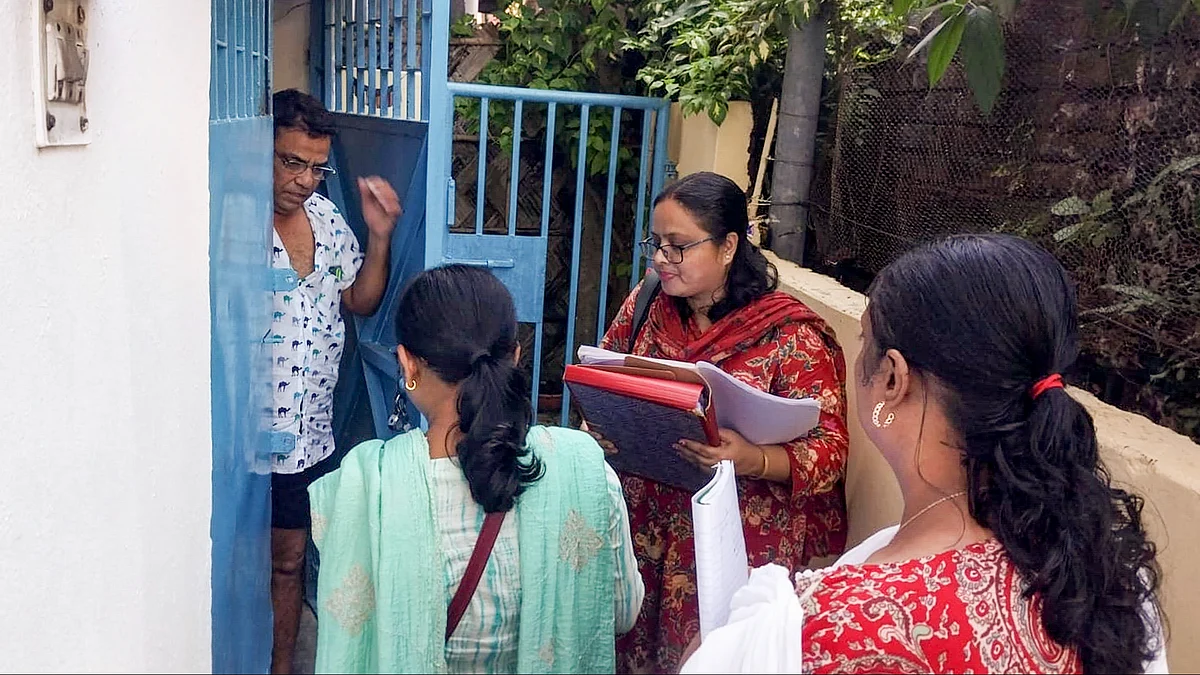


The Supreme Court on Tuesday permitted the deployment of additional judicial officers, including civil judges and officers from neighbouring states, to expedite verification of nearly 80 lakh claims and objections arising from West Bengal’s ongoing SIR (Special Intensive Revision) of electoral rolls.
A bench led by Chief Justice Surya Kant and comprising Justices Joymalya Bagchi and Vipul M. Pancholi took note of a 22 February letter from Calcutta High Court Chief Justice Sujoy Paul, which said even the deployment of 250 district judges may take around 80 days to process the claims and objections of voters flagged under “logical discrepancy” and “unmapped” categories.
The discrepancies include mismatches in parent details or unusual age differences — such as less than 15 years or more than 50 years — between a voter and the parent listed in the 2002 electoral roll.
Issuing fresh directions, the bench observed that even if each judicial officer handled 250 cases daily, the process would extend beyond the SIR deadline of 28 February. The court allowed the Calcutta High Court to deploy civil judges from senior and junior divisions with at least three years’ experience to assist in verification.
“If the Chief Justice of the Calcutta High Court is of the opinion that further human resources are required, he is at liberty to approach the Chief Justices of the High Courts of Jharkhand and Orissa to provide serving or retired judicial officers from those states of similar rank,” the bench ordered.
The court noted that Jharkhand and Odisha were historically part of Bengal and judicial officers from those states would be familiar with the language used in West Bengal. It directed that travel expenses, honorarium and related costs of such officers be borne by the Election Commission (EC), while urging the chief justices of the two High Courts to consider the request “sympathetically and urgently”.
The bench clarified that judicial officers would verify documents listed in earlier notifications and orders, including Aadhaar, Maadhyamik (Class X) admit cards and pass certificates, provided they were submitted physically or electronically before the 14 February cut-off date. It said Electoral Registration Officers (EROs) and Assistant Electoral Registration Officers (AEROs) would be responsible for satisfying judicial officers regarding the authenticity of documents.
The Supreme Court also permitted the EC to publish the final electoral roll on 28 February, allowing supplementary lists to be issued later as verification continues. Exercising plenary powers under Article 142 of the Constitution, the court said eligible voters included through supplementary rolls could be treated as part of the final list.
During the hearing, advocate Ashwini Upadhyay alleged widespread use of fake Aadhaar cards and claimed that many such documents originated from Bengal’s border districts. “It is practically seen throughout the country… whenever there are Bangladeshis or Rohingyas detained by the police, the Aadhaar is from Bengal,” he said, urging stricter safeguards.
Chief Justice Kant responded, “The matter may require a deeper probe. But this is not the timing. Lest we are misunderstood by anyone, let the right atmosphere and environment come.” Justice Bagchi added that any statutory changes must be pursued through representation to the Union government and amendments to the Representation of the People Act.
The directions follow earlier intervention by the top court amid an escalating dispute between the West Bengal government and the EC over the SIR exercise. On 20 February, the bench described the situation as an “unfortunate blame game” reflecting a “trust deficit” between the poll panel and the “democratically elected” Trinamool Congress government.
Earlier, on 9 February, the court had warned that no impediment would be allowed in the SIR process and directed the West Bengal Director General of Police to file an affidavit regarding allegations that EC notices were burnt by miscreants.
With the deadline approaching and millions of objections pending, the court’s latest order seeks to accelerate the verification process while ensuring that eligible voters are not excluded from the electoral roll.
With PTI inputs
Join our official telegram channel (@nationalherald) and stay updated with the latest headlines