


SC raps pollution watchdog over Delhi-NCR air quality, rejects plea for adjournment on toll plazas
Top court says CAQM “failing in its duty”, orders expert meet in two weeks to identify causes and long-term solutions to worsening AQI
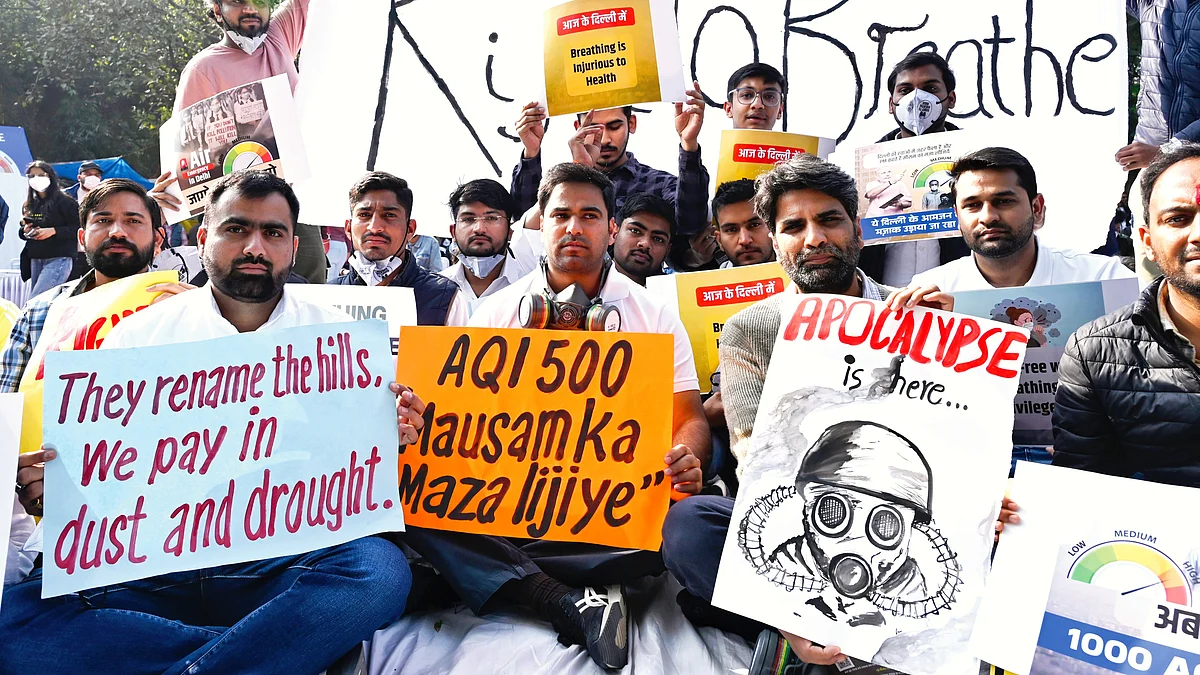


The Supreme Court of India on Tuesday came down heavily on the CAQM (Commission for Air Quality Management), accusing it of “failing in its duty” and lacking seriousness in tackling Delhi-NCR’s air pollution crisis, after the authority sought a two-month adjournment on the issue of closing or relocating toll plazas at the capital’s borders to ease traffic congestion.
A bench of Chief Justice of India Surya Kant and Justice Joymalya Bagchi refused to grant the request and directed the CAQM to convene a meeting of experts within two weeks and submit a report identifying the major causes of the worsening Air Quality Index (AQI) in the region.
“The CAQM appears to be in no hurry… to either identify the causes of the worsening AQI or the long-term solutions. We are therefore compelled to issue directions necessary to expedite the identification of causes as well as long-term solutions,” the bench said.
Toll plazas, congestion and court’s directions
The matter relates to the court’s 17 December order, when it took serious note of severe pollution levels in Delhi-NCR and asked the National Highways Authority of India and the Municipal Corporation of Delhi (MCD) to consider temporary closure or relocation of nine toll plazas at Delhi’s borders to reduce massive traffic congestion.
When the case was taken up on Tuesday, Additional Solicitor General Aishwarya Bhati, appearing for the CAQM, referred to stakeholder consultations and sought two months’ time on the toll plaza issue. The court rejected the plea, saying the first priority was to identify the causes of pollution.
“Have you been able to identify the causes of pollution? Heavy vehicles are contributing a large part… By holding a meeting on January 2 and telling us that we will come after two months, that is not acceptable. The CAQM is failing in its duty,” the bench observed orally.
The court said it would not adjourn the matter beyond two weeks and would monitor the pollution issue on a continuous basis.
Criticism of civic bodies
The bench also expressed dissatisfaction with other authorities, noting that instead of proposing solutions, the MCD had filed an affidavit defending toll plazas as a source of revenue. It further pointed out that the Gurugram Metropolitan Development Authority had sought a direction for apportionment of 50 per cent of the environment compensation charge generated in Gurugram.
“…instead of bringing any concrete plan or proposal for some visible long-term remedial measures, the CAQM has given a status report which unfortunately does not reflect any seriousness on the part of the authority,” the court said.
Long-term solutions stressed
The Supreme Court directed the CAQM to:
Hold an expert meeting within two weeks to identify major causes of pollution.
Submit a report on findings to the court.
Begin framing long-term solutions in a phased manner.
Consider the toll plaza issue independently, without being influenced by the stand of stakeholders.
The bench cautioned against adopting sweeping measures without proper assessment, saying there could not be a one-go decision such as introducing electric vehicles without first examining the financial implications for the public exchequer.
However, it said that with a structured long-term plan, better alternatives could be introduced gradually.
Background of the case
The directions were issued in a public interest litigation filed by environmentalist M.C. Mehta. During the 17 December hearing, the court had described Delhi’s pollution crisis as an “annual feature” and called for pragmatic and practical solutions.
It had also modified its interim order of 12 August, permitting authorities to take coercive action against older vehicles that do not meet Bharat Stage-IV (BS-IV) emission standards.
The matter has now been listed for further hearing on 21 January, when the court will review the steps taken by the CAQM and other agencies to address Delhi-NCR’s air quality emergency.
Join our official telegram channel (@nationalherald) and stay updated with the latest headlines