


Remembering a fearless historian of the Indus: Shereen Ratnagar and the burden of rational enquiry
Her work fundamentally altered the study of the Indus Valley Civilisation
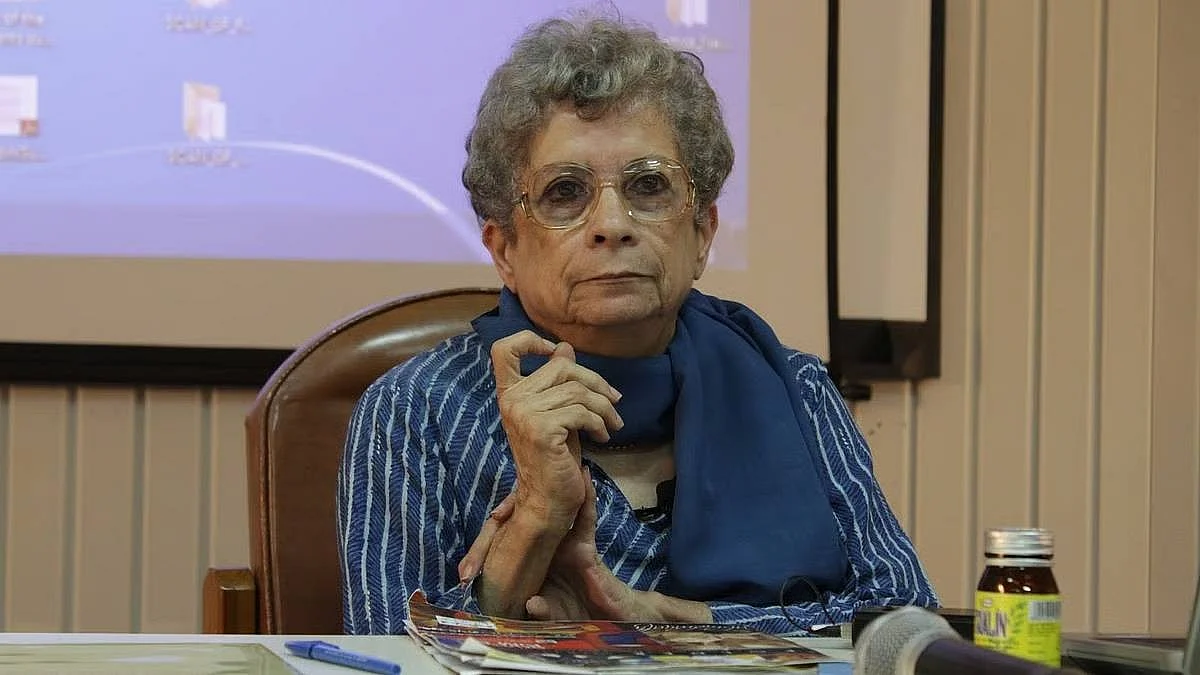


The passing of Shereen Ratnagar marks the end of an era in Indian archaeology and historical scholarship. Reports of her demise on 25 May 2026, accompanied by tributes from scholars and academic bodies including The Indian History Congress, have evoked profound sorrow across academic circles.
For generations of historians, archaeologists, and students, Ratnagar was not merely a scholar of the ancient past; she was among the fiercest defenders of intellectual honesty in the present.
To speak of Shereen Ratnagar is to speak of a scholar who refused comfort, conformity, and ideological compromise. In a public sphere increasingly vulnerable to myth dressed as history, she stood firmly on the side of evidence, excavation, and reason. Her scholarship on the Indus Valley Civilisation transformed understandings of early urbanism, trade, technology, and social organisation in South Asia. Yet her significance extended well beyond the archaeology of Harappa. She became one of the most important public intellectuals defending secular and scientific history-writing in contemporary India.
Excavating the Indus Beyond Romanticism
Born into a generation of scholars shaped by post-Independence intellectual optimism, Ratnagar approached archaeology not as a glorified search for civilisational pride, but as a disciplined inquiry into human societies. Educated at Deccan College in Pune and later trained in Mesopotamian archaeology at University College London, she brought to Indian archaeology a rare combination of global perspective and methodological rigour.
Her work fundamentally altered the study of the Indus Valley Civilisation. At a time when many interpretations of Harappan society remained descriptive and artefact-driven, Ratnagar insisted on asking larger structural questions: How did trade networks function? What forms of political organisation existed? What ecological and economic pressures contributed to urban decline? What did craft production reveal about class and labour?
Books such as Encounters: The Westerly Trade of the Harappa Civilisation and Understanding Harappa, and The End of the Great Harappan Tradition remain indispensable texts for students of ancient India. They revealed the Indus world not as an isolated marvel frozen in antiquity, but as part of a vast interconnected Bronze Age network stretching from Mesopotamia to the Arabian Sea.
Ratnagar challenged simplistic narratives that reduced the Harappan civilisation to nationalist symbolism. She consistently warned against reading modern religious identities into prehistoric societies. For her, archaeology was not a tool for validating political mythologies; it was a discipline grounded in material evidence and critical interpretation.
A Scholar Who Refused Silence
What distinguished Shereen Ratnagar from many accomplished academics was her refusal to remain confined within university walls. Even after retiring from the Centre for Historical Studies at Jawaharlal Nehru University, she continued to intervene courageously in public debates over history, secularism, and communal politics.
During the long and contentious disputes surrounding Ayodhya, Ratnagar emerged as one of the scholars who openly challenged the politicisation of archaeology. She argued that archaeological evidence must never become subordinate to religious mobilisation or majoritarian sentiment. Whether or not one agreed with every aspect of her interpretation, there was little doubt about the intellectual courage involved in defending scientific standards amid a highly charged political atmosphere.
In an age increasingly hostile to dissenting scholarship, Ratnagar represented a generation of historians who believed that evidence mattered more than ideology. She belonged to that shrinking tribe of public intellectuals willing to endure vilification in defence of academic integrity.
Writing history from the margins
Another remarkable aspect of Ratnagar’s work was her attention to communities often neglected in conventional historical narratives. Her writings on pastoralists, tribal societies, and marginalised peoples reflected a deep concern with social histories excluded from elite-centric accounts of civilisation.
She recognised that archaeology was not simply about kings, monuments, or urban grandeur. It was also about forgotten labourers, craftspeople, migrants, herders, and ordinary communities whose lives shaped history but rarely entered textbooks. In this sense, her scholarship possessed an unmistakably democratic impulse.
Her prose, though rigorous, was never inaccessible. Students remember her not only as a formidable scholar but also as a teacher capable of making ancient history intellectually alive and politically relevant. She inspired generations to see archaeology not as treasure hunting, but as an ethical engagement with the past.
Also Read: The freedom to think critically
The Defence of Secular History
The grief surrounding Ratnagar’s passing is also tied to the larger anxiety about the future of critical scholarship in India. She represented an intellectual tradition that viewed secularism not as a slogan, but as a scholarly obligation. Historical interpretation, she believed, must remain independent of religious chauvinism and state patronage.
At a time when mythology is often presented as historical fact and professional historians are routinely subjected to ideological attacks, Ratnagar’s life acquires even greater significance. She demonstrated that scholarship requires not only knowledge, but moral stamina.
Her generation of historians — including figures who defended plural and evidence-based historiography through turbulent decades — understood that the battle over the past is ultimately a battle over the character of the Republic itself. Ratnagar never separated historical inquiry from democratic responsibility.
An Irreplaceable Intellectual Loss
The sorrow over Shereen Ratnagar’s passing is therefore not merely institutional. It is civilisational in a deeper sense. India has lost one of the sharpest minds devoted to understanding its ancient past without surrendering to romantic nationalism or sectarian distortion.
Her books will continue to be read in classrooms and libraries, but her absence will be felt most acutely in public discourse — especially in moments when historians are called upon to defend reason against propaganda.
In mourning Shereen Ratnagar, India mourns more than an archaeologist. It mourns a scholar who insisted that history must remain accountable to evidence, complexity, and truth. Such voices are never easily replaced.
Hasnain Naqvi is a former member of the history faculty at St. Xavier’s College, Mumbai
Join our official telegram channel (@nationalherald) and stay updated with the latest headlines