


Wangchuk alleges key governance provision omitted from Ladakh talks draft minutes
Wangchuk warns omissions could erode trust in Centre-Ladakh talks; Chief Secretary says concerns can be added before minutes are finalised
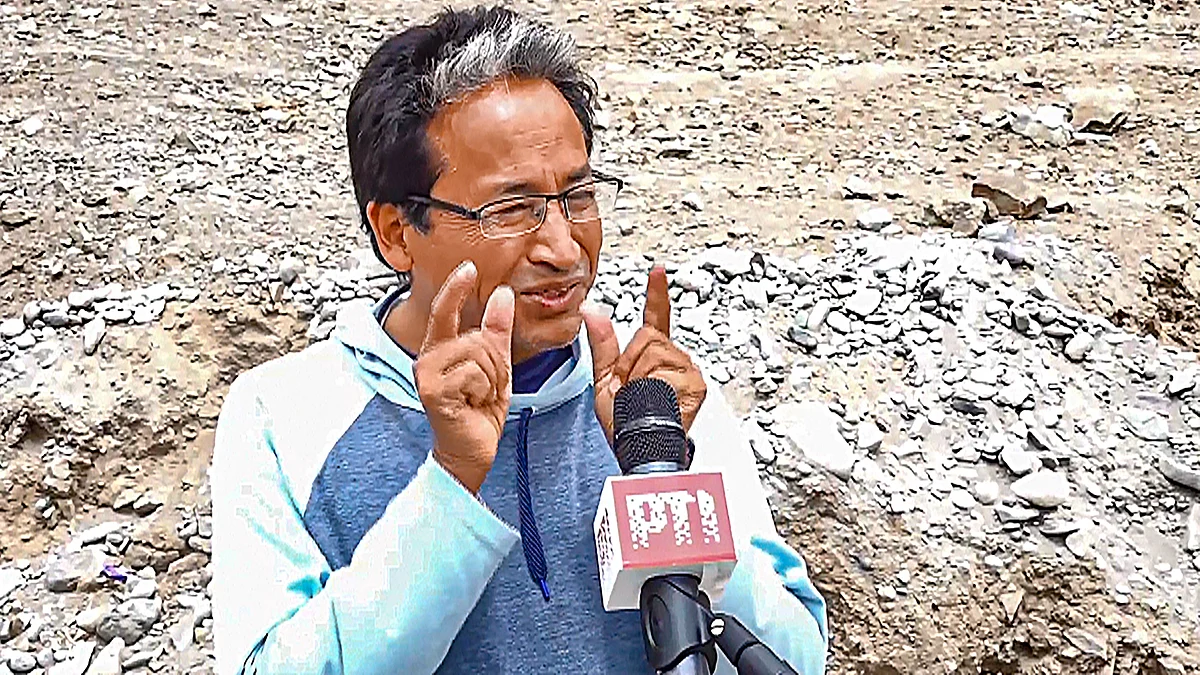


Climate activist Sonam Wangchuk on Monday alleged that a crucial understanding reached during recent talks between Ladakh representatives and the Centre had been omitted from the draft minutes circulated after the meeting, raising concerns over the transparency of the dialogue process.
The controversy relates to discussions held on 22 May during a meeting convened by the Ministry of Home Affairs (MHA) as part of its ongoing political dialogue with representatives of Ladakh. The Leh Apex Body and the Kargil Democratic Alliance (KDA) have been negotiating with the Centre since 2021 over demands including statehood for Ladakh and its inclusion under the Sixth Schedule of the Constitution.
Wangchuk said the draft minutes referred to discussions on legislative and executive powers but failed to record what he described as a key understanding reached during the meeting — that the bureaucracy would function under the authority of elected representatives.
The climate activist said talks had focused on strengthening democratic governance in Ladakh through creation of a legislative assembly vested with legislative, executive and financial powers, and on a governance framework in which senior administrative officials, including the chief secretary, would remain accountable to elected representatives.
“Our position is that Ladakh should have a legislative assembly with adequate legislative, administrative and financial powers,” Wangchuk said, adding that democratic oversight of the bureaucracy formed an important part of those discussions.
He alleged that when the draft minutes were first circulated by the government for review, Ladakh representatives pointed out the omission and sought corrections. Although the draft was subsequently revised, the provision relating to the authority of elected representatives over the bureaucracy was still absent, he claimed.
Wangchuk also said participants were not immediately provided with copies of the revised draft before being asked to sign it and were not permitted to photograph the document, raising doubts about whether the final record would accurately capture the meeting.
The developments follow Sonam Wangchuk’s arrest earlier after he criticised the government’s handling of Ladakh’s governance issues. He was detained on 26 September 2025, under the National Security Act (NSA) and spent 170 days — about six months — in Jodhpur Central Jail before being unexpectedly released on 14 March 2026.
The detention followed protests in Ladakh demanding statehood and Sixth Schedule protections. His preventive custody under the NSA was terminated earlier than the maximum 12 months after “due deliberation” by the Ministry of Home Affairs.
Wangchuk warned that discrepancies between the discussions and the official record could damage the atmosphere of trust that had emerged through the dialogue process. He pointed out that several participants invited by the government, including BJP leader and Kargil Hill Council chairman Thupstan Chhewang, had publicly indicated after the meeting that elected representatives would exercise meaningful control over governance and the administrative machinery, statements he said reflected the understanding reached during discussions. To preserve their interpretation of the proceedings, representatives of the Leh Apex Body and the KDA have prepared their own record of the meeting based on complete audio recordings, he added.
Responding at a separate press conference, Ladakh chief secretary Ashish Kundra described the meeting as a significant step forward and clarified that no official minutes had yet been finalised. He said what had been circulated was only a draft intended to facilitate further discussion and that the Centre had asked Ladakh representatives to prepare a detailed proposal outlining their preferred governance framework. Kundra invited stakeholders to raise concerns about omissions or inaccuracies, saying: “If there is anything left out, they can bring it to my notice. People should come forward and express their views openly, and we will certainly convey them to the Government of India.”
The dispute over the draft minutes comes at a sensitive stage in negotiations between Ladakh’s civil society groups and the Centre, with discussions increasingly focused on democratic representation, governance structures and constitutional safeguards for the Union Territory.
With PTI inputs
Join our official telegram channel (@nationalherald) and stay updated with the latest headlines