


Tamil Nadu law student refuses to remove blog criticising SC, cites free speech
TNNLU final-year student draws campus support as university rules out disciplinary action
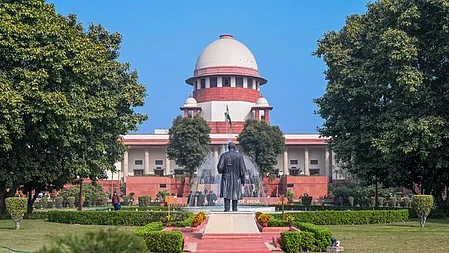


A final-year law student at Tamil Nadu National Law University has refused to take down a blog post sharply criticising the Supreme Court of India, asserting his right to freedom of expression.
A. Rishi Kumar published the article on his Substack page earlier this month, taking issue with the court’s decision to ban a Class VIII civics textbook and blacklist its authors over references to judicial corruption. Despite receiving an advisory from the university, he declined to remove the post.
The article, provocatively titled “The Supreme Court of India has no Spine”, questioned the court’s reasoning in restricting access to material that, according to him, largely praised the judiciary while briefly acknowledging its shortcomings. He also criticised the move to bar authors Michel Danino, Suparna Diwakar and Alok Prasanna Kumar from contributing to publicly funded curricula.
The student’s stance has garnered support from peers on campus, as well as a statement of solidarity from alumni of the 2020–2025 batch. Speaking earlier this week to The Hindu, Kumar said he had resumed attending classes and that no disciplinary action had been taken against him.
University officials clarified that their communication to the student was advisory in nature, prompted by external complaints and threatening messages reportedly received from individuals claiming to be lawyers from other states.
Registrar S.M. Balakrishnan said the institution would not pursue punitive action, noting that the blog was written in Kumar’s personal capacity and did not reference the university. He added that criticism of institutions, including the judiciary, was a legitimate exercise in a लोकतocratic framework and that the university did not wish to affect the student’s academic future.
The episode has sparked discussion within academic and legal circles about the boundaries of free speech, institutional criticism and the role of universities in protecting student expression.
Join our official telegram channel (@nationalherald) and stay updated with the latest headlines