


‘This SIR is error-prone by design’
A conversation with Dr Noor Mohammad, who served as chief electoral officer of Uttar Pradesh for nine years
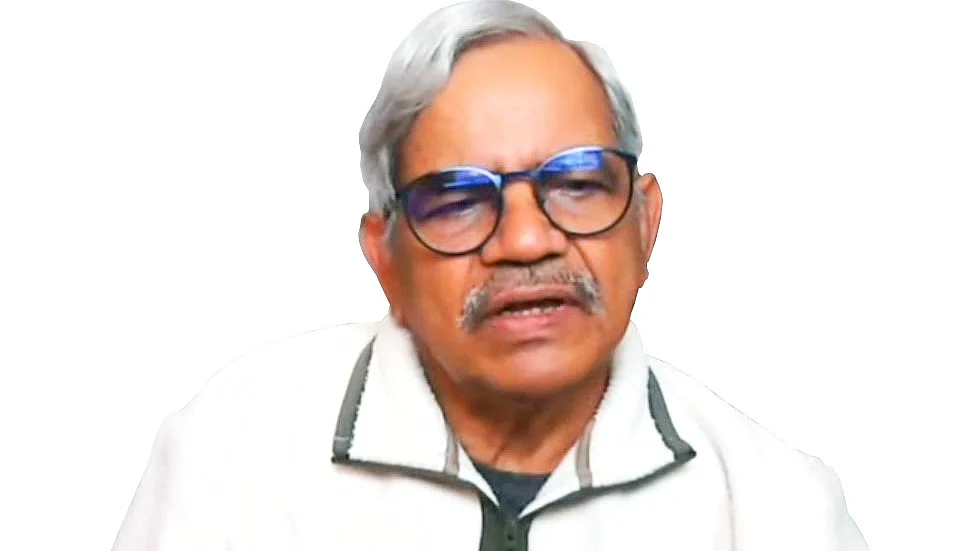


Dr Noor Mohammad served as chief electoral officer of Uttar Pradesh for nine years, followed by another nine years as deputy election commissioner in the Election Commission of India (ECI). He was selected by the United Nations to oversee elections in Afghanistan and later served as advisor to the India International Institute of Democracy and Election Management, New Delhi, set up by the ECI.
Excerpts from his conversation with Herjinder and Nandlal Sharma:
On why the Special Intensive Revision (SIR) has become so controversial
No electoral roll can be perfect because people are dynamic. The process of revising voter lists is immensely complicated. Having said that, I believe a series of errors and misjudgements by the ECI has made it controversial.
This SIR cannot be called an enumeration. Earlier, enumerators would visit households, collect information on all the adult members, get the forms signed by the head of the household and submit the details. Voters’ lists were prepared on the basis of such enumeration. Now, the ECI is distributing pre-printed forms and demanding supporting documents to prove citizenship.
Another reason for controversy is this: for the first time the onus is on the voters to prove that they are not non-citizens and are thus eligible to vote. In all the past revisions, summary or intensive, the onus was on the Election Commission.
Incorporating provisions of the Citizenship Act in the guidelines for SIR was a mistake. Citizenship is determined by the ministry of home affairs (MHA). Every time the ECI received a complaint about someone on the rolls not being a citizen, the name would be referred to the MHA for inquiry and determination. The Election Commission should not be doing the MHA’s job.
Also Read: Ask why Assam does not need an SIR
On the ECI’s refusal to consult political parties before launching SIR in Bihar
The Election Commission is a public authority and is required to be transparent. Before implementing any changes, the Commission’s practice was to call an all-party meeting, invite and incorporate suggestions. Since the last SIR took place 22 years ago, it was all the more necessary to hold such a meeting.
On whether this SIR is exclusionary
The end-result will be exclusionary. A large number of eligible electors will be left out. This SIR is error-prone by design as the deadline is too tight, with not enough time for training (before) and corrections (after). It pains me to hear such allegations against the Election Commission of India, which I served and hold in high esteem. In a country like India, expecting electors to prove their date and place of birth is not practical. A large number of people have no idea how old they are, forget trying to produce a birth certificate.
On SIR aiming to weed out infiltrators
I am not privy to what the ECI intended to achieve. In my experience, infiltrators tend to live in crowded cities which allow anonymity. Subjecting villagers to a citizenship test does not appear necessary.
Moreover, citizenship is to be determined by the MHA — the ECI need not have waded into this jurisdiction. None of the documents listed by the ECI prove citizenship. Demanding additional documents — which may be difficult or impossible to obtain — from certain groups of people effectively shuts them out of the voting process.
On the ECI’s reluctance to share machine-readable voter lists with political parties
I can’t think of any reason why such a list should be denied, especially now that there is a centralised database. Earlier, duplication of voters was detected first at district and then at state level. With centralised lists, the likelihood of central manipulation is certainly higher. That’s also why voter lists in machine-readable formats should be shared.
Also Read: Are BLOs being made the fall guys?
On anomalies such as voters living in houses numbered ‘0’ or ‘00’
I’m surprised to hear that these are notional numbers assigned to the homeless. The problem of homelessness is certainly not new. In Mumbai, for example, for as long as one remembers, the homeless slept on pavements, near lampposts and under flyovers. The ECI had a protocol of numbering the pillars and indicating that the voters named would be available only at night. For more than one person occupying the same spot, the practice was to indicate them as by 1/1, 1/2, 1/3 and so on for pillar number one.
Marking voters’ addresses with a zero is absurd because then nobody can track them.
On the BLOs’ training
I believe the training was limited to briefings on the step-by-step process to be followed. Such briefings are held in batches to cover all the field staff engaged. It is therefore incorrect to assume that each BLO went through 4–5 days of training.
On the BLOs’ ability
It is unfair to expect Anganwadi workers, auxiliary nurse midwives and junior school teachers to become tech-savvy after one short briefing. In most cases, BLOs would seek help, possibly from the booth-level agents (BLAs) of political parties. Ruling parties with proactive BLAs stand to gain from this arrangement. This is why the burden of registration should not have been shifted to the voters.
What’s more, 30 days is too short a time to complete the exercise.
On a better alternative
It would have been a better idea to collect data through family enumeration forms, as per the Registration of Electors Rules, 1960. The BLOs would have managed that fairly well. Data entry and uploading could have been done by trained data entry operators at the ERO (Electoral Registration Officer) level with every log-in and log-out punched in. That way, anyone who messed up could be held accountable.
On the same elector’s photograph appearing multiple times in a constituency, as in the case of the Brazilian model in Haryana
I can only say that there’s obviously a failure at some level. In 2003, we noticed that some draft voter lists had abusive words added after the names.
The reason, we found, was that the data entry firm engaged for the purpose had not paid the operators — who expressed their anger in this manner. Mistake or mischief, this can happen at any and every level of data management and maintenance. EPIC contractors or anyone with access could be responsible.
On tracking the culprits
The Election Commission does maintain a log of everyone accessing the data at any given time. Each one is given a password and all changes made can be tracked. Responsible management of data can fix responsibility. De-duplication software exists, which is capable of spotting similar images and names through phonetic matching algorithms. There’s clearly some laxity.
On electoral rolls displaying 90 or more people living in the same house
There can be several factors: incorrect enumeration, wrong data entry, manipulations to impersonate voters on polling day, failure to assign house numbers… However, the primary responsibility to prepare an accurate and inclusive voters’ list rests with the Election Commission.
On the same house in Bihar registering a large number of voters from different castes and communities living together
In metropolitan cities where migrant workers converge, this may happen, as shared vulnerabilities create more inclusive and secular spaces for survival. In districts in Bihar? It needs to be probed.
Join our official telegram channel (@nationalherald) and stay updated with the latest headlines