


Arunachal: Caught between consent and diplomacy
Inside a community's uncompromising stand against a project that seems designed to erase an entire culture
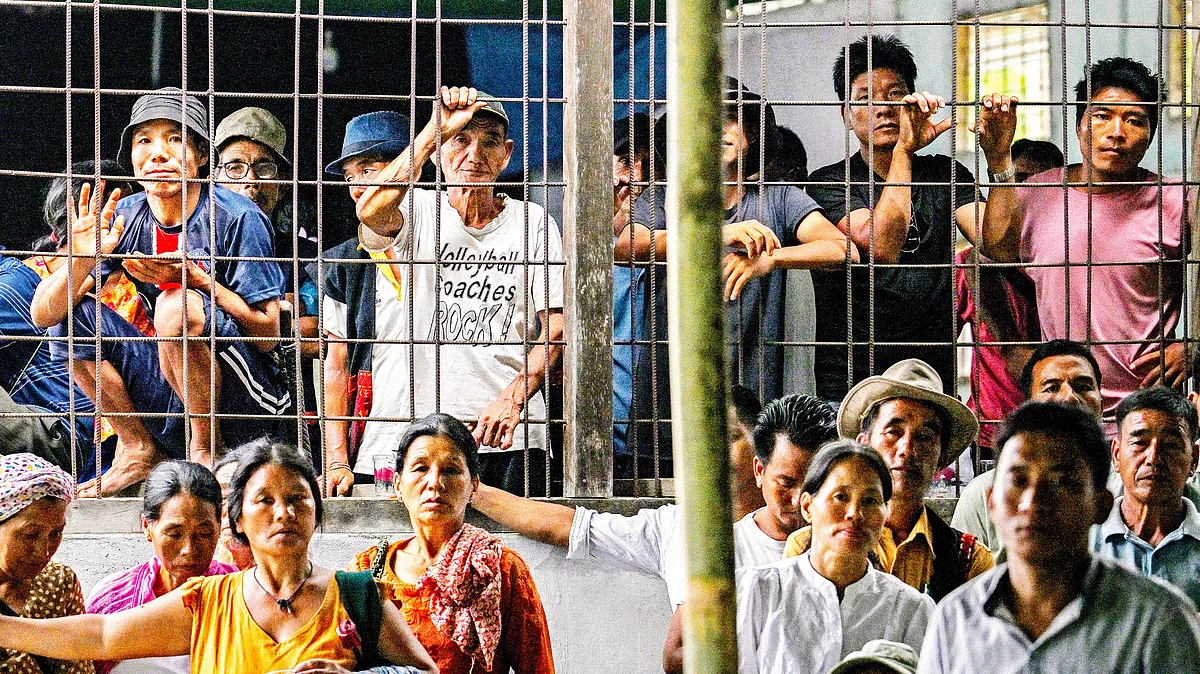


Along the rushing green waters of the Siang river in the eastern Himalaya, a decades-long struggle between indigenous rights and State-led megastructure ambition seems to have reached a point of no return. The flashpoint of this crisis is the proposed 11,200-MW Siang Upper Multipurpose Project (SUMP) — a mega dam projected by the government of India as both strategic hydel power hub and downstream hydrologic buffer against upstream China’s infrastructure on the Yarlung Tsangpo.
Yet, on the ground across the Abor and Adi valleys of Arunachal Pradesh, the project is regarded more as an existential threat to ancestral homelands than as a national security asset. Leading the charge against it is indigenous rights activist ‘Abor Man’ Katon Mayong, whose recent public statements have drawn clear red lines and reignited local resistance.
Tensions gathered momentum following protest rallies, bandhs and high-profile demonstrations. On 31 October, protesters gheraoed Arunachal Bhawan in New Delhi to demand the immediate release of detained anti-dam activists, a complete rollback of security forces deployed across the Siang valley and a total halt to the survey work for pre-feasibility reports (PFR).
Following his detention and subsequent release, Mayong convened a press conference where he delivered a forceful message, rejecting the state government’s offer for further negotiations. “Discussion time is over,” Mayong declared, signalling the complete collapse of formal talks. “We have been shouting in the government’s ear for 47 years. From our grandfather’s generation to ours, we have been clear: there will be no Siang Dam. Either you have to exterminate the entire Adi community or it will not be built.”
Mayong’s stark ultimatum underscores deep-seated anxieties among the Adi community — a scheduled tribe whose cultural identity, indigenous governance structures and historical territory are tied to the mainstream Siang river. Mayong’s pushback against the SUMP mega dam weaves together local self-determination, indigenous rights, environmental advocacy and administrative critique.
Mayong reiterated that the anti-dam movement is not anti-development. He advocated building micro or small-scale hydropower dams along the river’s smaller tributaries rather than constructing a massive concrete structure across the main flow of Siang. Blocking the main channel, local activists argue, will permanently alter aquatic ecosystems, submerge sacred tribal and Buddhist sites, and destroy the river ecosystem that has sustained local agriculture for generations.
A key criticism raised by Mayong has to do with the militarisation of ancestral lands. The state government’s deployment of Central Armed Police Forces (CAPF) and security personnel across the Abor, Adi and Siang valleys is viewed by the tribes as an attempt to intimidate local populations into accepting survey teams.
Mayong has called on the Pema Khandu-led state administration to put an end to police harassment, withdrawal of security forces and release of all peaceful protesters jailed during the agitations — a demand the state government has since acceded to.
In his public addresses, Mayong detailed attempts by state officials to bypass collective indigenous consent by exploiting localised disputes. He alleged that administrative authorities attempted to pit neighbouring Adi villages and sub-clans against one another — Komkar against Geku, Simo against Karko — in a bid to secure consent signatures. Mayong emphasised that true community consent requires absolute consensus across all 60 affected villages, asserting that over 99 per cent residents stand firmly against the project.
The civil society resistance against the Siang project is being met with political obduracy. Tapir Gao, the BJP MP from Arunachal East constituency, is in favour of the project. During a recent public meeting in Tezu (Lohit district), Gao asserted that the Siang dam “will be built, come what may”. While state and Central authorities justify SUMP as a buffer against China’s upstream hydro-engineering, Mayong directly challenges this premise.
He points out that the government had shifted the narrative on SUMP — from development (flood control and power generation) to national security (buffer against water bombing by the Chinese). Indian policymakers and diplomats, he added, should focus on diplomatic engagement with Beijing to negotiate formal water-sharing treaties rather than placing the burden of border security onto vulnerable indigenous border communities.
****
Across the border in Tibet on the lower Yarlung Tsangpo — Arunachal’s Siang and Assam’s Brahmaputra — China commenced construction of the Medog hydropower station on 19 July 2025. Designed to be the world’s largest hydropower installation, it has a planned capacity of 60 gigawatts and an annual power generation of roughly 300 terawatt-hours (TWh) — triple the capacity of the Three Gorges Dam.
The project, estimated to cost around $150 billion, will achieve full commercial operations by 2033. The power generated will be transmitted via ultra-high-voltage lines to eastern China’s industrial provinces and data centres.
Instead of a single massive dam, the Medog project will have five cascading hydropower stations and diversion tunnels bored through the Namcha Barwa mountain at Yarlung Tsangpo’s Great Bend, bypassing a 2,000m drop over a short distance.
While China officially maintains that the project will be designed as a ‘run-of-the-river’ style scheme — which, on paper, returns the water to the river after passing it through turbines rather than holding it back permanently — experts, regional governments and downstream communities remain deeply concerned about potential impacts on water availability.
The National Hydroelectric Power Corporation’s SUMP will involve constructing a massive 300m high concrete gravity dam. The reservoir behind this dam will store 9.2 billion cubic metre of water, designed to act as a hydrological buffer during periods of excessive flow and controlled release during lean periods.
There is considerable debate among river experts, hydrologists and policymakers on whether the Medog project will pose a water-bomb threat or reduce the downstream flow. At the centre of this debate is the lack of reliable data on the Siang basin’s hydrology. Three Chinese stations (Nugesha, Nuxia and Yangcun) that currently share rainfall data with India only give a partial picture as the Himalayan precipitation profile changes significantly around the Medog site.
“One can’t rule out the possibility of flash floods or any sudden rush of water from upstream Yarlung Tsangpo. But the argument that the Brahmaputra will dry up due to the Medog project is not true. This is because most of the Brahmaputra is fed by rivers originating in India — downstream of Siang,” river expert and scholar Nilanjan Ghosh told National Herald.
Ghosh explained that neither India nor China are signatories to the UN Watercourses Convention on non-navigational water use; other South Asian countries are. When the treaty was presented before the UN in 1997, China voted against it and India abstained. Neither are they signatories to regional treaties like the 1992 UNECE Water Convention — officially the Convention on the Protection and Use of Transboundary Watercourses and International Lakes — which originally covered Europe before opening up globally in 2016. Instead, India and China preferred to address such issues within a bilateral framework.
That is what Mayong alluded to when he urged Indian policymakers and diplomats to focus on ‘higher’ diplomatic engagement with Beijing. India is set to engage with Bangladesh over the Ganga Water-Sharing treaty (which expires this December). The Siang may well open up a diplomatic Pandora’s box, even as indigenous communities resist potential ecological erasure and physical displacement.
Sourabh Sen is a Kolkata-based independent writer and commentator on politics, human rights and foreign affairs. More of his writing here
Join our official telegram channel (@nationalherald) and stay updated with the latest headlines