


Uttarakhand faces drought as dry winter hits crops, forests and glaciers
Officials report 15–20% crop losses as scientists warn of negative glacier mass balance amid near-total absence of rain and snowfall
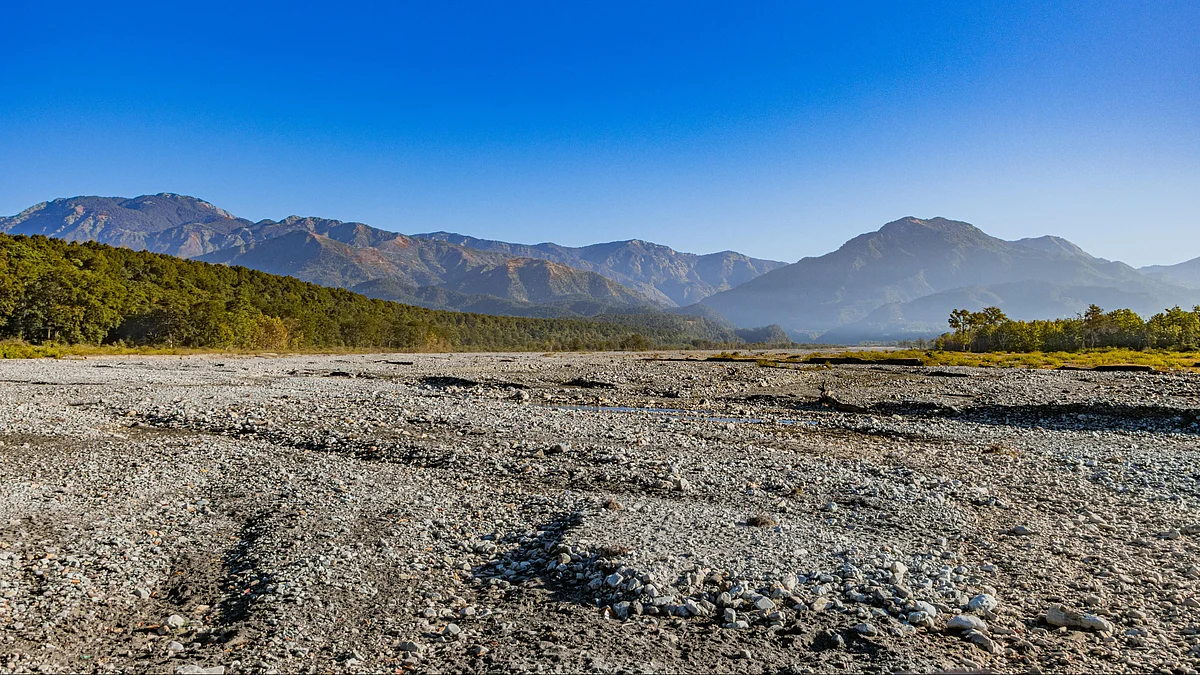


Uttarakhand and the wider Central Himalayan region are experiencing an unusually dry winter, with almost no rain or snowfall recorded so far, triggering crop losses, forest fires and concerns over long-term impacts on glaciers.
The state is facing a hydrological drought, with no significant winter precipitation reported to date. Manish Mehta, glaciologist at the Wadia Institute of Himalayan Geology, warned that the lack of snow accumulation could push glacier mass balance in Uttarakhand into negative territory, meaning glaciers would lose more ice than they gain.
The impact is already visible on agriculture. Dinesh Panwar, Director of the Uttarakhand Agriculture Department, said preliminary assessments indicate crop losses of 15–20 per cent in districts including Chamoli, Tehri and Bageshwar. Wheat crops have suffered around 15 per cent damage so far, he said, cautioning that losses could increase if rainfall does not occur soon. Under existing rules, compensation is provided only when crop damage exceeds 33 per cent.
Former agriculture protection officer B.D. Sharma said the situation is particularly severe because nearly 90 per cent of Uttarakhand’s agriculture is rain-fed. He said soil moisture has evaporated, preventing seed germination across large areas.
Horticulture is also under stress, particularly apple cultivation. Apples require a minimum number of chilling hours during winter. In high-altitude areas such as Harshil, night-time temperatures are dropping to minus 10°C, while daytime temperatures are rising to around 15°C. In some lower-altitude regions, daytime temperatures have reached 20°C. According to Sharma, this sharp fluctuation is creating “false spring” conditions, increasing the risk of premature and irregular flowering and affecting fruit size and quality, including apricots and plums.
Data from the India Meteorological Department shows a sharp decline in winter precipitation over recent years. Uttarakhand recorded three to four feet of snowfall in 2021, which fell to one to two feet in 2022.
Between 2023 and 2025, snowfall declined further to just one to three inches, and in 2026 it has so far been almost negligible. Winter rainfall dropped from 182 mm in 2021 to 12 mm in 2024 and 4 mm in 2025, with no rainfall recorded so far this winter.
Rohit Thapliyal, meteorologist at the IMD’s Dehradun centre, said the frequency and intensity of western disturbances — weather systems responsible for winter rain and snowfall in the Himalayas — declined between 1980 and 2020. He said snowfall that earlier began in late December is now often delayed until February, a shift of around 30–40 days, resulting in an estimated 70 per cent reduction in snowfall.
Mehta said reduced snowfall and rising temperatures accelerate glacier melt and can lead to the expansion of glacier lakes. He added that the number of supraglacial lakes, which form on the surface of glaciers, could increase, posing long-term environmental and safety risks.
Former scientist Jagdish Chandra Kuniyal of the GB Pant National Institute of Himalayan Environment said snowfall in February and March often melts quickly because of higher temperatures and does not significantly contribute to glacier recharge. “Delayed snowfall may benefit tourism, but it does not help glaciers,” he said.
One of the most immediate consequences of the dry winter has been the outbreak of forest fires. Fires have been reported in the buffer zone of Nanda Devi National Park, as well as in the Gangotri Valley and the Valley of Flowers region.
Forest Range Officer Chetna Kandpal said forest department teams have been deployed on the ground. Chamoli District Magistrate Gaurav Kumar confirmed that the state government has sought assistance from the State Disaster Response Force and the Indian Air Force to help control the fires.
Officials warned that unless rainfall or snowfall occurs soon, the combined impact on agriculture, forests and glaciers could intensify, with long-term consequences for water availability in the Himalayan region.
Join our official telegram channel (@nationalherald) and stay updated with the latest headlines