


Uttarakhand SIR under scrutiny as voter deletions exceed 2022 victory margins in 45 seats
Districts with higher Muslim population recorded higher deletion intensity, raising questions over the targeting of Muslim voters
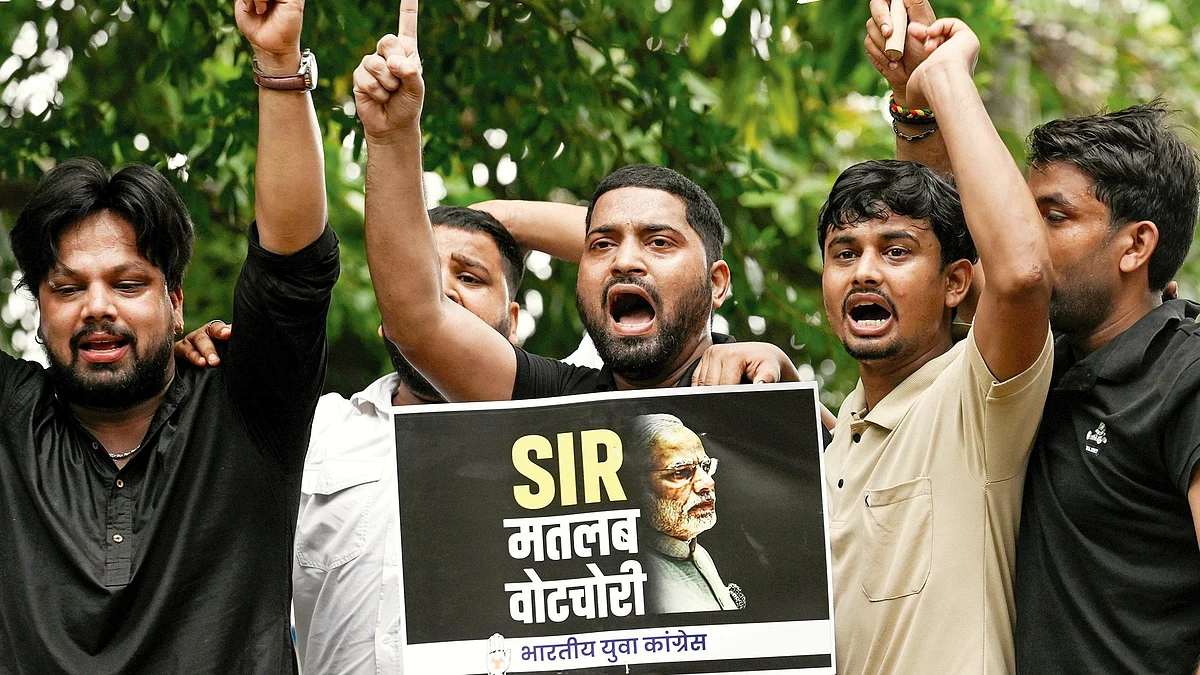


The BJP government in Uttarakhand is under fire over the deletion of voters from electoral rolls during the ongoing Special Intensive Revision (SIR), with an analysis finding that constituencies with a higher share of Muslim electors recorded greater deletion intensity.
An analysis by the Sabar Institute found that districts with a higher share of Muslim population recorded higher levels of electoral-roll deletions under the state’s 2026 SIR.
The report also found that in 45 of Uttarakhand’s 70 Assembly constituencies, the number of voters deleted exceeded the winning margin recorded in the 2022 Assembly election.
The findings have acquired added significance amid reports that individuals linked to the BJP filed a disproportionately high number of objections seeking deletion of voters.
According to a Newslaundry report, five men, each linked to the BJP, filed around 6,500 objections across five Assembly constituencies, seeking to remove Muslim voters from the rolls.
Media reports have also said that 262 objectors filed more than 10 objections each. However, the Election Commission’s 2023 manual states that an individual cannot raise more than 10 objections in a day. The large number of objections filed by some individuals, including hundreds and, in some cases, thousands, has therefore raised questions over the process.
The exercise has resulted in the state’s electoral rolls shrinking from around 79.6 lakh voters to 71.3 lakh.
Hindi daily Amar Ujala reported that the highest number of deletions was recorded in three districts — Nainital, Udham Singh Nagar and Haridwar — which have sizeable Muslim populations.
In the Kichha Assembly constituency in Udham Singh Nagar, 4,857 objections were filed, of which 4,855 were submitted by a single person named Rajesh Tiwari, who works as a BJP booth-level agent. Most of Tiwari’s applications cited the same ground: “already enrolled”.
Kichha has around 28.4 per cent Muslim electors, more than twice the community’s share of the state’s population. In 2022, Congress candidate Tilak Raj Behar won the seat, defeating BJP’s Shukla, a two-time MLA, by more than 10,000 votes.
A similar pattern was reported from Gadarpur, where 670 objections were filed. The seat was won by the BJP in 2022 by a margin of 1,120 votes. According to reports, BJP worker Chankit Huria filed all 670 objections, seeking the deletion of Muslim voters.
In Chief Minister Pushkar Singh Dhami’s former constituency, Khatima, 394 deletion requests were filed, of which 392 — nearly 99 per cent — came from Amit Kumar Pandey, identified as a BJP activist.
Khatima has particular political significance for Dhami. He represented the seat in 2012 and 2017 but lost to Congress candidate Bhuwan Chandra Kapri in 2022 by 6,579 votes.
Dhami subsequently returned to the Assembly after winning a bypoll from Champawat.
According to a report by The Indian Express, the BJP has been closely monitoring the 23 Assembly constituencies it lost in 2022, with Khatima among the seats on its list. The constituency has around 8 per cent Muslim electors.
In Rudrapur, also in Udham Singh Nagar, 2,818 deletion requests were received. The largest batch, comprising 230 names, was filed by Sunny Paswan, whose Facebook profile identifies him as the city general secretary of the BJP’s SC Morcha in Rudrapur.
The pattern of deletions and the concentration of objections in constituencies with sizeable Muslim populations have prompted the Congress to raise the issue with the Election Commission.
The party has alleged that the SIR exercise is being used to systematically target voters and has demanded scrutiny of the objections and the deletion process.
It said that factors such as tight verification timelines, discrepancies in names and addresses, migration and classifications such as “logical discrepancies” could lead to disproportionate exclusions, particularly in areas with a higher concentration of minority voters.
The Uttarakhand Special Intensive Revision (SIR) 2026 began on June 8, with the final electoral roll scheduled for publication on September 15.
Join our official telegram channel (@nationalherald) and stay updated with the latest headlines