


Why I have never voted, and perhaps never will
A personal reflection on political disillusionment, electoral cynicism, and the distant realities of democracy
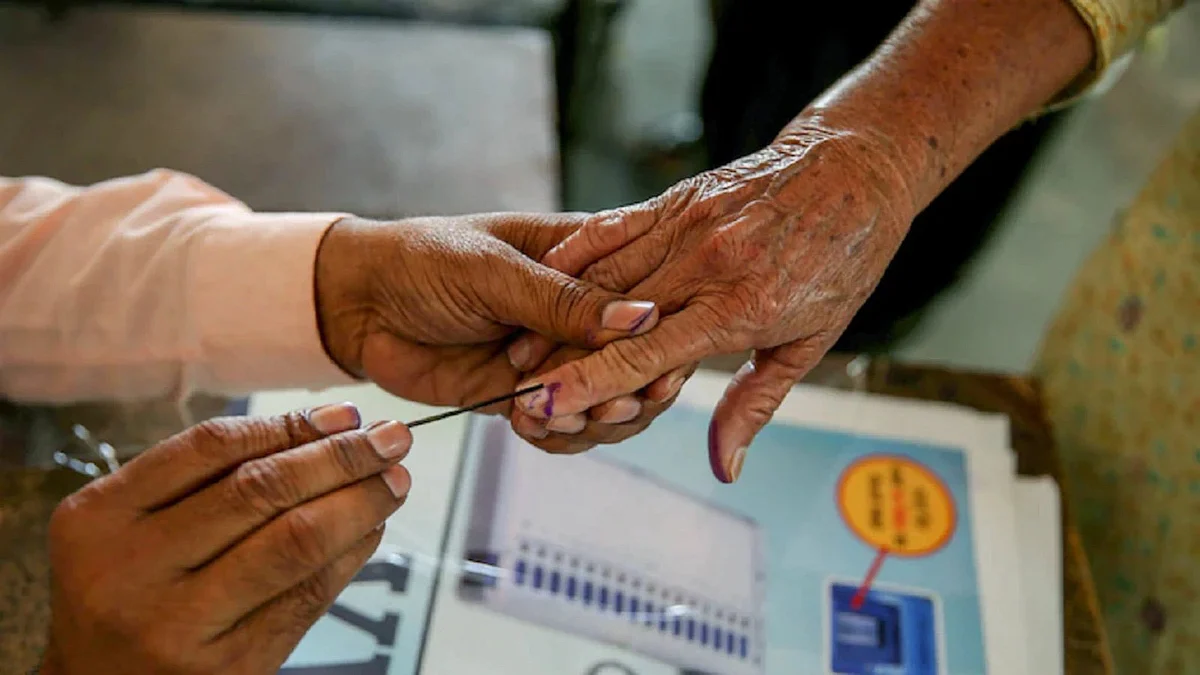


To have the right to vote is not the same as having the urge to vote. While it is held as a great democratic duty, elections increasingly leave people cold and the uninspiring candidates do little to motivate to cast one’s vote.
Most people react with shock on learning that I have never voted in any election. The reproach in their eyes and voice is unmistakable. How could you? they seem to ask.
Generally, they are too shocked to ask why. I myself never gave it a thought although as a journalist I covered many elections in several states, watching the process from close. I travelled with candidates, followed leaders on their campaign trail and interacted with voters in the dusty Indian countryside. I never felt the urge, however, to exercise my right to franchise and never gave much thought to why I needed to exercise the right.
The ‘tamasha’ over the Special Intensive Revision over these past six months have, however, forced me to think. I am more fortunate than many of my countrymen. More fortunate than many in my own profession. I have a passport and have travelled a bit, both on work and on vacation and have visited some countries at the invitation of those governments always extended through the ministry of external affairs (MEA).
I own a house and a four-wheeler and luckily have retained my school-leaving certificate, marksheets as well as my degree. I have a provisional master’s degree but never went back to collect the official degree because I did not have to present it at any job interview. Not casting my vote therefore did not appear like a calamity. It did not matter.
Reflecting on my younger days, I can think of two reasons why I never voted. I usually had to travel long distances the day before polling to be able to cover a sensitive or key constituency and return in time to file a report or two. I was never in my own constituency on polling days. The question of casting my vote never arose.
The second reason for not casting my vote was my cynicism about the political and the electoral system. The cynicism has only grown as I witnessed first-hand how elections are managed, how money is spent and how polling is manipulated. Having friends in the IAS also helped in gaining insights into the political pressures at work.
Way back in 1977, when the Congress was swept out of power and many of us were euphoric, I saw one polling party stuffing ballots into the boxes.
In later years I saw polling parties being ‘entertained’ in villages by dominating groups, looting of ballot boxes, the blatant appeal made to caste and religion and of course violence on the polling day, plenty of it. I encountered voters who did not know who they were voting for or why. I met officials who were openly partisan and ‘dons’ who were confident of winning even before a vote was cast.
I was also witness to the T.N. Seshan ‘era’ and as late as in 2005, control rooms, CCTV cameras and mobile phones being used on polling days to keep watch over booths. It still did not ‘feel’ right with too many bureaucratic controls and too little of people’s participation.
A key reason for not feeling the necessity to exercise my franchise has been the candidates put up by different political parties. Often they were moneybags or people with known links to the underworld.
There were candidates known to be bigots, extortionists or worse. There were candidates who seemed decent enough but who never inspired me to want to stand in a queue or canvass for them. Above all, most of the time I had no clue as to the candidates. I did not know them and knew of no good reason why they were candidates in the first place.
Nor did they take up issues that concerned the people. The closest I have come to a candidate who I might have liked to vote for is Ravindra Varma from Karnataka, who contested the Lok Sabha election from Ranchi in 1977. He won and went on to become a minister in the Janata Party government headed by Morarji Desai. But then he never returned to Ranchi.
Also Read: The fantasy of ‘free and fair’ elections
During the election we became friendly, partly because I was comfortable conversing with him in English. He confided once that he felt sorry for Ranchi and its people, who seemed to have no idea what an MP’s job was. After all these years, I wonder how many voters in 2026 have the answer.
As my career took me to different states and cities, I found that I knew even less about the politicians. Newspaper reports were all that I could bank on and they did not tell me much.
Elections, I discovered, provided another opportunity for newspapers to carry ‘paid news’, take money from a party or a politician to do puff jobs. Reporters and local editors almost gleefully competed with each other to campaign for their own candidates of preference; so much so that a newspaper I worked for once carried two reports on the same page, one saying that a candidate was poised for a landslide victory and the other saying that the same candidate in the same constituency was staring at defeat.
Working in the volatile media industry, with my penchant for seeking new opportunities and new challenges in newer cities, the future always looked uncertain. I was never sure how long I would last in a job or how long I would stay in a rented flat or how soon the company would decide to throw me out and ask me to vacate the company flat.
Exercising my franchise was the least of my preoccupation and I felt no urge to vote in any election. There was no Zohran Mamdani in sight.
I, therefore, sympathise with the millions of migrant workers who are far less fortunate than I am. The future for them is always uncertain. They are in one city one day and are never sure if they would be still there six months later. I know many of them, largely domestic helps, who registered themselves as voters in multiple places by way of ‘insurance’.
They do not trust the system or the political parties. They are afraid of losing out on welfare schemes and concessions, on subsidised fuel and free rations. They know their value to political parties is because they are voters. The day they cease to be voters, their utility is over.
While I certainly do not want to be deprived of my voting right, I still feel no urge to exercise it. Am I alone? Maybe not, but I am certainly in a minority. With the madness of SIR around me, I feel like starting a club for those who have never voted and probably never will.
Join our official telegram channel (@nationalherald) and stay updated with the latest headlines