


Another law to target political opponents?
The 130th amendment Bill's framing betrays its political motive. Ajit Ranade on why it’s not about keeping criminals out of power
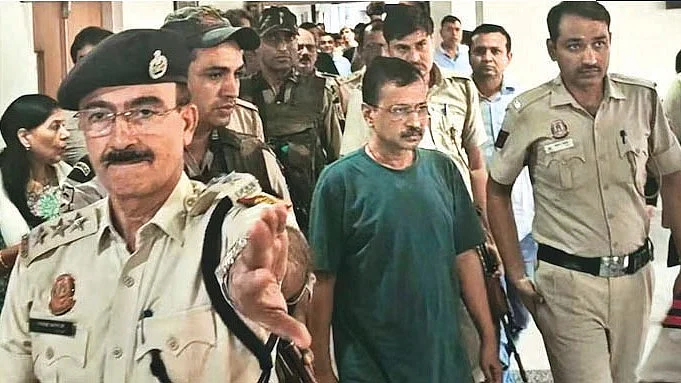


In late February, a Delhi court discharged all 23 accused in the excise policy case, ruling there was “no overarching conspiracy or criminal intent” in the policy at issue. One of the accused had spent 530 days in jail before being cleared. The Enforcement Directorate, which drove much of the prosecution, has registered 193 cases against politicians over the last decade. The total number of convictions has been two, which is barely one per cent.
Now consider this: the proportion of Members of Parliament who have declared pending criminal cases on their self-sworn affidavits has risen from 24 per cent in 2004 to 46 per cent in 2024. Among sitting MLAs across the country, 45 per cent face criminal charges of whom 29 per cent face serious charges including murder, attempt to murder, kidnapping and crimes against women. This criminalisation of politics is real, corrosive to democratic life and getting worse.
This defines the central dilemma of the Constitution (130th Amendment) Bill 2025, currently before a joint parliamentary committee. The Bill mandates the automatic cessation of ministerial office for prime ministers, chief ministers and cabinet ministers, if they are arrested and detained for 30 consecutive days on charges punishable by five years or more. The intention is to put an end to governance from jail. The mechanism is, however, deeply flawed.
What a pending case actually means
Remember that a case pending in court is not a police FIR, not a noting in a history-sheeter’s file, not a complaint lodged by a political rival. Charges are framed only after a full investigation is complete, after a court has taken cognisance of the offence, and after a judge independently determines that a prima facie case exists. This involves the judicial application of mind. An ordinary citizen with any such criminal blemish on their record cannot get government employment.
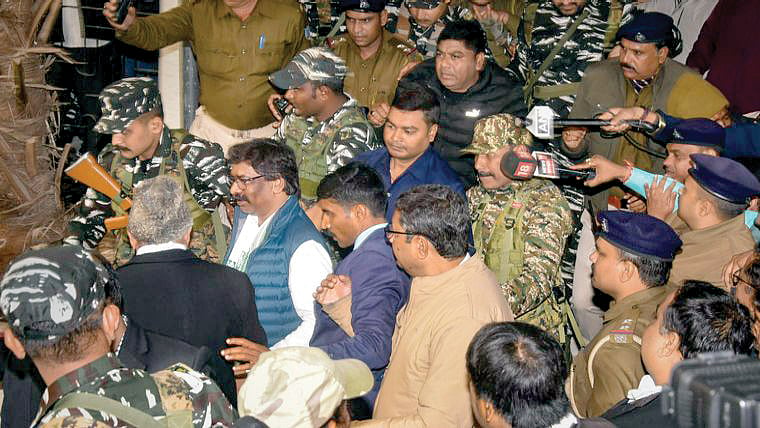
And yet politicians across party lines routinely argue that all such cases against them are fabricated or politically motivated. How can this be even in the case of heinous offences such as rape, murder, kidnapping and extortion? Courts do not frame such charges casually.
The wrong trigger
The problem with the Bill is that it uses arrest — an executive action — as the trigger for removal from office, rather than the framing of charges by a court.
Investigative agencies can arrest and detain without a conviction or even a formal trial. Under the Prevention of Money Laundering Act (PMLA), bail conditions are near-insurmountable. Section 45 imposes twin conditions for release and Section 24 reverses the burden of proof onto the accused. Under the Unlawful Activities Prevention Act (UAPA), the difficulty is even greater. Securing bail within 30 days is near impossible.
This creates a structural vulnerability that any government can exploit against its opponents. Arrest rival ministers and hold them under a bail-resistant law for 30 days and evict, even before any court has examined the merits. The bill contains no safeguard against such misuse. The 244th Law Commission Report had explicitly recommended that disqualification be triggered at the stage of the framing of charges by a competent court i.e. the first point at which genuine judicial scrutiny occurs.
The ED data underlines why this matters. The agency has a conviction rate of only 1 per cent over a decade. Its overall PMLA conviction rate since 2019 is barely6 per cent. This implies that arrest by such agencies is not a reliable proxy for guilt.
The conviction rate paradox
There is one counter-argument. The National Crime Records Bureau (NCRB) data reveals that conviction rates in Indian lower courts are, in many jurisdictions, alarmingly low. In Pune’s lower judiciary, the conviction rate in 2023 was only 8.8 per cent. Over 91 per cent of those who faced criminal trial were acquitted or discharged.
If this pattern holds more widely, then any law that bars persons with pending court cases from public office would, in practice, be wrongly disqualifying the overwhelming majority who are innocent.
This is not a trivial objection. It cuts to the heart of what a pending case actually signifies in the Indian judicial context. Does it reflect genuine criminality, or a broken system of prosecution and investigation? The answer quite often, appears to be the latter.
The correct response to this paradox is not to abandon the project of keeping tainted candidates out of public life. It is to fix what is broken. Trials against sitting legislators must be fast-tracked as the Supreme Court directed in 2014 and again in 2017. The government’s power to withdraw cases against powerful politicians under Section 321 of the CrPC must be curbed. And investigative agencies must be held to genuine standards of evidence before courts, not used as instruments of pre-trial political pressure.
Other failings
The Bill also fails on its own stated logic. Re-appointment to ministerial office upon release from custody is expressly permitted under the proposed provisos to Articles 75(5A) and 164(4A). A minister removed after 30 days in jail can return to the same post on bail while the same charges are still pending.
Nothing has changed except a brief interruption. The Bill applies only to ministers, leaving untouched the hundreds of MPs and MLAs with serious charges framed against them who continue to legislate and govern. And it does nothing to prevent tainted candidates from entering the electoral arena in the first place.
What genuine reform looks like
For over 25 years, solutions have been documented and ignored. The Vohra Committee (1993), the 170th and 244th Law Commission Reports, the National Commission to Review the Working of the Constitution, and the Supreme Court in its 2018 judgment in Public Interest Foundation v. Union of India, have all urged Parliament to disqualify candidates at the stage of the framing of charges by a competent court, for offences punishable by five years or more, in cases filed at least six months before the relevant election.
Upon conviction for heinous crimes, the disqualification should be permanent. Also, political parties should come under the RTI Act. NOTA should be strengthened.
The ADR’s proposed reformulation of the 130th Amendment says that any minister, prime minister, chief minister, MP or MLA against whom charges have been framed by a court for offences under Section 8(1), (2) and (3) of the Representation of the People Act, or for offences carrying a minimum five-year sentence, should be automatically relieved of their position. This is the judicial standard. This is what the Law Commission has repeatedly recommended. This is also what the SC, unable to act itself in 2018, expressly asked Parliament to do.
A democracy cannot be held hostage either to the criminalisation of politics or to laws that can be weaponised for political ends. The 130th Amendment, as drafted, risks being both ineffective against the first problem and dangerously enabling of the second.
Ajit Ranade is a noted economist. More of his writing may be found here
Article courtesy: The Billion Press
Join our official telegram channel (@nationalherald) and stay updated with the latest headlines