


Bulldozers, due process, and the fate of Jauhar University
The controversy is not merely about unauthorised construction but balancing legal accountability, educational interests, and equal application of law
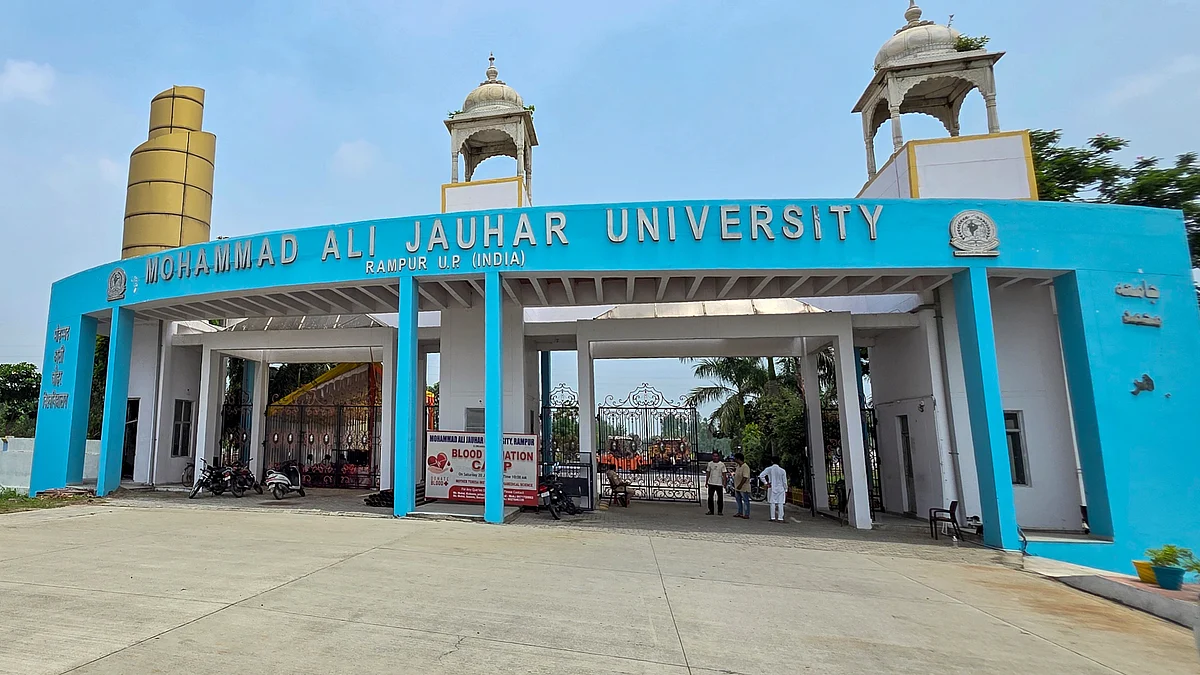


The Rampur Development Authority's order directing the demolition of 38 of the 40 buildings at Mohammad Ali Jauhar University is far more than a routine planning dispute. It raises fundamental questions about the rule of law in Uttar Pradesh: whether urban planning regulations are enforced uniformly or wielded selectively as instruments of political reckoning, and whether the state's pursuit of legal compliance adequately considers the public purpose served by educational institutions.
Established by the Maulana Mohammad Ali Jauhar Trust and named after distinguished freedom fighter and scholar Maulana Mohammad Ali Jauhar, the university was conceived as a minority institution dedicated to expanding educational opportunities in a region of considerable historical and cultural significance.
Its founder Azam Khan — a veteran Samajwadi Party leader and former cabinet minister — has long been a deeply controversial and polarising political figure. Supporters credit him with creating educational opportunities for underprivileged students, both Hindu and Muslim. Critics, however, point to a long history of alleged legal and administrative irregularities that predate the present controversy.
According to the Rampur Development Authority (RDA), a technical inspection found that only the medical college building and one academic block had approved building plans. The remaining 38 structures — including academic buildings, administrative offices, hostels, and ancillary facilities — were allegedly constructed without obtaining the requisite permissions from the competent authority.
Following this finding, the university was served with a notice, granted a hearing on 15 July, and given 15 days to remove the unauthorised structures, failing which demolition proceedings would commence under Sections 27 and 59 of the Uttar Pradesh Urban Planning and Development Act, 1973.
The university has contested the order, arguing that Singankhera village, where the campus is situated, did not fall within the RDA's jurisdiction until late 2024 and that the buildings had received approvals from local authorities, including the zilla panchayat. The authority has rejected this defence. Simultaneously, inspections by the fire department have reportedly identified significant fire safety deficiencies in several campus buildings, adding further urgency to the compliance process.
Nor do these allegations arise in isolation. Court records and government investigations have previously documented accusations involving encroachments on chak roads, gram samaj land, enemy property, and public utility land; diversion of government funds and infrastructure for the benefit of the trust; and land acquisitions questioned for procedural irregularities and violations of lease conditions. The Supreme Court has also upheld the cancellation of a land lease, observing that ministerial authority had allegedly been misused to benefit a family-controlled trust.
No serious observer can justify unauthorised construction on such a scale. Urban planning laws exist to safeguard public safety, ensure environmental compliance, and promote orderly development. Yet this case invites closer scrutiny because demolition represents one of the most severe enforcement mechanisms available to the state.
Across India, institutions — both public and private — have often been permitted to regularise comparable violations through compounding fees, penalties, or corrective measures. The wholesale demolition of an operational university risks inflicting disproportionate harm on thousands of students, faculty members, and employees whose education and livelihoods depend upon the institution.
In recent years, the bulldozer has emerged as one of the defining symbols of governance in Uttar Pradesh. Its proponents argue that it restores accountability by dismantling entrenched networks of political patronage that once shielded illegalities. In the case of Jauhar University, official action follows years of allegations concerning land encroachments, unauthorised structures, illegal access roads to government properties, and other regulatory violations.
Critics, however, discern a broader pattern. They argue that institutions associated with Opposition leaders or minority communities have often faced intensified scrutiny following shifts in political power. Although enforcement has not been confined exclusively to minority institutions, the combination of Azam Khan's prolonged incarceration on separate criminal charges and the university's minority status has inevitably fuelled perceptions of political vendetta.
Article 14 of the Constitution guarantees equality before the law. If comparable planning violations elsewhere are routinely regularised while one university is subjected to near-total demolition, public confidence in the neutrality of law inevitably weakens.
Equally, insulating influential individuals from legal accountability merely because the institution they established serves a public purpose would undermine the principle of equal justice. The historical record also indicates that the university benefited from substantial state patronage during earlier political dispensations, including public expenditure on supporting infrastructure.
Educational institutions deserve particular consideration because they are not merely physical assets but vital public institutions advancing the constitutional commitment to education embodied in Articles 21 and 45, read alongside the Directive Principles of State Policy. Demolishing classrooms, laboratories, libraries, and hostels ultimately harms students far more than it punishes administrators.
Indian courts have consistently emphasised that executive action must adhere to the principles of due process, including adequate notice, a meaningful opportunity to be heard, and the doctrine of proportionality. The Supreme Court has repeatedly cautioned that demolition is a draconian measure and should remain an exceptional remedy rather than a routine instrument of executive action.
The Jauhar University controversy also exposes deeper structural weaknesses in Uttar Pradesh's regulatory and land administration systems. Allegations of illegal land acquisitions, forged records, encroachments, and diversion of public assets surfaced years ago. If substantiated, they point not merely to institutional misconduct but also to prolonged failures of governance under successive administrations. The appropriate response lies in transparent, consistent regulation backed by efficient approval mechanisms, digital land records, independent audits, and timely enforcement before violations assume irreversible proportions.
Political symbolism notwithstanding, the true measure of a constitutional democracy lies in its ability to rectify legal violations without imposing unnecessary collateral damage upon innocent stakeholders. The university administration still retains legal avenues, including seeking regularisation where permissible, pursuing judicial remedies — particularly since the RDA has already filed a caveat anticipating litigation — or implementing phased compliance wherever feasible. Students deserve continuity in their education; the state is entitled to insist upon lawful development.
The controversy should ultimately prompt a broader national conversation extending well beyond Rampur. If anti-encroachment drives and urban planning regulations are to command public legitimacy, they must be enforced uniformly — against politically influential private developers, government institutions, corporate interests, and opposition-linked establishments alike. Selective enforcement breeds cynicism; consistent enforcement strengthens the rule of law.
Azam Khan's political legacy will remain contested. The future of an educational institution, however, should not be determined solely by the fortunes of its founder. Thousands of students pursuing higher education in Rampur deserve to remain outside the arena of political confrontation. Equally, the state bears the responsibility of demonstrating that its actions are motivated by genuine regulatory necessity rather than political expediency.
Join our official telegram channel (@nationalherald) and stay updated with the latest headlines