


What counts as heritage on Race Course Road?
The message of the Central Vista project is hard to miss and it speaks in one civilisational idiom


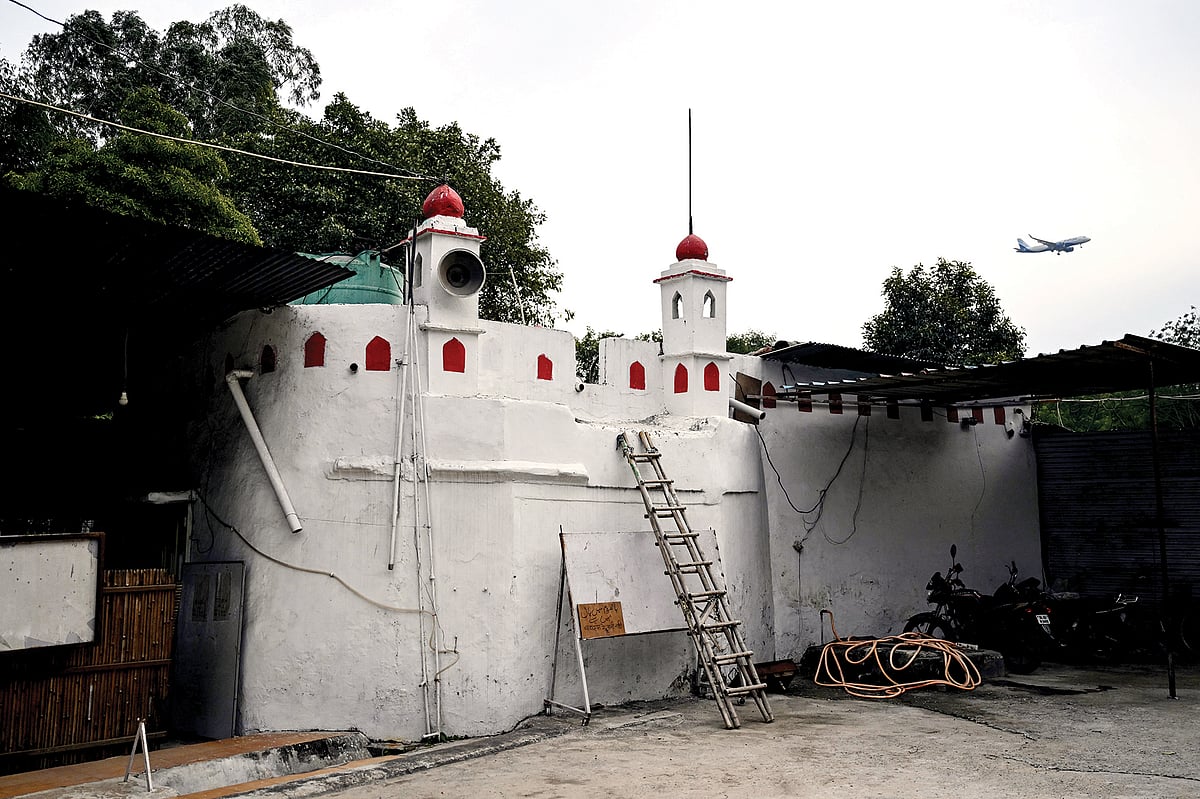
On 19 October, a century-old mosque, a short walk from the prime minister’s residence, was given six days to vacate. Water and electricity had already been cut off on 7 October. The Land and Development Office (L&DO) declared the Race Course Mosque ‘unauthorised’, saying it stands on government land. A place that has called people to prayer for a hundred years or more is being treated as an illegal structure.
The paperwork tells a different story. Mohammad Hakimuddin Qasmi, representing a Jamiat Ulama-i-Hind delegation, has submitted a memorandum to Union minority affairs minister Kiren Rijiju. The memo establishes the mosque’s historical provenance: it appears in the New Delhi Municipal Council (NDMC) heritage list referenced in the 1977 Delhi Gazette, as well as in a revised list maintained by the ministry of minority affairs. The Jamiat has asked that no action be taken until the dispute is legally settled. Rijiju has reportedly promised “every possible effort”.
In a video statement reported by The Hindustan Gazette, the mosque’s imam Mohammed Harun revealed the process has been a lot bumpier. For six months, he had raised the matter with the Delhi Waqf Board, to no avail. The board, he says, did little beyond writing to the NDMC about suspended utilities. Drinking water has run out, and the approach to the mosque has been blocked.
When Harun went to the high court on his own, it ruled against him because he lacked the board’s permission. He also points to a 2021 survey, which did not list the mosque as unauthorised or an encroachment.
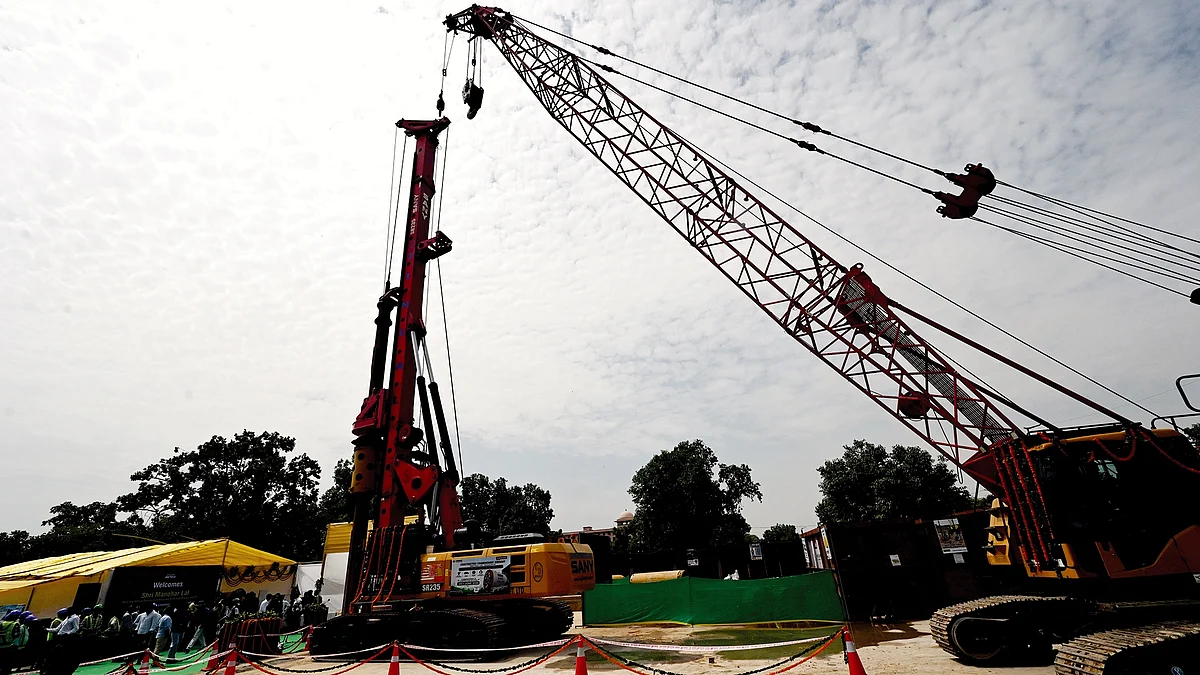
The century-old race course, which gave the road its name, has already been demolished. The reason offered was its proximity to 7, Race Course Road — rechristened Lok Kalyan Marg — the prime minister’s official residence and other sensitive government complexes. Reclaiming the zone, we are told, answers long-standing public security and defence concerns in high-security Lutyens’ Delhi.
Meanwhile, a Rs 467 crore residential complex for the prime minister, with an underground tunnel to the PMO and Parliament, is nearing completion. Once Narendra Modi moves, 7 RCR is to be the site for a museum. In other words, the neighbourhood is to be cleared for a residence that will soon be empty.
All this is part of the Central Vista Redevelopment Project, the government’s makeover of the national administrative corridor in New Delhi. While national capitals do need new offices, the grand renewal it was sold to us as has meant a swathe of destruction and erasure. A great many trees have gone, and familiar landmarks reworked, renamed or removed. The 135-year-old Central Secretariat Library is being relocated to two rooms, utterly inadequate to hold its historic repository of over 8.5 lakh books.
Inaugurating the Central Vista project, Narendra Modi described it as a move away from the symbols of British colonial rule. A republic is entitled to reconsider its colonial inheritance. A mosque, however, is not a colonial symbol. For Modi, the BJP and the RSS, it is more a Hindu project than a ‘redevelopment’ project. A mosque finds no place in that schema, even when it is a heritage building.
The government’s Central Vista website says: ‘While planning this transition, great care has been taken to ensure that the heritage status of the existing structures is preserved while new projects are built around them.’ A fine sentiment, utterly disregarded on the ground. Relabelling a building listed in Delhi’s own gazette as a heritage site shows just how seriously they are honouring their promise.
This mosque is not the only casualty. Eviction notices have gone out to more than 700 families in the adjoining clusters of Bhai Ram Camp, Masjid Camp and DID Camp. Some have lived here for decades, a few for nearly a century.
On 19 October, the same day the mosque got its notice, the Delhi High Court cleared the way for their removal to Savda Ghevra, a resettlement colony about 45 km away.
The people affected are the cooks, drivers, vendors and domestic workers who keep Lutyens’ Delhi running. They are being moved far away from their work and their children’s schools. Security is the reason given.
How is the ecosystem that sustains the corridors of power a threat?
Nor is the mosque’s fate an isolated worry. Muslim communities are already seeing their places of worship and religious structures being demolished overnight in Uttar Pradesh and Delhi, including a mosque in the Saharanpur collectorate that was pulled down in the early hours. The bulldozer at dawn is a pattern people have come to dread.
Then there is the question of who owns the city. Every new layer of VVIP security shuts the citizen out. With every new stretch closed off, ordinary people cannot access the avenues, the lawns, the parks that afford them a modicum of respite from the urban hustle. A national capital is not a private estate for those who govern. Its roads and open spaces are to be held in trust, with the public as beneficiary.
The message of the Central Vista project is hard to miss. Its architecture, its symbolism, its choice of what stays and what goes speaks in one civilisational idiom alone.
But India is much more than that, as should its capital be. A republic’s centre must be large enough to hold the mosque, the temple, the church, the gurdwara, and the poor who live beside them.
Delhi has been built and abandoned many times. Rulers who tried to obliterate the legacy of their predecessors are remembered less for what they raised than for what they razed.
The stones of this city have outlasted every empire that claimed them. The test of this government’s confidence is not how much it can get rid of, but how much it can bear to keep.
Join our official telegram channel (@nationalherald) and stay updated with the latest headlines