


How a protest against NEET has become a political crisis over Modi's credibility
From exam fairness to youth trust, the NEET controversy has spiralled into a defining moment in India’s political landscape
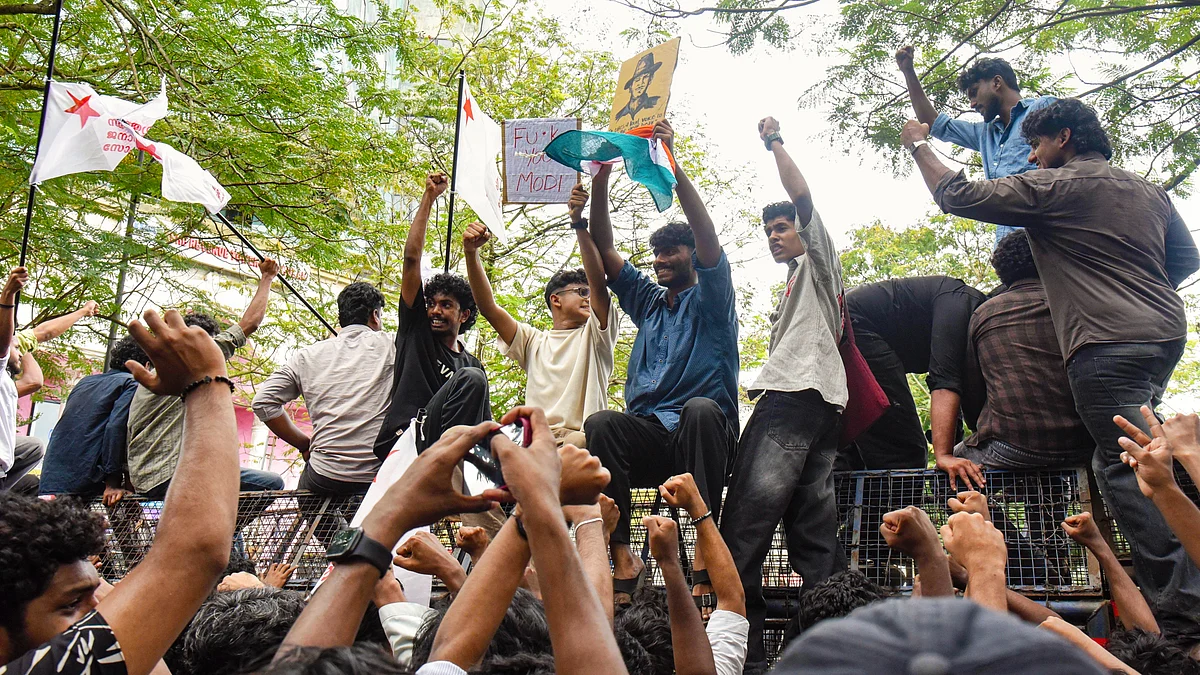


It took weeks of sustained student protests and relentless pressure from the Opposition, both inside and outside Parliament, before Prime Minister Narendra Modi finally responded to the NEET paper leak controversy. His announcement that fast-track courts would be set up to ensure swift punishment of those involved in examination leaks was presented as a decisive intervention. By the time the assurance came, it had done little to calm the anger of students who felt the government had acted only after the crisis had snowballed into a national political issue.
What the government appears to have underestimated is a familiar pattern in mass movements. They rarely remain confined to the issue that gives birth to them. A movement begins with one grievance, but if that is not addressed convincingly, it gradually grows into a larger indictment of the system itself. What began as outrage over a compromised examination has now evolved into a broader challenge to the government’s credibility among India’s youth.
The immediate trigger was the alleged leak of the NEET-UG 2026 question paper. For lakhs of students who had invested years preparing for one of the country's toughest examinations, the controversy struck at the very idea of merit. Their demand was simple: ensure a fair examination and hold those responsible accountable. The students who assembled at Delhi’s Jantar Mantar were not seeking political change; they were asking that the country’s examination system be trusted again.
Today, however, NEET has become only one element in a much wider charter of demands. Student groups are seeking the resignation of Union education minister Dharmendra Pradhan, holding him politically accountable for repeated examination irregularities.
They have also demanded the release of climate activist Sonam Wangchuk, who joined the movement and was detained during the protests while on an indefinite hunger strike. Other demands include Rs 1 crore as compensation for families of NEET aspirants who allegedly died by suicide amid the uncertainty surrounding the examination, and an assurance that no criminal cases will be pursued against peaceful student protesters following clashes with the police in Delhi.
Equally significant is the changing character of the agitation. What initially appeared to be driven largely by the Cockroach Janta Party (CJP) has expanded well beyond the organisational capacity of any single political formation. Students, young professionals and parents are joining demonstrations across several cities in what increasingly appears to be an organic expression of public anger rather than a politically manufactured campaign.
The same mood is visible in the large participation witnessed at 'Chhatron Ki Goonj', the series of student interactions led by Lok Sabha Leader of Opposition Rahul Gandhi. The turnout suggests that resentment over examination irregularities runs much deeper than the confines of any one organisation or protest platform. Opposition parties have recognised the political opportunity, they are responding to a sentiment that already exists rather than creating it.
Predictably, the political opposition has widened the scope of the debate. Questions are now being directed not only at the education ministry but also at the Union home ministry over the police response to demonstrations, and increasingly at the PM himself. Political parties rarely create such public currents; they seek to ride them. Whether that ultimately strengthens the students’ cause or subsumes it remains to be seen.
What is unmistakable, however, is that the Opposition has sensed an opportunity to corner the government. Its aggressive campaign — from coordinated parliamentary protests to the dramatic sit-in outside the prime minister’s residence — signals that it intends to keep the issue alive both inside Parliament and on the streets. For the BJP, this is no longer merely an examination controversy; it has become a political test of its credibility with young Indians.
The students themselves now stand at an important crossroads. They can allow their movement to become another battle over ministerial resignations and partisan politics, or they can continue to foreground the question that first united them: can India’s examination system still be trusted to reward merit fairly? That question transcends governments and political parties.
For Modi, the larger challenge may only be beginning. If the government continues to treat the NEET controversy as a law-and-order issue or believes that administrative announcements alone can defuse public anger, it risks misreading the moment.
The movement has already expanded beyond a single examination, beyond a single minister and beyond Delhi. If the grievances of students continue to resonate with millions of young Indians and their families, the days ahead could prove politically far more difficult for the ruling government than the paper leak itself ever suggested.
Join our official telegram channel (@nationalherald) and stay updated with the latest headlines