


How the US will pay for Trump’s expansionism
By using coercive diplomacy to try to counter China’s rise, Trump may be strengthening his principal rival
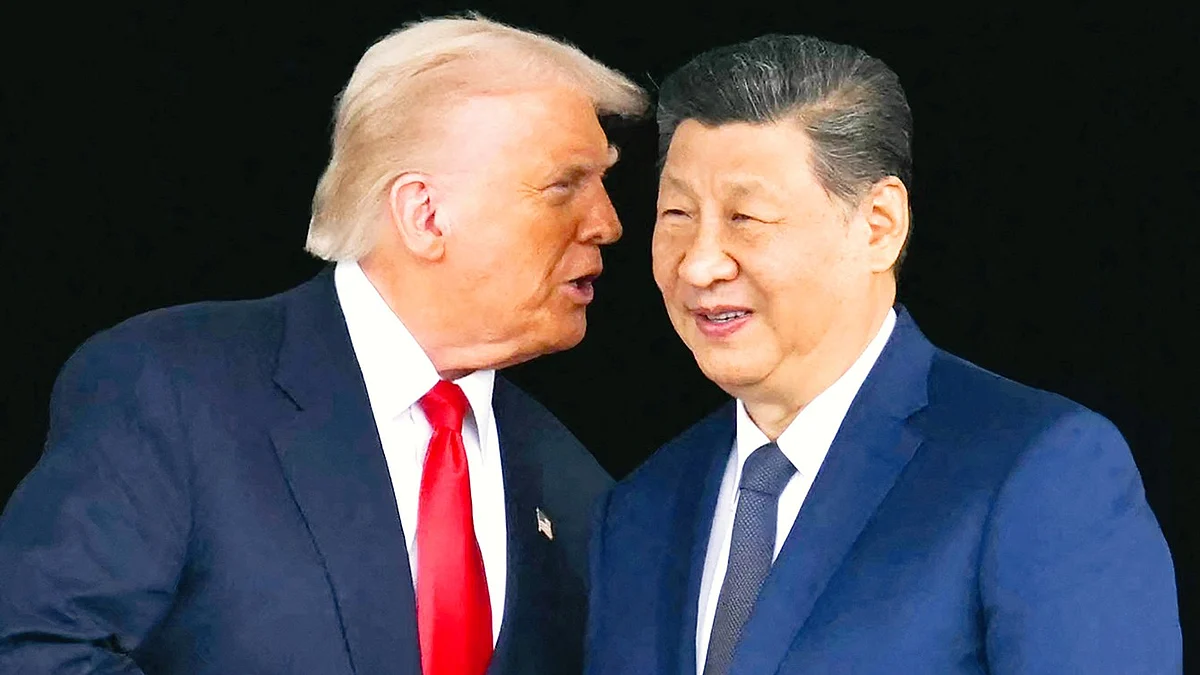


Donald Trump’s second term has stripped away the ideological veil that once softened America’s manoeuvres for global dominance. What earlier US administrations framed as the defence of democracy and a rules-based international order has now been recast in blunt, transactional terms.
This is not a stylistic shift. It’s a more profound transformation and has come at a moment when American hegemony is being challenged by the rise of China. Paradoxically, though, in trying to counter China’s rise through coercive diplomacy and aggressive expansionism, Trump’s strategy seems to be accelerating the erosion of American power and strengthening its principal rival.
In the Trump doctrine of US national security, China is no longer an ideological adversary but an economic competitor. Gone is the moral posturing of old, the language of democracy and human rights that once underpinned America’s claim to global leadership.
The narrowing of focus on economic protectionism and material advantage betrays a loss of confidence and/or interest in its universal appeal or acceptance. This shift appeared pragmatic to many — certainly to his ‘America First’ MAGA base — but the sacrifice of values has come at the cost of influence.
Trump’s naked ambition to annex new territories, his assertions to dominate the Western Hemisphere have further eroded America’s stature. The bid to reassert US primacy through economic pressure and war signals a neo-imperialist design, but the approach misunderstands the nature of contemporary power.
Influence in Latin America and Africa, for example, will no longer be determined by military presence but through trade, investments and long-term economic engagement. China’s deepening ties with the Global South cannot be undone through coercion. On the contrary, heavy-handed American policies are pushing the region further into Beijing’s orbit.
Also Read: Has Donald Trump met his Waterloo?
The military campaign against Iran, launched with the aim of degrading its strategic capabilities and reshaping regional dynamics, has also revealed the limits of America’s coercive power. What was presented as a quick, decisive operation has turned into a protracted, uncertain conflict, with Iran waging an asymmetric war on its own terms.
The war has other strategic costs for the US. Apart from further straining alliances and raising questions about the reliability of American leadership in times of crisis, the conflict has forced the US to commit both military resources and political attention to West Asia. Which in turn will affect its capacity to operate effectively in the Indo-Pacific. The diversion creates strategic space for China to strengthen its position, both economically and militarily.
The pattern is familiar. Previous American entanglements in Iraq and Afghanistan provided Beijing with the opportunity to rise with minimal interference. A similar dynamic is playing out now, except that China today has vastly enhanced capabilities.
China’s response to the Iran war has been remarkably restrained and calculated. Rather than getting entangled in the conflict, Beijing has positioned itself as a cautious observer, avoiding direct confrontation while securing its economic interests and providing intelligence to Iran. This approach allows China to benefit at the cost of an overstretched America, without incurring significant costs.
The war also reinforces China’s narrative of the US as a destabilising force, enhancing its appeal among countries in the region and outside seeking alternatives to Western dominance. In this sense, the Iran conflict is not just a regional crisis but the precursor to a global strategic shift that will further tilt the balance of power in Beijing’s favour.
Also Read: Cuba next on Trump’s imperial hitlist
Trump’s foreign policy approach amplifies these dynamics. His willingness to undermine longstanding alliances within NATO and the Quad and his penchant for unilateral action has weakened the network of partnerships that historically extended American influence. At the same time, his inconsistent stance on China, oscillating between confrontation and accommodation, creates uncertainty about US intentions. This lack of coherence undermines credibility and reduces the effectiveness of US policy.
For decades, the United States positioned itself — even if the reality was different — as a model of governance, a guardian of the rules-based international order. That claim lies in tatters. The Iran war, widely seen as an act of unilateral aggression, has reinforced scepticism about American intentions.
As this perception spreads, it will further erode American leadership and strengthen China’s push towards an alternative global order. For China, Trump’s missteps are a cheap way to expand its influence without even confronting the US directly.
Trump loyalists stubbornly argue that his disruptive policies are necessary to confront an unfair international system and to counter China’s rise. They contend that previous strategies had failed to address structural imbalances in trade and technology.
These concerns are not entirely without merit, but the paradox of Trump’s foreign policy lies in its unintended consequences. By abandoning the ideological framework that once legitimised American power, it weakens that power. By engaging in expansionist actions and costly conflicts, it accelerates strategic over-stretch. By focusing on short-term dominance rather than long-term stability, it creates conditions that favour the rival it seeks to contain.
Ashok Swain is a professor of peace and conflict research at Uppsala University, Sweden. More by the author here
Join our official telegram channel (@nationalherald) and stay updated with the latest headlines