


Prove again that you belong
With its recent ‘clarification’ on the validity of the passport, has the government issued yet another notice to Indian citizens?
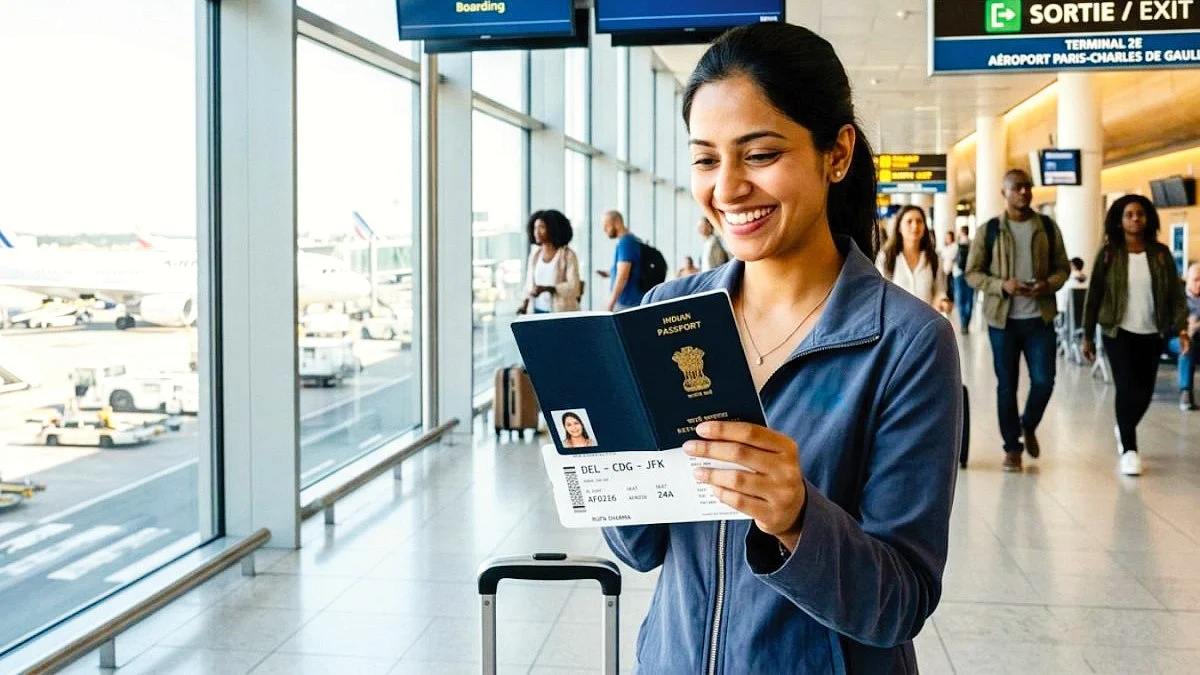


When officials of the ministry of external affairs (MEA) recently clarified that an Indian passport is ‘primarily a travel document’ and not conclusive proof of citizenship, they set the cat among the pigeons.
Less than nine per cent Indians hold a valid passport, according to the MEA, but that still means 12-13 crore Indians. For all these millions and many more aspirants, the Indian passport represents the Republic’s highest seal of trust. It carries the national emblem, permits international travel and is accepted by governments across the world as proof of Indian nationality. If even this document cannot establish citizenship, the question is: what can?
The controversy erupted after the MEA ‘clarified’ during a media briefing on Passport Seva Divas (24 June) that, legally speaking, the Indian passport does not create citizenship, that citizenship is governed by the Citizenship Act, 1955, while passports are issued under the Passports Act, 1967. The clarification came when a reporter from The Hindu asked if an Indian citizen could use their valid passport as a document to legally challenge their exclusion from the voter rolls.
In a piece she wrote for The Indian Express, former foreign secretary Nirupama Menon Rao tried to introduce nuance into the debate. ‘For most Indians, the passport is the most authoritative document the Republic issues. It bears the name of the Republic of India, carries the holder’s identity, and is accepted around the world because foreign governments trust that India has verified the bearer’s nationality before issuing it,’ she wrote.
But, she added, ‘a passport does not create citizenship. Nor is it the legal instrument that finally determines citizenship if that status is challenged before a court.’
The courts will perhaps in due course affirm this position, but the reason why this ‘clarification’ has only aggravated citizen anxiety is that in recent times a series of other documents — like Aadhaar or voter I-card or PAN — that citizens used as proof of identity have been declared invalid for these purposes.
Over the past decade, India has witnessed a series of citizenship-related exercises and debates centred on the National Population Register (NPR) or the National Register of Citizens (NRC) or the Citizenship Amendment Act (CAA), and more recently the Special Intensive Revision (SIR) of electoral rolls.
Each exercise, each database may have distinct legal foundations, but what seems to lie at the heart of these exercises is a drive to re-certify Indians as Indians. There’s great unease about the citizenship question — who is in and who is out; who is or isn’t eligible for welfare; who is or isn’t a voter and other such questions of belonging that hitherto weren’t questions.
Their citizenship must be repeatedly verified and defended. It doesn’t seem to matter that many do not possess the documents that will serve as valid proof of eligibility.
And the list of acceptable documents is shrinking. Voter identity cards are issued only to eligible citizens, but have repeatedly been described as insufficient proof of citizenship. Aadhaar, which was seeded into all databases, even in violation of a Supreme Court order, and then used as the default proof of identity and address for banking, welfare and digital services, is invalid as proof of nationality. And now, we’re told, that the passport isn’t proof either.
Senior Congress leader and former external affairs minister Salman Khurshid summed up the paradox succinctly: “The Passports Act does not say that it is a proof of your citizenship, but it does say that if you are not a citizen, you won’t get a passport.”
Lawyer and activist Ayushman Pandey concurs with Khurshid, adding that delinking passports from citizenship creates both legal contradictions and practical problems. The Passports Act explicitly limits passports to Indian citizens, barring exceptional circumstances. The application process involves extensive documentation and police verification. Globally, passports are the principal documents through which states certify nationality.
The case of veteran journalist R. Rajagopal has been in the news. Rajagopal, a former editor of The Telegraph, a Kolkata-based news daily, found he’d been struck off the voter rolls in West Bengal during the SIR exercise. He writes in a social media post, later reproduced by other digital media outlets, that the deletion affected police verification during the renewal of his passport, delaying the process by months and preventing him from travelling abroad to attend his daughter’s wedding.
Rajagopal writes: ‘Like nearly 27 lakh other residents of West Bengal, I was excluded on account of what were described as ‘logical discrepancies’. No reason was furnished even after I submitted my matriculation certificate, and my appeal is now pending before one of the tribunals constituted pursuant to the Supreme Court’s directions. As a consequence, I was unable to vote in the recent election.
‘More distressing has been the fate of my passport renewal application. Although I completed the biometric formalities on March 19, 2026, police verification has not been cleared because my name no longer appears on the electoral roll. Despite submitting several alternative documents, I have been informed that they are insufficient.
'In fact, today (June 27, 2026) is the 100th day since my biometrics for passport renewal were taken. I was formally informed last week by the passport-issuing authority that Kolkata Police sent an adverse report, citing the deletion of my name from the voters’ list. I have been asked to appear before the Regional Passport Office in Calcutta ‘immediately’ but when I sought an appointment, without which it is difficult to gain entry, the date granted is July 17, 2026.’
What transformed Rajagopal’s ordeal into a larger public debate is the realisation that if a senior journalist with decades of public visibility could be victimised in this manner, what chance did an ordinary citizen have against a vindictive state and an indifferent bureaucracy?
The burden to produce legacy documents, ancestral records and other paperwork is not evenly distributed. Many Indians, especially the elderly, rural communities, migrant populations and economically vulnerable groups possess incomplete or sketchy documentation. Registration of birth became near-universal quite recently. Spelling variations, missing records, change in address and lost documents are common realities.
The experience of Assam’s NRC process demonstrated how easily documentation gaps can place even long-time residents under suspicion.
The political rhetoric of illegal immigrants (‘ghuspaithiye’) has sharpened these anxieties. Minorities, particularly Muslims, understandably fear that the demand for documents may disproportionately affect them.
The argument that citizenship derives from the Citizenship Act rather than the passport may even be technically correct and legally sound, but what is the effect on citizens of this broad brush-stroke question mark on their status? Is governance about underlining the precise legal nuance or giving the public a sense of belonging?
As the debate rages, the question is less the validity of passports or other documents and more the relationship between citizens and the state. Should the state and its agencies err on the side of inclusion or make its 1.47-billion-strong citizenry jump through hoops to establish that they belong here?
Join our official telegram channel (@nationalherald) and stay updated with the latest headlines