


Justice needs no 'swadeshi' label
India's justice system needs stronger institutions, not a uniquely Indian jurisprudence divorced from global principles
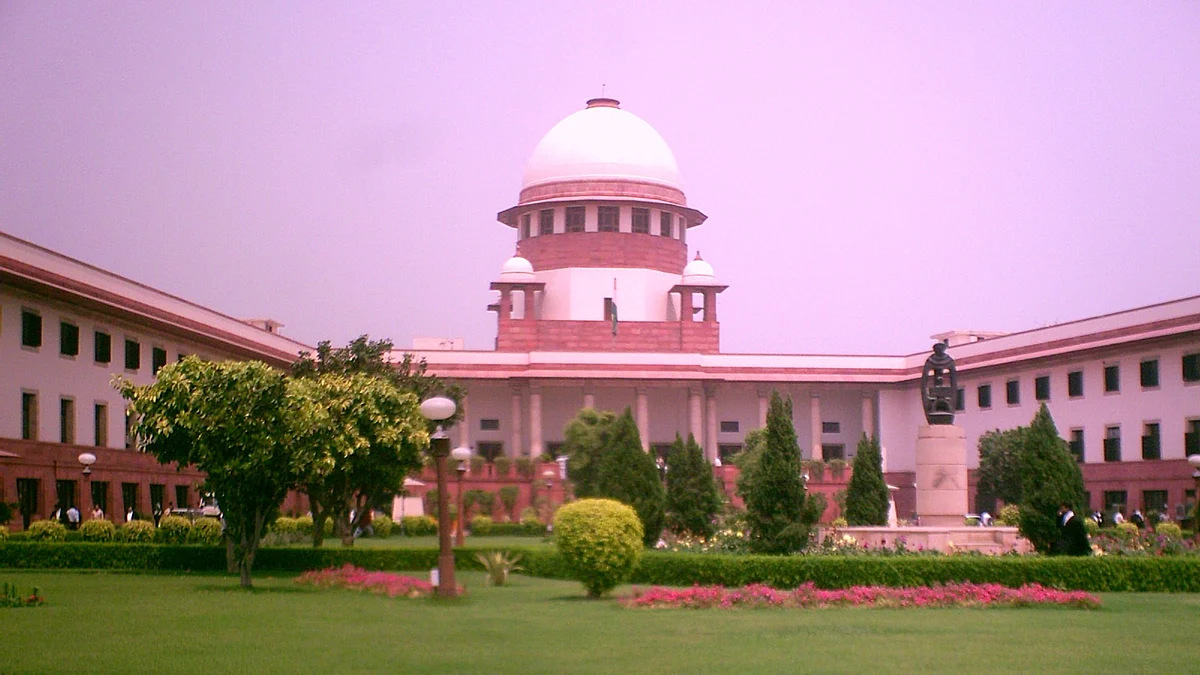


It was indeed a wise man who said judges should shun the spotlight and let their judgments do the talking. But that was before the era of the sound bite, YouTube and 24x7 breaking news. And, of course, post-retirement re-employment, or the need to demonstrate loyalty.
In India's legal firmament today, judgments no longer make news, mainly, I suspect, because they have become one-sided and therefore predictable. It is the obiter dicta that make news nowadays, delivered from the lofty perch of finality, if not infallibility.
Chief Justice of India Surya Kant is currently not only the master of the roster, he is also the master of the obiter dicta. How can we forget, if not treasure, his denunciation of the three distinguished academicians who wrote the chapter on the judiciary for an NCERT textbook, and his decision to bar them from any government engagement? The later "cockroach" comment is now part of legal folklore. And just last month, in an address at Oxford University, he remarked that India should develop its own "swadeshi jurisprudence", something even our freedom fighters had not thought of.
I am not sure what the CJI meant by this call for legal atmanirbharta, or whether this self-inflicted ghetto-isation is the right course to follow. For, in civilised democracies at least, jurisprudence and laws are aligned with global principles, concepts, conventions, declarations, rights and charters, and until recently we more or less conformed to these universal principles. Over the last decade or so, however, we have started ploughing our own legal furrow, and the remark of the CJI has only served to draw attention to this unhealthy development.
For, it must be lamented, swadeshi jurisprudence has unfortunately already arrived in India, which is why, according to the World Justice Project's Rule of Law Index 2025, we rank 86th out of 143 countries, firmly in the bottom half. We have been consistently slipping down this index; in 2014, we ranked 66th.
Frankly, I am not surprised, because the evidence is strewn all along the road to swadeshi jurisprudence like roadkill. It is the price we have paid for the gradual loss of the judiciary's independence, integrity and quality, and its growing eagerness to accommodate the executive.
Also Read: An apology may be in order, your lordship
Jurisprudence in India today appears to be governed by four made-in-India, or swadeshi, doctrines that should be a blot on any justice system: the doctrines of the fait accompli, sealed cover, ignore the science, and reward the criminal.
Important, even constitutional, challenges to executive actions are kept on the backburner for so long — Article 370, the CAA, the SIR and the Shiv Sena split are examples — that by the time they are decided it is impossible to turn back the clock and undo what the government has already implemented on the ground. The sealed cover has become the standard fallback option for denying full disclosure to civil society petitioners or withholding rebuttable reasons for a particular judgment, as in the Rafale, Pegasus, Vantara and Hindenburg cases.
Increasingly, our swadeshi jurisprudence, much like the executive itself, appears to show disdain for science. Whether it is the cases relating to stray dogs, the Aravalli mountains, the Char Dham highway or the Great Nicobar project, greater faith is placed in government-appointed committees and partisan ministries than in scientists, domain experts and specialised organisations working in the relevant fields.
Finally, this hybrid form of justice also ensures that criminals are allowed to retain the proceeds of their crimes even as their actions themselves are declared irregular, as in the Ram Mandir and electoral bonds cases. A judicial paraprosdokian, if ever there was one.
Perhaps the biggest stain on our swadeshi system of justice is the default denial of bail to three out of four accused persons who are otherwise entitled to bail under the law. Some 74 per cent (3.9 million) of India's prison population comprises undertrials, and the position keeps worsening as more and more draconian laws are enacted.
Eminent scholars, academicians, students, social activists and journalists are denied bail for as long as five years even though they have not been convicted and, in many cases, their trials have not even begun.
A university professor with 90 per cent disability is deemed a national security threat, kept in jail for years without trial, finally acquitted and released by a high court, only to be pushed back into prison within 24 hours at an urgent Saturday hearing before the apex court. And here lies the supreme irony: while those who have not been convicted remain in prison, convicted persons are routinely granted parole whenever they seek a breath of fresh air.
Millions of voters are denied their franchise by a capricious chief election commissioner and his untested algorithms, their appeals remain pending, and the swadeshi response to their entreaties is a callous: "Never mind, you can vote in the next election." An exercise based on mysterious algorithms, which has disenfranchised millions of citizens, has been given the highest court's imprimatur. Thanks to this endorsement, the citizenship, welfare benefits and even the social identity of tens of millions more are now under threat.
Judicial orders are routinely flouted by the executive — on Aadhaar, demolitions, bulldozers, hate speech, voter rolls and citizenship, to mention just a few examples — yet there is little meaningful pushback or punitive action from the courts.
The swadeshi jurisprudence model has ensured that our judicial system is broken and on the verge of collapse. There is a backlog of 54 million cases that will take an estimated 323 years to clear. Of these, 180,000 have been pending for more than 30 years. India has only 15 judges per million people, compared with 150-200 in most developed countries; China's figure is 300.
It gets worse. The judiciary has carved out so many privileges for itself that it is accountable to virtually no one. The collegium system ensures that only judges appoint judges, and that too in the most opaque manner. Judicial corruption cannot be investigated unless the judiciary itself permits it. Even though all government appointees are expected to declare their assets, it is reported that only 12 per cent of judges have done so.
It has also been reported that appointments to the Supreme Court have historically been confined to members of just 250 families across the country. This is a swadeshi blueprint for judicial anarchy and ochlocracy, not jurisprudence.
No, sir, the last thing we need is a swadeshi version of what a justice system should be. The swadeshi model ensures that democracy, and justice, have become privileges available only to those with influence. Your constitutional rights depend on who you are. Leave swadeshi to the politicians. The jurisprudence of rights, justice and equity needs a more solid and time-tested foundation. We need to adopt the best global practices and principles and dig ourselves out of this swadeshi hole.
And yes — let judgments do the talking, not obiter dicta.
Views are personal. More of the writer's work here
Avay Shukla is a retired IAS officer and author of Holy Cows and Loose Cannons — the Duffer Zone Chronicles and other works. He blogs at avayshukla.blogspot.com
Join our official telegram channel (@nationalherald) and stay updated with the latest headlines