


India's cruellest month
Avay Shukla repeats the familiar tax season lament: why should citizens pay ever more when they see so little in return?
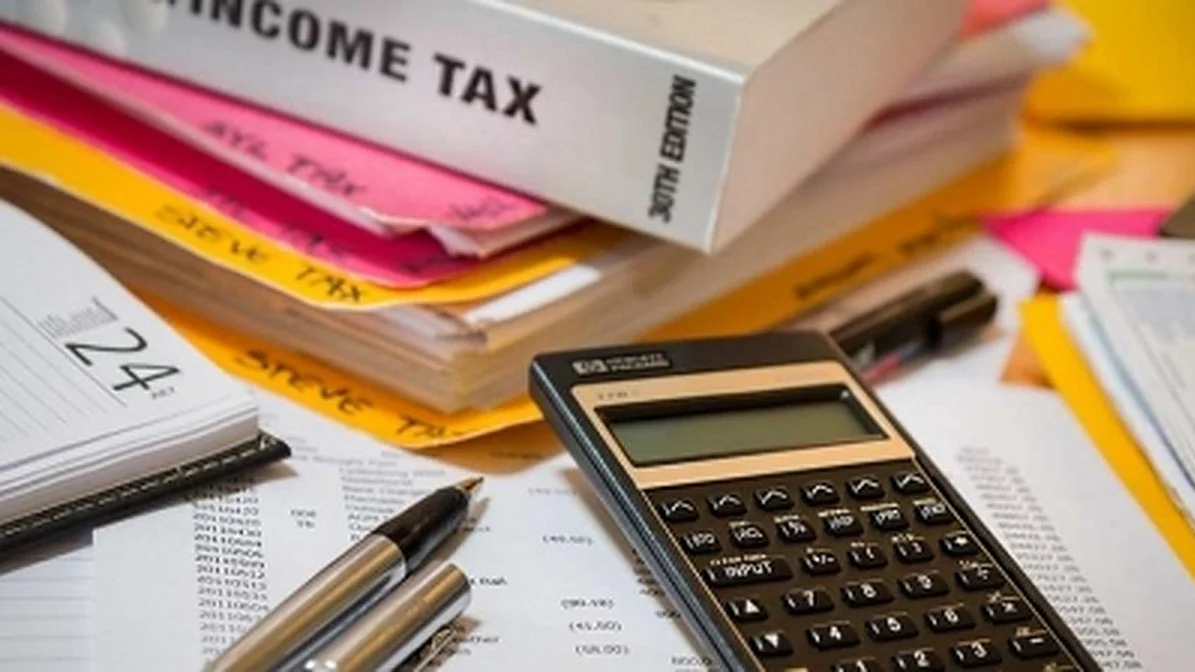


T.S. Eliot dubbed April 'the cruellest month' in one of his poems. I am sure he had his reasons for doing so, but it does reveal that he was not one of the 40 million-odd Indian taxpayers. For, had he been one, he would have vehemently disagreed. In India, the cruellest month is July, and it has nothing to do with a delayed monsoon or a pensioner's annual ordeal of submitting a 'life certificate' to prove that he is still alive and kicking.
The cruelty of the month derives from the fact that it is when we have to render unto Caesar what is definitely not Caesar's. A large part of the wages of our toil has to be handed over to Ms Sitharaman as income tax, along with an ITR that is as decipherable as the Dead Sea Scrolls and requires an expensive CA to complete.
I have just shelled out one-fourth of my annual income, comprising pension, interest from fixed deposits, a dash of capital gains, and a drizzle of royalties and remuneration for my books and articles from grudging editors and publishers. The wolf is not at my door yet, but it is getting closer every year.
And, for the life of me, I cannot see the justice in the government looting a large portion of my coffers every year without doing anything for me in return. Whatever happened to the adage: no quid pro, no quid?
I can understand a tax on my pension, since the government is entitled to recover some part of what it paid me for doing nothing for thirty-five years. I can also see the logic in taxing the interest on deposits and the like. They are passive income, unearned moolah I have not laboured for.
But why capital gains?
If property prices go up, it is not because of the government. It is because of relentless population growth, rapid urbanisation as villages continue to languish in poverty and underdevelopment, and the dismal failure of the Smart Cities programme. The government's only contribution is to ensure that the cities keep deteriorating, yet it will still take its undeserved cut of any increase in value.
Take shares. They go up despite a failing economy and declining FDI and FPI (the government's contribution!), because of insider trading, price rigging, cronyism and a gullible retail investor. The inexplicable rise of the Sensex has nothing to do with economic logic and, once again, the government's contribution is zero, if not negative. So why should Ms Sitharaman get a share of this gain?
Taxing what editors and publishers pay me (after many reminders!) is a raid on my intellectual, if not personality, rights. Writers are doing a public service by keeping alive the habit of reading, an activity that is itself on ventilator support. Nobody reads nowadays, lacking the attention span to read more than 140 words and preferring TikTok reels and emojis.
A recent study by the Booker Awards Institute reveals that only 4 per cent of Indians read books (about the same number as pay income tax — is there a connection here?). Nobody other than Shashi Tharoor or Chetan Bhagat makes any money by writing; the rest of us get by on crumbs from the Amazon toast.
Also Read: Prove again that you belong
We also take a huge risk every time we put pen to paper, not knowing when we might be hauled off to a police station for sedition, criminal defamation or contempt of court. I learn banks are now offering special FDs termed 'bail deposits'. The interest on them starts at a low 4 per cent but goes up by one percentage point for every year you stay out of jail. The full amount can be redeemed after eight years or whenever you are arrested, whichever is earlier. Even the interest income from these deposits shall be taxable, with an 'anti-national surcharge'.
There are rumours that insurance companies, sensing a great market opportunity, will shortly launch policies providing financial cover for arrests under UAPA and deportation under the Citizenship Act. Now that the passport has been shown its place, they expect this market to grow at a CAGR of 20 per cent.
There used to be a time (which I can barely recall now) when the best things in life were supposed to be free. No longer. They are now taxed at 28 per cent GST.
It is no coincidence that the words taxidermist and taxman have their first three letters in common. The only difference between them is that the taxidermist skins you after you are dead, while the taxman does so while you are still alive.
And the final question: now that it has been officially declared that no Indian has a document providing 'conclusive' proof of citizenship, how come we still have to pay taxes as Indians?
Views are personal
Avay Shukla is a retired IAS officer and author of Holy Cows and Loose Cannons — the Duffer Zone Chronicles and other works. He blogs at avayshukla.blogspot.com
Join our official telegram channel (@nationalherald) and stay updated with the latest headlines