


Israel, with or without Benjamin Netanyahu
In the foreseeable future, expect nothing more than a diplomatic dressing for the settler-colonial project, writes Ashok Swain
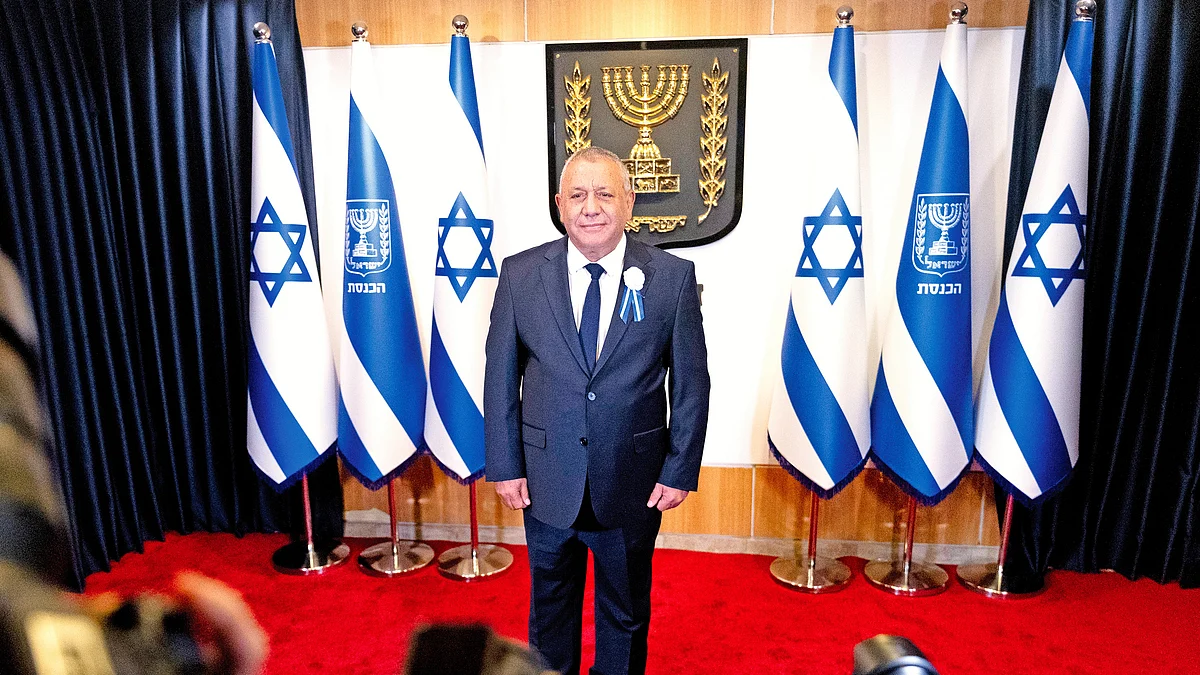


The prospect of Benjamin Netanyahu losing power after dominating Israeli politics for nearly two decades has created expectations of a political turning point. President Isaac Herzog’s decision to entrust former military chief Gadi Eisenkot with forming a government has brought Israel closer to a post-Netanyahu era. Yet the most important question is not whether Netanyahu finally leaves office. It is whether his departure will change Israel’s treatment of Palestinians under its occupation, its regional military adventurism or its dependence on American support.
The answer is likely to disappoint those hoping for fundamental transformation. Eisenkot may replace Netanyahu’s confrontational rhetoric with diplomatic sophistication and institutional respectability. He may restrain extremist settlers and permit limited humanitarian reconstruction in Gaza. But the occupation, settlement expansion, rejection of Palestinian sovereignty and overwhelming reliance on its military power are unlikely to disappear. Israel could acquire a more acceptable international face without substantially changing its policies.
The 27 October election produced a fragmented Knesset. Netanyahu’s bloc secured 53 seats, Eisenkot’s four-party opposition alliance 48 and Arab-led parties a historic 19. Although 67 lawmakers recommended Eisenkot for prime minister, endorsements do not automatically translate into coalition support. He has 28 days, potentially extended by another 14, to assemble a government.
Eisenkot’s background offers little reason to anticipate a fundamental reversal of Israeli policy towards Palestinians. As military chief between 2015 and 2019, he became associated with the Dahiya doctrine, advocating overwhelming military force against enemy-controlled areas, including civilian infrastructure. His reputation rests on the use of brutal military force rather than a commitment to democratic and human rights of Palestinians.
More revealingly, Eisenkot explicitly rejects Palestinian statehood in the foreseeable future. His proposed Gaza strategy would replace Hamas with another administrative authority, potentially involving the Palestinian Authority or international arrangements, while preserving Israeli security control. He might permit partial reconstruction and humanitarian relief, but Palestinians would remain denied of self-determination.
Netanyahu has pursued territorial domination through aggressive settlement expansion, collective punishment and the empowerment of extremist settlers. Eisenkot might reduce the most provocative manifestations of these policies without challenging their underlying logic. He has promised tougher action against settler militia, restoration of law enforcement and restrictions on illegal outposts.
Such measures could save Palestinian lives and should not be dismissed. Nevertheless, suppressing particularly violent settlers while maintaining occupation and denying statehood would regulate, rather than dismantle, the settler-colonial structure.
The danger is that international attention will shift from Palestinian dispossession to Israeli political moderation. Fewer inflammatory ministerial statements, strictly controlled humanitarian deliveries and renewed diplomatic negotiations could create an impression of progress while occupation and apartheid policy continue.
For Palestinians, the decisive test is not whether Israel’s prime minister speaks in politically correct language but whether the occupation ends, whether displaced communities can return, whether settlements cease to expand and equal political rights become attainable.
On Iran, the differences may prove even narrower. Eisenkot shares Netanyahu’s fanaticism to prevent Iran from acquiring nuclear weapons and preserve Israel’s nuclear superiority. His reported proposals include American-enforced exclusion zones around Iranian nuclear facilities and expanded covert operations against Iran’s missile capabilities.
These proposals suggest tactical diversion rather than strategic restraint. Eisenkot may prefer coordinated American pressure, intelligence operations and selective military strikes over Netanyahu’s confrontational political theatre. But the underlying assumption remains that Israel possesses an exceptional right to determine regional security arrangements through military power.
Similar continuity is likely in Lebanon and Syria. Eisenkot might negotiate limited withdrawals, strengthen cooperation with European governments and pursue security agreements. Yet he would retain Israeli military unilateral action and self-declared buffer zones.
A change of leadership could therefore make Israeli military dominance more predictable and diplomatically manageable without making the region substantially more peaceful.
Also Read: How lonely it is to be Israel
The most consequential transformation could occur internationally. Netanyahu has become politically toxic across significant sections of Western public opinion. His confrontations with European governments and increasingly partisan relationship with American politics have damaged Israel’s diplomatic standing. Eisenkot offers Washington and European capitals an opportunity to restore relations without confronting the deeper contradictions of their Israel policies.
He would likely rebuild bipartisan American relationships, emphasising intelligence cooperation, military technology and Israel’s strategic usefulness. European governments could go back to business as usual after renewed dialogue, limited humanitarian concessions and a less provocative administration.
This would create an uncomfortable paradox: the removal of Netanyahu could reduce international pressure precisely when sustained scrutiny of Israeli conduct remains necessary. Western governments might portray Eisenkot as evidence that Israeli democracy can correct itself, overlooking the continued exclusion of Palestinians from determining their political future. Sanctions discussions could weaken, diplomatic isolation might ease and demands for accountability could lose momentum.
The United States would almost certainly remain Israel’s principal strategic protector. Military assistance, intelligence cooperation and diplomatic backing would survive Netanyahu’s departure. What might change is the political cost for the Trump administration of providing that support. Eisenkot’s greatest international achievement could thus be restoring Western confidence in Israel without requiring Israel to fundamentally change.
For India, Netanyahu’s departure would probably produce limited disruption to bilateral relations, although their political character and public presentation could change significantly.
The relationship between Narendra Modi and Netanyahu has acquired a distinctly ethno-political dimension, reflecting ideological affinities between Hindu nationalism and Zionist nationalism. Their highly personalised partnership has often projected a shared nationalist anti-Muslim worldview, extending beyond conventional diplomatic cooperation.
Under Eisenkot, India-Israel relations could become less overtly ideologically political and more firmly anchored in traditional diplomatic, security and economic interests. Arms sales, intelligence sharing and cyber snooping would remain central pillars of the partnership.
Eisenkot’s military background could further strengthen institutional cooperation between the two countries’ security establishments, while reducing the political symbolism associated with the Modi-Netanyahu relationship. The substance of India-Israel cooperation would remain largely intact, even if its public expression became less overtly ethno-political and more military and intelligence driven.
Netanyahu’s personal future presents another uncertainty. Losing office would deprive him of the authority, visibility and political leverage that have helped sustain his megalomania and political career. His longstanding corruption trial would continue, while questions concerning responsibility for the 7 October security failures could intensify. Losing office would weaken his ability to shape the political environment surrounding accountability.
Nevertheless, Netanyahu will not disappear. A fragile coalition might offer him opportunities for a comeback. He could also seek to preserve influence through a unity arrangement or political negotiations concerning his future. Whether Likud eventually abandons him would depend on its assessment of his electoral usefulness.
Netanyahu’s departure could end an era of personalised political dominance without ending 'Netanyahu-ism'.
Netanyahu has become the international symbol of Israel’s destructive policies in the region and genocidal policies in occupied territories. Replacing him may reduce global anger and give Western governments a convenient justification for returning to business as usual.
For Palestinians, however, changing the identity of the prime minister without changing the structures of domination would offer little more than a different administrator of the same injustice. Israel may be approaching the end of Netanyahu’s rule. Whether it is approaching the end of Netanyahu’s policies is an entirely different question
Ashok Swain is a professor of peace and conflict research at Uppsala University, Sweden. More by the author here
Join our official telegram channel (@nationalherald) and stay updated with the latest headlines