


Nepal has another date with democracy
Ashok Swain on whether India and Nepal can rediscover mutual trust after the 5 March elections in an internally riven Himalayan state
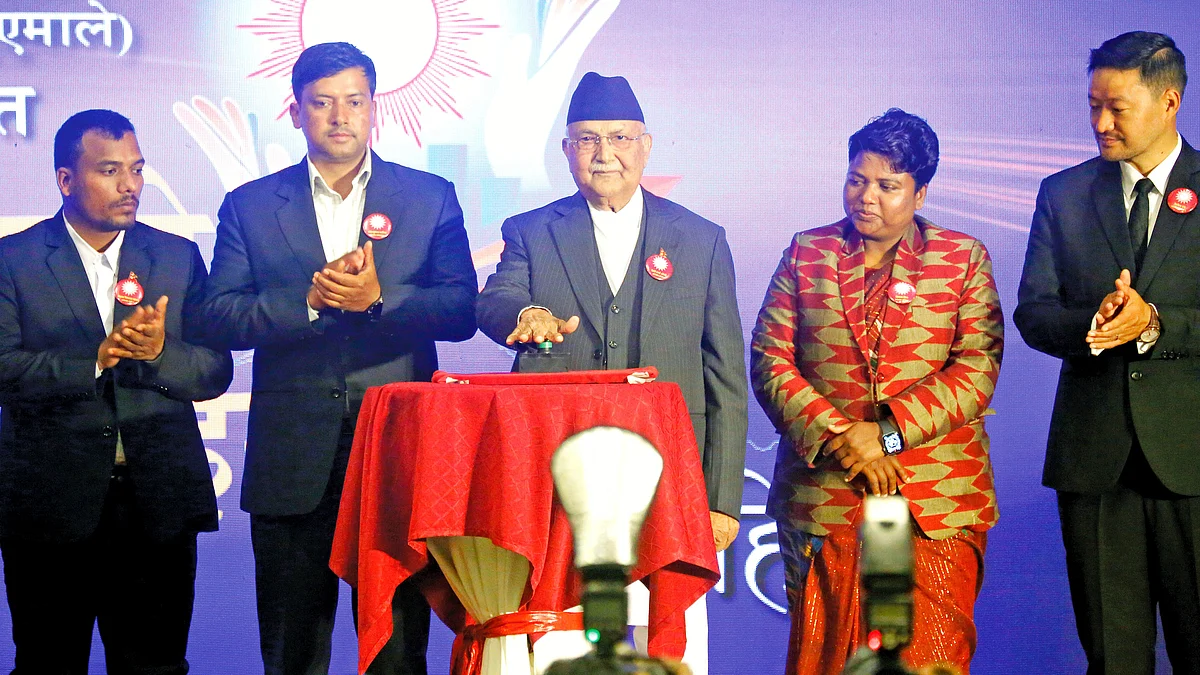


Nepal’s general election on 5 March is being held at a time when the geopolitical weather is heavy and uncertain. This is not just another round in the country’s familiar cycle of unstable coalitions and revolving-door prime ministers. It is the first nationwide vote after the 2025 Gen Z uprising, which revealed how exasperated the youth of Nepal were with the country’s political class.
It also revealed how deeply Nepal’s domestic politics is entangled in regional power rivalries. Whoever forms the next government will inherit a foreign policy environment far more constrained than any predecessor has faced, and far less forgiving of leaders perceived as pliant in the face of external pressure.
The irony is that this election comes at a moment when Nepal’s two most consequential neighbours formally agree on one thing — the country must have a timely, elected government. Both India and China supported the March polls after the uprising that forced K.P. Sharma Oli out of office, calculating that prolonged uncertainty in Kathmandu would be inimical to their interests.
Yet beneath this surface convergence lies a sharp divergence in what each hopes the election will ultimately deliver. There is a growing recognition inside Nepal that no incoming government can realistically function as an ally of India in the old sense of the term.
India has been historically the most consequential external actor in Nepal, not just because of geography but because of the open border, dense social, cultural and historical ties, and deep economic dependence. New Delhi’s immediate preference is clear. It does not want Oli back. The former prime minister’s standing among young voters collapsed during the uprising, and his party, the CPN-UML, is widely expected to perform poorly.
India’s quieter hope is for a government led by Gagan Thapa of the Nepali Congress (NC) or, failing that, a coalition in which the NC plays a central role. The party has long been seen as predictable, more comfortable with India, and sceptical of deep commercial entanglement with China.
But even if Thapa becomes prime minister, expectations in India should be tempered. The structural conditions that once allowed a Nepali government to align closely with New Delhi no longer exist. Anti-India sentiment has grown steadily since Narendra Modi came to power, driven not by ideology alone but by lived experience and political symbolism.
The unofficial economic blockade of 2015-16, imposed during Nepal’s constitutional transition, lingers as a traumatic memory. It is remembered not merely as a disruption of supply lines but as a humiliation, a reminder that sovereignty could be throttled by exploiting dependence. Any Nepali leader who appears indifferent to that scar risks being discredited.
The damage is not limited to that episode. Subsequent moves by the Modi government, including the publication of official maps in 2023 that ignored contested border areas, reinforced the perception that New Delhi does not treat Nepali sensitivities as equal to its own. In an asymmetrical relationship, symbolism matters enormously. Maps, official statements, media narratives all signal whether a smaller neighbour is regarded as a sovereign partner or a strategic appendage.
Under Modi, India’s foreign policy has increasingly mirrored the high-voltage nationalism of its domestic politics. That style may consolidate its core support base at home, but in Nepal, it has translated into a sense of constant pressure to conform to Indian preferences.
This is the central reason why Modi’s politics has made it much harder for any party in Kathmandu to pursue a visibly pro-India foreign and security policy.
Modi’s worldview collapses the distinction between domestic mobilisation and external posture. Even when Indian concerns are legitimate, the manner in which they are articulated often feels coercive. For Nepal, this has meant repeated reminders that its room for manoeuvre is highly limited, that deviation invites punishment, and that reassurance is expected more often than it is offered.
The effect has been politically corrosive. Any leader seen as too accommodating towards India now risks being labelled as weak or compromised. The result is a shrinking political space in Nepal for leaders who might otherwise favour close strategic alignment with India, particularly on security matters.
This constraint applies not only to the NC but to any conceivable governing coalition in the country. Even leaders personally inclined toward pragmatic engagement with India must now demonstrate distance, if only rhetorically, to retain domestic legitimacy. Nepal’s election thus mirrors a broader regional mood.
In Bangladesh, the February 2026 election returned the BNP to power, a party long uneasy with overt Indian influence. Across South Asia, democratic politics is increasingly punishing leaders who appear pro-India, especially when India’s governing majoritarian ideology is perceived as abrasive and dismissive of smaller neighbours.
If India’s influence has become politically costly, China’s rise has made strategic hedging unavoidable.
This reality complicates the calculations surrounding Balendra Shah, the prime ministerial candidate of the Rastriya Swatantra Party (RSP). Shah embodies the contradictions of Nepal’s current moment. A nationalist with little patience for diplomatic niceties, he has irritated India through symbolic gestures such as displaying maps of Greater Nepal and pushing back against Indian cultural dominance, while also refusing to visit China, when Beijing’s new map mentioned contested Limpiyadhura, Kalapani and Lipulekh areas as Indian territory.
If Shah comes to power, he is likely to frame foreign policy in transactional, business-like terms rather than ideological or historical ones. Domestic instability only sharpens these pressures. The RSP itself is divided, with a tussle for supremacy between Shah and party chair Rabi Lamichhane. Even if the party performs well, its internal cohesion is uncertain. A hung parliament remains the most likely outcome, raising the prospect of another round of fragile, short-lived coalitions.
The paradox facing Nepal’s next government is therefore stark. It must reassure India without appearing subservient, and engage China without becoming dependent. None of this can be achieved through the old rhetoric of non-alignment alone. It will require credible governance, economic reform and a foreign policy transparent enough to command public trust.
In this sense, the most significant constraint on Nepal’s foreign policy may not be geography but politics. The Gen Z uprising was not merely a revolt against corruption; it was a rejection of a system in which foreign relationships were often used to compensate for internal failure. Young Nepalis are less interested in which external power backs their leaders. They are more interested in whether those leaders can deliver jobs, services and dignity.
Ashok Swain is a professor of peace and conflict research at Uppsala University, Sweden. More by the author here.
Join our official telegram channel (@nationalherald) and stay updated with the latest headlines