


“Speaker sir, uphold the dignity of your office”
Many addressed G.V. Mavalankar with affection and respect as ‘Dadasaheb’; prime minister Jawaharlal Nehru called him the ‘Father of the Lok Sabha’
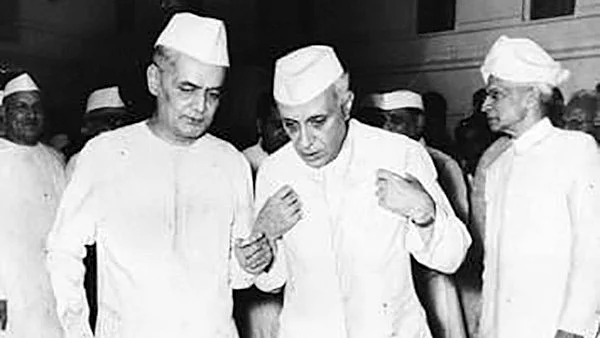


When the country’s first Lok Sabha convened in 1952, Ganesh Vasudev Mavalankar was elected its Speaker. Many addressed G.V. Mavalankar with affection and respect as ‘Dadasaheb’; prime minister Jawaharlal Nehru called him the ‘Father of the Lok Sabha’.
Mavalankar was a Congressman and had, no doubt, a soft corner for the party. But never once did that association intrude upon his rulings from the Speaker’s chair, the directions he issued, or the way he conducted proceedings. So, when he passed away on 27 February 1956, he was remembered as the man who laid the foundations of integrity and high moral standards in India’s parliamentary system.
Mavalankar believed that as Speaker, his most sacred duty was to apply the same yardstick of justice to every member of the House—whether from the treasury benches or the Opposition. On one occasion, when he felt that the Nehru government’s tendency of promulgating ordinances was unhealthy for parliamentary democracy, he did not hesitate to write to Nehru himself. Issuing ordinances merely for lack of time, he warned, was to set the wrong precedent; Parliament must not be reduced to a ‘rubber stamp’.
His moral commitment to parliamentary sovereignty also led him to press for the establishment of an independent secretariat for the Lok Sabha. It is another matter that on 18 December 1954, the Opposition brought a no-confidence motion against him. Even while describing it as ‘frivolous’ and ‘motivated’, Nehru argued that Opposition leaders be given ample time to debate it.
If we turn back to the pre-Independence years, Purushottam Das Tandon—later honoured with the title ‘Rajrishi’—was elected unopposed on 31 July 1937 as the first Speaker of the United Provinces (now Uttar Pradesh) assembly, and continued in that office from 1946 to 1950. His impartiality was such that when the Opposition questioned his participation in meetings of the Indian National Congress while serving as Speaker, he stood on the floor of the House and declared that the day even a single member expressed distrust in his decisions or neutrality, he would re sign. No MLA raised the issue again. It was his steadfast commitment to this principle that earned him the sobriquet ‘Rajrishi’.
It’s apt in this context to also recall Dhaniklal Mandal, who served as Speaker of the Bihar assembly between 1967 and 1969—years of intense political instability in the state. The first non-Congress Samyukta Vidhayak Dal government, led by Mahamaya Prasad Sinha, rested on a fragile arithmetic. In January 1968, amid defections and manoeuvres, it faced a no-confidence motion and plunged into crisis.
Unable to muster a majority, Sinha quietly visited Mandal at his residence, requesting him to use his powers as Speaker to defer consideration of the motion. That would give him time to secure the numbers he currently lacked.
Mandal’s response was blunt: since Sinha had effectively admitted before him— the Speaker—that he did not command a majority, the proper course was to go to the Governor and resign. Sinha did not resign. His government fell on 28 January 1968 through the no-confidence motion.
These instances of Speakers safeguarding democratic probity, integrity and moral discipline in the Houses they ran stand in sharp contrast to the conduct of the current Lok Sabha Speaker, Om Birla, raising serious concerns for our democracy.
Recall that in an earlier session, Leader of the Opposition Rahul Gandhi remarked that while shaking hands with Prime Minister Narendra Modi, the Speaker had bowed while standing upright when he was greeting the LoP. The charge was discrimination between the treasury and Opposition benches, a recurring pattern that has been on display even in the ongoing Budget session.
When Rahul Gandhi rose to speak on the ‘motion of thanks to the President’s address’, he sought to refer to former Army chief Manoj Mukund Naravane’s book Four Stars of Destiny, quoting a passage that suggested that during China’s aggression at the border in 2020, timely and appropriate directions were not given to Naravane by the defence minister or the prime minister. He was stopped on the ground that he should confine himself to the President’s address.
Gandhi argued that an issue as vital as national security could not be divorced from the address. In brushing this aside, Birla appeared to forget his own earlier ruling in a previous session that during the debate on the motion of thanks, members may also raise issues not mentioned in the address but which they believe ought to have found place in it.
The double standard became starker when the LoP was not allowed to quote from Naravane’s book, yet BJP MP Nishikant Dubey was given a free rein to quote freely from books that cast aspersions on Nehru and the Gandhi family.
Speaker Om Birla has some very worthy predecessors to turn to if he has any doubts on how to be scrupulously fair in his high office
It did not stop there. The day after Prime Minister Modi did not attend the House to reply to the debate on the motion of thanks, Birla shielded him by claiming that he himself had advised the prime minister not to come, as there could be an “unexpected incident”.
Several questions arising from this claim remain unanswered. Which agency alerted him? How did he receive this information? What steps did he take after receiving it? Was an FIR registered? If not, why not? Having apprehended a threat to the prime minister inside the House, why did he allow proceedings to continue as though nothing had happened? Was it his duty to ensure that the House functioned in a manner that enabled the prime minister to reply—or to prevent him from attending? As the Opposition has suggested, if this was a tactic to shield the prime minister from questioning, then there can be little doubt where the Speaker’s sympathies lie.
There are numerous instances of Opposition members being interrupted or restrained without cause. On 24 July 2024, during the Budget debate, Trinamool Congress MP Abhishek Banerjee referred to demonetisation. Birla interjected: “demonetisation is old news; speak on the Budget.” Banerjee shot back that when the ruling party invokes the Emergency imposed fifty years ago—or goes further back to criticise Nehru—no such objection is raised. But when he mentions demonetisation, he is told that since two Lok Sabha elections have taken place since then, he must stick to the Budget. “This bias will not do, sir. Uphold the dignity of your office,” Banerjee said.
Birla has upheld that dignity in a very distinctive way: his tenure is now marked by the record suspension of Opposition MPs. Which is why Abhishek Banerjee’s words of 24 July 2024 bear repeating today: “Speaker sir, uphold the dignity of your office.”
Join our official telegram channel (@nationalherald) and stay updated with the latest headlines