


The cow, the carcass and the republic
The cow may be sacred in India’s politics. But the economy around it is unholy, writes Jaideep Hardikar
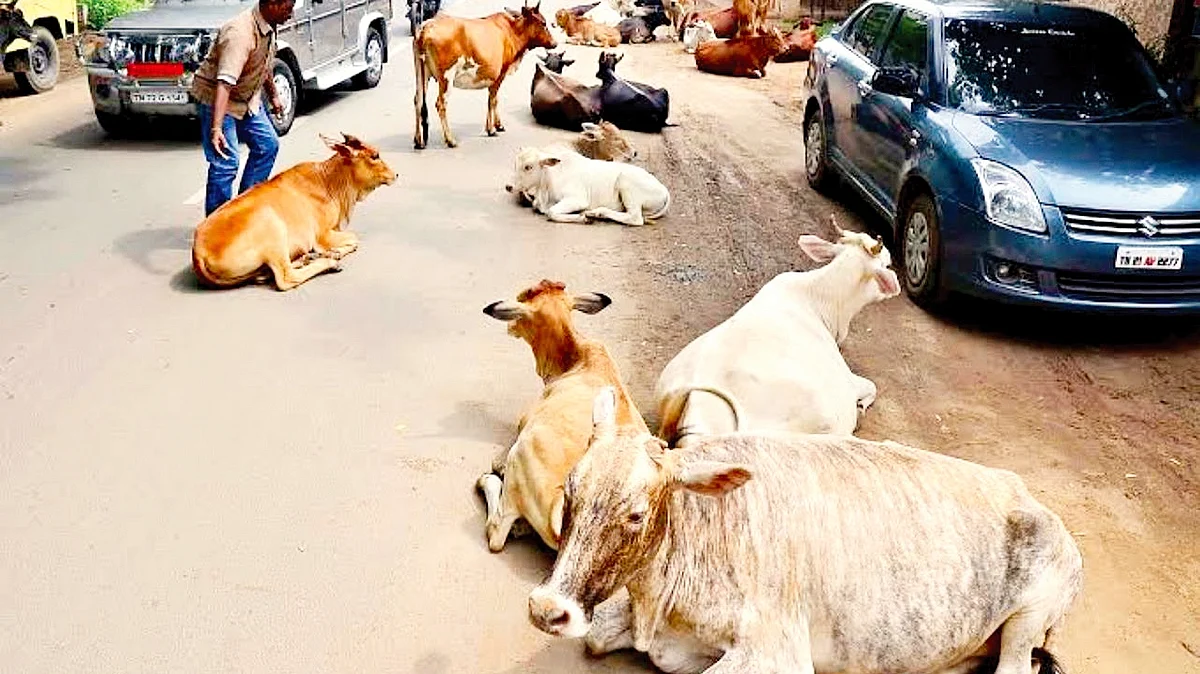


India’s cattle economy is marred by a profound contradiction. The regime that invokes the cow as a sacred symbol and fails to curb vigilante attacks on those who trade in cattle also presides over one of the world’s largest bovine meat export industries, earning billions from exports. It claims to protect rural India but destabilises the economic chain that links farmers, traders, tanneries, transporters and leather workers. Most recently, that contradiction played out sharply in West Bengal ahead of Eid al-Adha.
Soon after the installation of the new chief minister Suvendu Adhikari, Bengal’s BJP government tightened regulations, effectively restricting the slaughter of cattle below 14 years of age unless certified unfit for breeding or work. The Calcutta High Court declined to stay the order, observing that cow sacrifice is not an essential part of Eid rituals.
Amid fears of harassment, seizures and communal targeting, reports from Bengal’s cattle markets suggest that many Muslim cattle traders and buyers have become overly cautious. Not only are they dissuading cattle breeders from selling their livestock for slaughter, they are turning them down.
Hindu livestock farmers have reportedly complained that weak demand is hurting prices and disrupting rural economies. In some cattle markets in Bengal, buyers are simply not turning up. Having invested money in rearing cows for Eid, many farmers fear ending up in debt. In an economy built on interdependence between Hindu farmers and Muslim cattle traders, fear of retribution from vigilante groups seems to have travelled quickly.
Meanwhile, the meat export business has been thriving.
The billion-dollar contradiction
India officially prohibits the export of cow meat. But buffalo meat — marketed globally as ‘carabeef’ — is one of India’s largest agricultural export sectors.
According to the APEDA animal products export database, India exported more than 1.25 million metric tonnes of buffalo meat in 2024-25 alone, worth over $4 billion, accounting for nearly 80 per cent of all animal product exports. The biggest buyers include Vietnam, Egypt, Malaysia, the UAE and Saudi Arabia.
Also Read: If the cow is sacred, should the law say so?
As per a recent Lok Sabha reply, India has 94 APEDA-registered export-grade slaughterhouses spread across Uttar Pradesh, Maharashtra, Haryana and Punjab.
Vigilantism, however, rarely distinguishes between cows and buffaloes, legal exports and illegal smuggling. Muslims have been killed or thrashed at the mere whiff of a suspicion. The politics around beef obscures the fact that our export industry is overwhelmingly buffalo meat, not cow meat. That ambiguity has led to a thriving export economy in an atmosphere of fear around cattle transport.
Cow vigilantism has become one of the defining social phenomena of the last decade. Data compiled by journalists, rights groups and researchers show that most reported cow-related mob attacks occurred after 2014, with Muslims disproportionately targeted. The date is crucial. That’s when Narendra Modi came to power at the Centre. In 2017, Reuters reported that at least 28 people — 24 of them Muslims — had been killed in cow-related violence between 2010 and mid-2017.
That violence altered the livestock economics.
The broken rural chain
For generations, rural India functioned through a circular cattle economy. Farmers sold ageing or unproductive cattle to traders. Traders supplied slaughterhouses and meat processors. Hides moved to leather clusters. Bones, fat and by-products fed ancillary industries. Selling ageing cattle gave farmers the liquidity to buy seeds, repay loans or survive a bad agricultural season. Cow vigilantism has disrupted that chain, leaving farmers vulnerable in moments of crisis. Mind you, livestock is a reliable liquid asset.
With cow vigilantism galloping across India — save in those BJP-ruled states where eating beef is permitted for political goals — that circular economy began to founder. Transporters no longer move cattle at night. Traders fear highway attacks. In several states, farmers abandon ageing cattle because selling them is too risky. The result is a surge in stray cattle destroying standing crops, especially in Uttar Pradesh.
Also Read: The extortion rackets of cow vigilantes
One of India’s distinguished geneticists and animal scientists, Dr Chanda Nimbkar, argues that Maharashtra’s cow slaughter restrictions have severely distorted the livestock economy. In an illuminating essay in the Marathi daily Loksatta, she urged the lifting of the ban on cattle sale and slaughter to provide relief. ‘Even buffalo traders are increasingly targeted by self-styled gau rakshaks… directly hurting small livestock farmers’.
She is right. Two years ago, Qureshi traders — increasingly under attack in Maharashtra — boycotted the cattle trade in all the major markets of the state (similar to what is unfolding in West Bengal today). Prices of male calves and buffalos plummeted, creating great unrest among farmers and ill will against the state government. Nimbkar writes, if the government can’t control vigilante violence, it must compensate the farmers.
Sales resumed only after mediation, pushback from the farmers and assurances from the Maharashtra government that no harm would come to the traders. Till date, they haven’t returned to normalcy. Economically lagging dry-land areas have been hardest hit by the disrupted cattle trade, which has crippled the small farmer economy and added to their financial woes.
Dr Nimbkar’s critique cuts deeper. She argues that governments subsidise overcrowded gaushalas while denying farmers the economic flexibility to manage unproductive animals. The irony, she notes with frustration, is that indigenous cattle and bull populations in Maharashtra have continued to decline despite aggressive ‘cow protection’ politics, while goat populations — linked to a freer, more flexible market — have risen significantly.
In short, cow vigilantism, patronised by the state’s ruling regime, exposes the fundamental contradiction at the heart of cow politics: laws framed in the name of protection actually undermine both livestock conservation and rural livelihoods.
Few sectors reveal this contradiction more starkly than India’s leather industry which depends on the slaughter economy for hides. Disrupt slaughter, transport and cattle markets, and the leather sector feels the shock almost immediately.
As early as 1950, the Centre had warned states that blanket slaughter bans would hurt India’s tanning industry and exports. Today that warning is proven prophetic.
India’s leather industry employs roughly 4-4.5 million people directly and indirectly, many of them Dalits and Muslims concentrated in tanning, carcass handling, leather processing and footwear manufacturing. Current estimates show the sector contribute roughly $5 billion annually when domestic market value and exports are combined.
In FY 2024-25, the leather industry’s export earnings stood at around $4.8-5.7 billion. The domestic market is even bigger. In 2025, the council for leather exports (CLE) estimated that India’s domestic leather and footwear market was worth about $19 billion with ambitious plans to expand substantially over the next decade.
Major leather clusters in Kanpur, Unnao, Chennai and Kolkata depend on a stable supply of hides. Bengal is one of India’s important leather-processing centres, with Kolkata and Bantala accounting for nearly a quarter of India’s tanning activity. In a state where industry is flagging, a big dent in its leather trade could be fatal.
After cattle trade restrictions intensified in 2017, leather industry bodies warned of falling hide availability and shrinking exports. Industry reports documented declining domestic hide supply as slaughter rates fell and cattle transport became increasingly risky.
The economic logic is brutal: fewer sales devastate farmers, disrupted slaughter reduces hide supply, tanneries slow down, exports weaken, workers lose jobs.
The worst affected are those on the margins — Muslim traders, Dalit leather workers, transporters and informal sector labourers.
Who owns the beef economy?
One of the least discussed aspects of India’s meat economy is that it cuts across religious identities more than politics reveals.
Some of India’s largest buffalo meat exporters are Hindu-owned firms. The export industry itself is not controlled by any one community. Yet public discourse has communalised the entire trade, collapsing distinctions between legal export businesses, local livestock markets and everyday cattle transport.
A single video of vigilante attacks has the potential to cripple transport routes and turn rural markets into communal flashpoints. Entire groups start withdrawing from traditional trades out of fear.
The republic at a crossroads
India’s cattle economy has always involved an uneasy weave of religion, caste, livelihood, agriculture and commerce. But during the Modi regime, it has also become a theatre of nationalism.
The same State that promotes export-oriented buffalo meat production because it earns foreign exchange criminalises and intimidates the people who keep that economy functioning.
The burden falls on the farmer with an unproductive animal he cannot sell; on the transporter waylaid by vigilantes; on the tannery worker without raw hides to cure; on the cattle trader who quits a market out of fear; and on communities learning to mistrust each another in spaces once built on everyday cooperation.
The cow may be sacred in India’s politics. But the economy around it is unholy.
Jaideep Hardikar is a senior Nagpur-based journalist and author of Ramrao: The Story of India’s Farm Crisis. Read more by him here
Join our official telegram channel (@nationalherald) and stay updated with the latest headlines