


To Be Young Was Very Heaven
Those who govern would do well to read Indian history. Ours has always been a movement polity, writes Sanjay Hegde
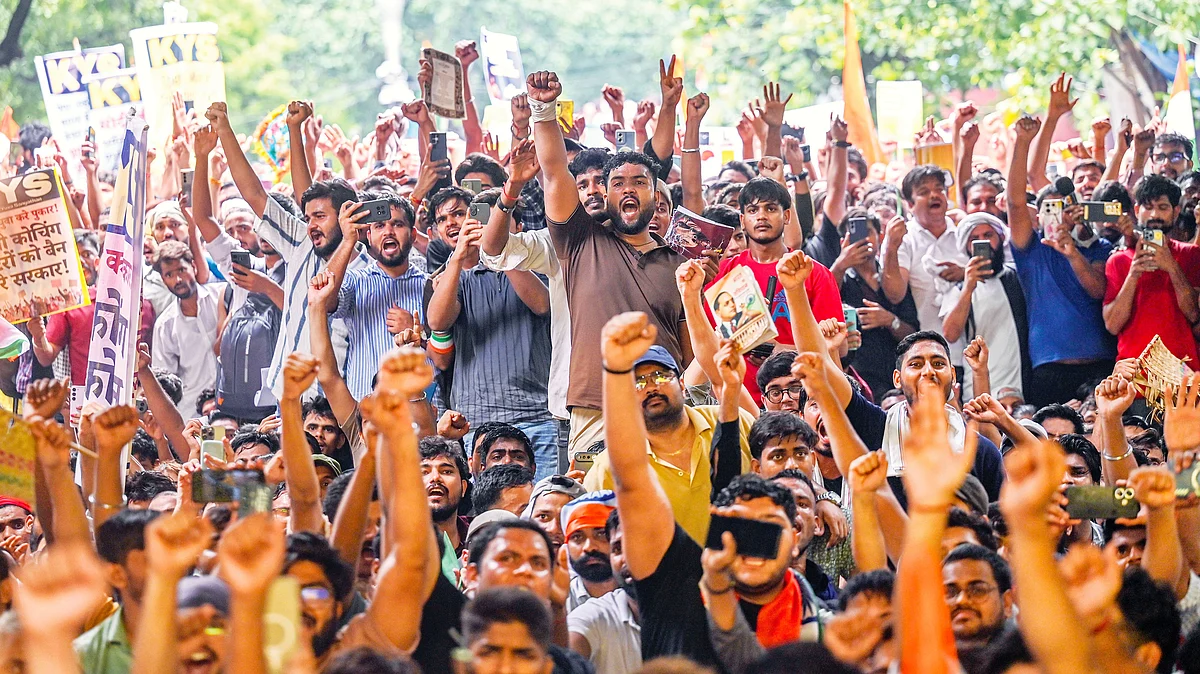


At Jantar Mantar in Delhi, young India has pitched camp. Students roll up their bedding at dawn. They sing, they argue, they nurse their bruises. They call themselves, with mocking self-deprecation, the ‘Cockroach Janta Party’. A judicial remark had likened the struggling youth to cockroaches. They wore the insult as a badge. Satire became a movement. The movement now unsettles the national capital.
The immediate provocation is NEET, the single examination that decides who may become a doctor. Question papers leaked. Lakhs of students were made to sit the test again. Years of preparation, family savings and young hope dissolved in official incom-petence. The students ask a simple question: if they must play by the rules, why doesn’t the State? They demand accountability from those who set the examination. The State has answered with prohibitory orders, tear gas and the lathi.
Those who govern would do well to read Indian history. Ours has always been a movement polity. The freedom struggle was not won in committee rooms alone. It was won on the streets, in the villages, in the salt pans of Dandi. Every generation since has produced its movement, and every movement has ended in a rebalancing of political power.
The JP movement of the 1970s broke the Congress monopoly. The Mandal agitation redrew the map of social power. The anti-corruption stir of 2011 birthed a new party and buried an old government. Movements are how India renegotiates the terms between rulers and ruled.
Consider the greatest renegotiation of them all. Until 1920, Indian politics was a polite conversation. The Congress petitioned, memorialised and waited. Its leaders sought gradual reform within the Empire, a seat at the table, dominion in the fullness of time. Then Gandhi arrived from South Africa and changed the grammar of the argument. Non-cooperation asked ordinary Indians to withdraw their consent. Civil disobedience asked them to break unjust laws openly and take the punishment cheerfully.
Within a decade, the demand had travelled from gradualism to Poorna Swaraj. The subjects had become claimants. The Raj never recovered the initiative. Movements do that. They do not merely press a demand. They change what a people believe themselves entitled to ask.
The young at Jantar Mantar stand in that tradition, whether they know it or not. And they ask for less than revolution. A decade ago, a young student leader named Kanhaiya Kumar faced sedition charges for slogans he did not raise. He answered with a distinction that deserves to outlive him. We want azadi in India, he said, not azadi from India. Freedom within Bharat, not freedom from Bharat.
Freedom from hunger, from corruption, from rigged examinations and stolen futures. That is precisely what this generation demands. They wave the tricolour. They quote the Constitution. They ask the republic to be worthy of its own promises. No State should fear such patriots. Only a State that has stopped listening does.
Yet the response has been depressingly colonial. Batons fell on unarmed students marching towards their own Parliament. Scores were carried to hospital. The internet was switched off, as if darkness could hide what daylight had witnessed. A camp of sleeping protesters was demolished. An ageing Gandhian sat on hunger strike while ministers looked away.
This is the reflex of the Raj, not of a republic. It carries the odour of General Dyer, who believed at Jallianwala Bagh that a whiff of force would teach the natives their place. Dyer’s bullets killed hundreds. They also killed something larger: the British claim to fair play. After Amritsar, no Indian could believe the Empire was benevolent. Tagore returned his knighthood. Gandhi returned his medals.
The moral licence of British rule bled out on that ground, though the flag flew for twenty-eight more years. Governments that answer questions with force do not end questions. They end their own legitimacy.
The wise course is the old constitutional one. Talk to the young. Fix the examinations. Punish the leakers, not the leaked-upon. Power rebalanced through persuasion survives. Power defended by the lathi does not.
I watched the footage from Jantar Mantar again last night. Bandaged heads, borrowed megaphones, the anthem sung off-key and wholeheartedly. I thought of Wordsworth, watching another generation storm another old order: ‘Bliss was it in that dawn to be alive, but to be young was very heaven.’
The dawn is theirs. The rest of us should have the grace not to stand in its light.
Sanjay Hegde is a Senior Advocate in the Supreme Court of India. More of his writing here
Join our official telegram channel (@nationalherald) and stay updated with the latest headlines