


More vignettes of ‘Viksit Bharat’
Umar Khalid’s endless incarceration is less about what he did or didn’t, more about who he is. A letter Aakar Patel wrote to him might explain
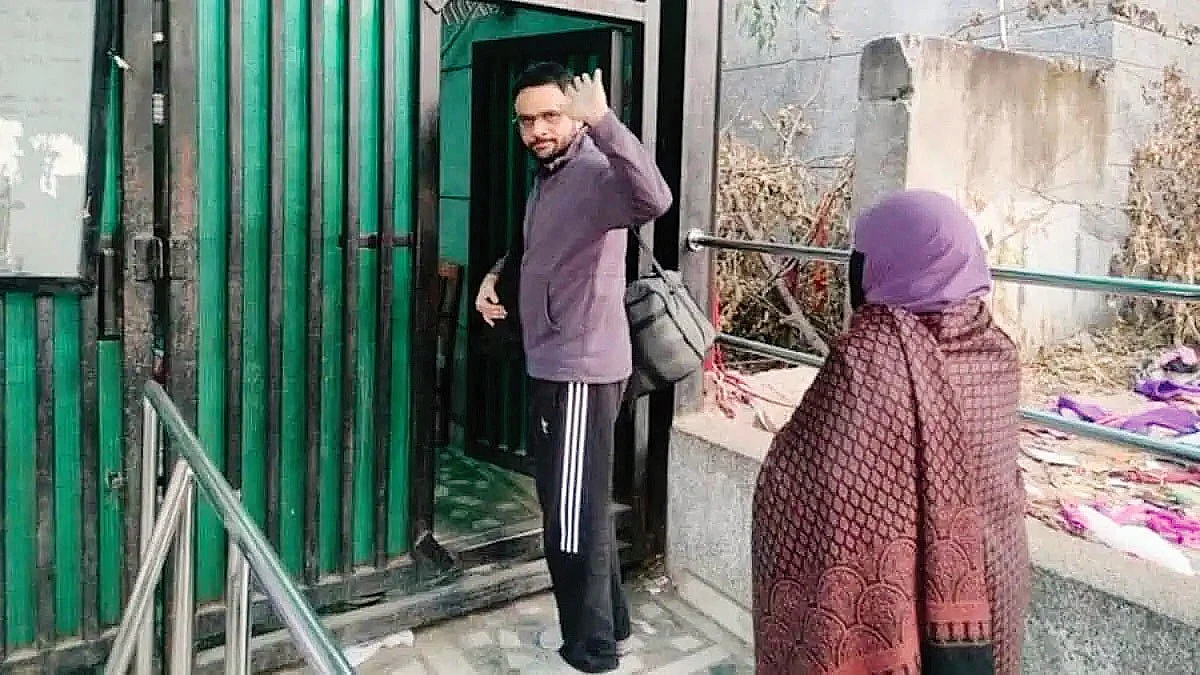


On 5 January, the Supreme Court denied Umar Khalid (and Sharjeel Imam) bail, while letting rapist Ram Rahim out on his 15th parole. Co-accused in what is being described as the ‘Delhi riots larger conspiracy case’ — Meeran Haider, Gulfisha Fatima, Shifa Ur Rehman, Shadab Ahmed and Saleem Khan — were granted bail.
As the Amnesty International website states: all are ‘human rights defenders who have spent more than five years in pre-trial detention on terrorism-related charges following their peaceful participation in protests against the discriminatory Citizenship Amendment Act (CAA).’
On 11 August 2023, when Umar Khalid turned 36 — in jail — Aakar Patel wrote him a letter. Even as that moment of reflection from three years ago strikes us anew, we turn to Patel’s response to the latest Supreme Court judgement in his capacity as chair of the board of Amnesty International India:
“While we welcome the court’s decision to grant bail to their co-accused, it is shameful that Umar Khalid and Sharjeel Imam continue to be denied bail. Neither of these individuals should be in detention in the first place. They have been detained for more than five years without trial on politically motivated allegations — the charges against them should be dropped and their release should be unconditional.”
The Supreme Court also imposed exceptionally harsh restrictions on future bail applications by Umar Khalid and Sharjeel Imam. It ruled that they could seek bail only after the prosecution concludes examination of its protected witnesses or after one year, whichever is earlier — thereby placing their ability to pursue bail largely at the mercy of the prosecution’s pace and conduct.
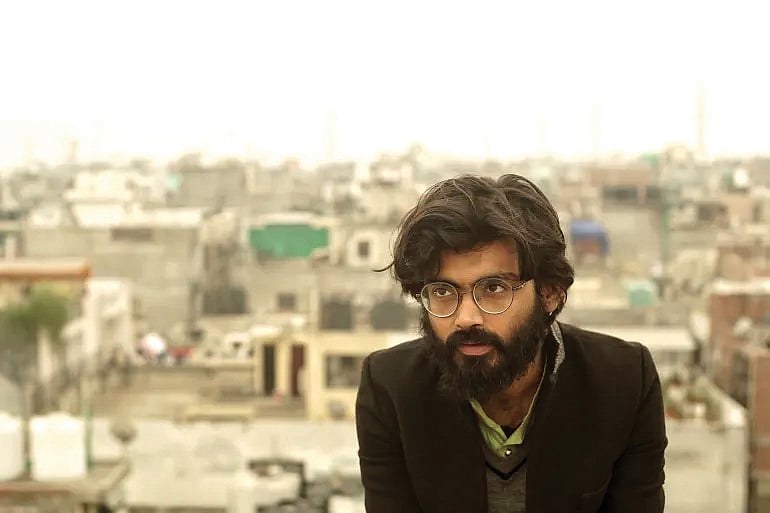
I have known Umar for some years now, and he has been good enough to come to some of the meetings held by Amnesty International India. It is hard to think of anyone who has been more demonised than he has, both by the government and its machinery and the media, which in ‘New India’ is also part of the machinery.
When Umar completed 1,000 days in jail, without trial, Amnesty India tweeted: ‘He was arrested under India’s draconian anti-terror law simply for peacefully expressing his opinions. He must be immediately and unconditionally released.’
This so offended some people that a complaint was filed against Twitter, asking that the tweet be taken down. It wasn’t, but the episode shows the acidity that exists against someone whom people know little about, and what little they know comprises force-fed falsehoods.
His friends and colleagues and those of us who know him have tried to speak of the real man, the person who is missing from the wild and fraudulent narratives on him.
Writing in The Wire (7 August 2023), professor Nandini Sundar wrote: ‘When a Muslim like Umar Khalid crosses boundaries, there is a further panic attack. A young articulate Muslim man who does not wear a skull cap, who is an atheist, who did his Ph.D. from JNU in history on Adivasis in Singbhum is seen as an anomaly in the segregated world the RSS wants to create.
'The attempt is then to reduce him to just one aspect of his identity — so that whatever else he does or says or writes in the end he must be seen merely as a Muslim, and by extension, violent, anti-national, and a threat to the “Indian mainstream”.
'So dangerous that he has been in jail for three years without bail. It is not surprising that so many of the young people who were arrested for the anti-CAA protests were Muslim students at India’s leading universities.’
Arrested in September 2019 by Delhi Police for making ‘provocative statements’ when Donald Trump was on his visit to India, Umar has now spent [over five] years in jail without being convicted of an offence. He is incarcerated because the government of Narendra Modi continues to oppose his bail. Over time, the BJP has fallen in love with laws that allow it to jail opponents, dissenters (especially Muslims).
In 1954, the party said it would repeal the first amendment to the Constitution that curbed freedom of speech by imposing ‘reasonable restrictions’. This amendment essentially took away freedom of expression because the list of what is seen as a ‘reasonable restriction’ was far too wide and broad.
The Jana Sangh sensed that it was not something that could be allowed to go unchallenged. However, after 1954, the demand that the first amendment be repealed and freedom of speech, association and assembly be restored to Indians disappeared from the Jana Sangh manifestos.
Interestingly, the Jana Sangh said it would also repeal preventive detention laws which (it asserted) were absolutely in contradiction to individual liberty. This promise was made repeatedly in the 1950s.
However, by 1967, it began to qualify the demand and said that ‘care will be taken to ensure that fifth columnists and disruptionist elements are not allowed to exploit fundamental rights’. Eventually, the Sangh and the BJP became the most enthusiastic champions of preventive detention. When the party was in opposition for decades, it opposed these same laws.
In 1954, as the Jana Sangh, it demanded that the first amendment be repealed and freedom of speech, association and assembly be restored to Indians. The party said it would also repeal preventive detention laws (like UAPA) which were absolutely in contradiction to individual liberty. However, by 1967, it changed its position to where it is today: an opponent of liberty, particularly liberty to the sort of man Umar Khalid is.
Views are personal. More of Aakar Patel’s writing may be read here
Join our official telegram channel (@nationalherald) and stay updated with the latest headlines