


What CJP’s protest at Jantar Mantar demanded and what it did not
At the end of a dramatic day in New Delhi, time to dwell on what the protest at Jantar Mantar demanded and what it might get
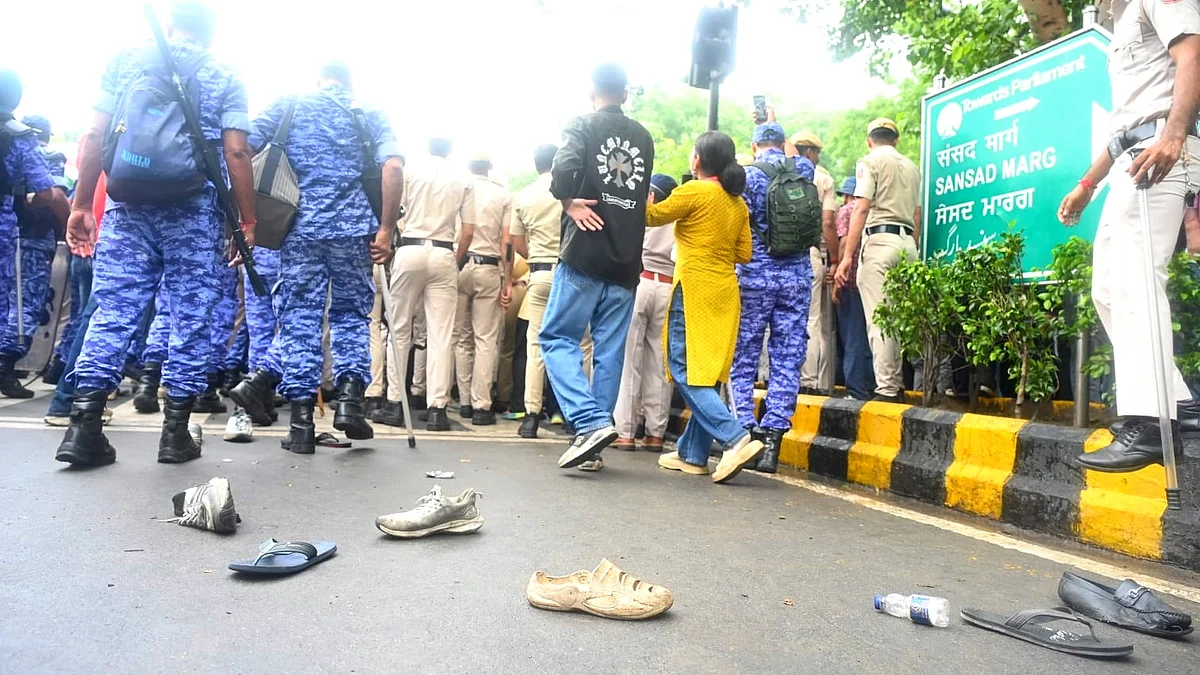


An overwhelming show of strength by Delhi Police marked Monday, 20 July when protestors had declared they would march to Parliament from Jantar Mantar. Members of Parliament were briefly detained, protesters were caned, teargas shells were lobbed near Press Club of India, Railway Bhavan and Shastri Bhavan, and the tents put up at Jantar Mantar were uprooted and protesters dispersed. The issue was raised in Parliament by the Opposition, and both Houses were adjourned for the day without transacting any business.
The only forward movement, from the point of view of the protestors, was the brief audience they received at the residence of Union health minister J.P. Nadda. The two spokespersons from the Cockroach Janata Party, Ashutosh Ranka and Saurav Das, were escorted by the police to the minister’s residence around noon. The minister met them briefly, received a three-point charter of demands and apparently promised that he would consult with senior colleagues in government.
Briefing the media, Ranka said, “We came to Nadda’s residence at around 12 o’clock. We met him at around 2.15 pm. We submitted a charter of demands. First, Sonam Wangchuk ji should be released immediately and allowed to address people through a video message. Second, Dharmendra Pradhan ji, who we consider an incompetent education minister, should either be removed immediately or his resignation accepted. Third, families of the students who died by suicide following the NEET paper leak should be given compensation of Rs 1 crore each.”
The CJP’s demands appear tame and almost reasonable in comparison to demands raised by other recent protests in the country. The Jan Lokpal agitation demanded a specific anti-corruption law. Shaheen Bagh and the anti-CAA-NRC protests demanded the repeal of the Citizenship Amendment Act. The farmers’ protest demanded the repeal of three farm laws. The political movement in Ladakh, which Wangchuk himself has previously fasted for, centred on Sixth Schedule protections and statehood. The CJP protest caused no disruption until 20 July and the CJP played well within the rules set by the government at a ‘designated’ protest site.
Active support from the CPI(ML) and left-affiliated student organisations like AISA, SFI and AISF provided ballast. Three AISA student activists including Neha Bora, Ameen and Manish joined the fast with Wangchuk and activists from these organisations recited poems, sang protest songs, painted posters and slogans and mobilised students. None of them carried any party flag in deference to the CJP’s decision to keep the protest ‘non-political’. “Hum is platform ko political platform nahi bana sakte hain (we can’t make this a political platform)," CJP founder Abhijeet Dipke had announced. Political parties were plainly not welcome.
Surprisingly, the protest did not even demand the dismantling of the controversial National Testing Authority (NTA) which conducts NEET and other examinations. The NTA remains an unaccountable registered society rather than a statutory body. The government which has brought in the VBSA Bill to scrap the UGC, AICTE, and NCTE has turned a deaf ear to complaints against NTA and its dismal record of leaks year after year.
The 'exam manifesto' unveiled by the CJP at its Pune rally had asked for compensation, physical evaluation of answer sheets, transparent testing, and an audit of government contracts with private exam vendors. The 40-point 'Jantar Mantar declaration' released by the Krantikari Yuva Sangathan actually demanded the disbanding of the NTA, a Supreme Court-monitored probe into its mismanagement, and its reformation as a body with representation from state education boards. Two doctors’ bodies — FAIMA and United Doctors’ Front — have approached the Supreme Court with similar demands.
CJP’s protest drew both the young and old from various parts of the country. There were students in their early teens, unemployed graduates facing an uncertain future, parents worried about their children's job prospects, and grandparents accompanying their grandchildren to give them a taste of the country’s protest culture. There were also activists, public intellectuals and a smattering of celebrities who arrived in solidarity.
It will perhaps be easy for the government to concede the CJP’s demands and defuse the situation. Pradhan, who held a meeting with home minister Amit Shah during the day, could be shifted to some other ministry and Wangchuk could be released from hospital and the compensation paid. It is how the CJP decides to carry on the agitation for more systemic and structural changes in India’s education system that will determine the place of this protest movement.
Join our official telegram channel (@nationalherald) and stay updated with the latest headlines