


What if the monsoon fails the farmer again
While monsoon patterns change, Indian farming is still stuck in yesterday’s assumptions, writes Jaideep Hardikar
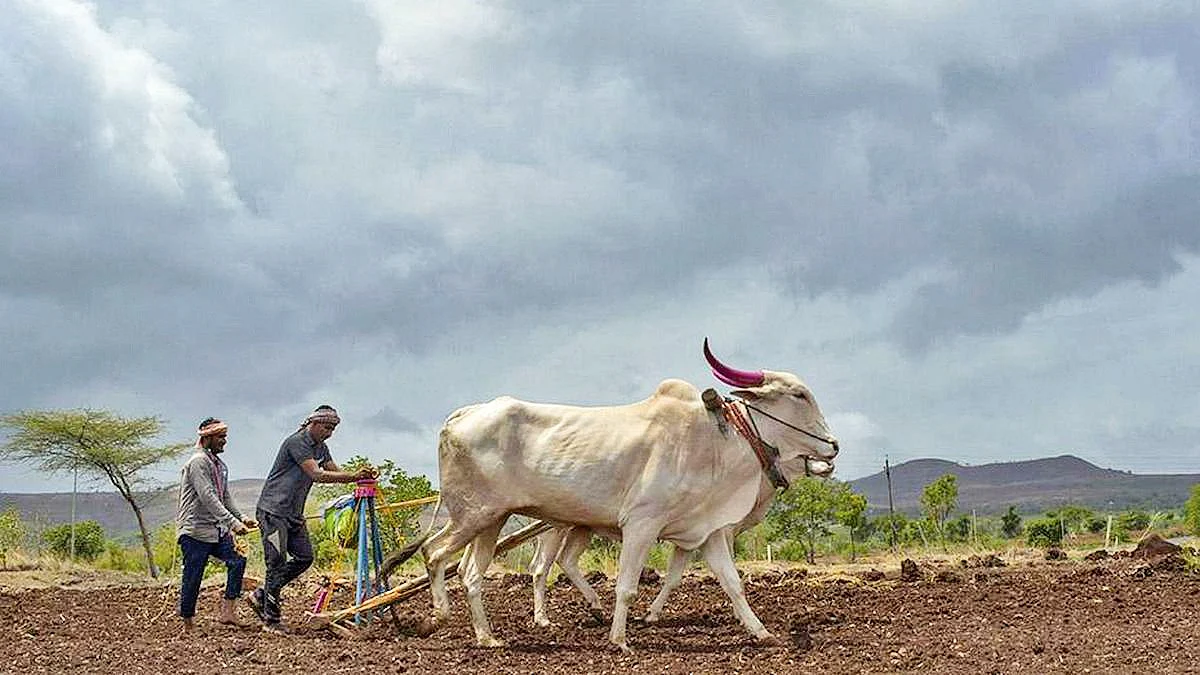


For Nitin Khadse, a five-acre farmer and social activist in the cotton district of Yavatmal, the first month of this monsoon is already a puzzle.
“For the last few years, we’ve noticed that rainfall is not uniform in a circle of 10-12 villages, but this year, I see that pattern on one farm—while one patch of my farm got rain, the other patch did not,” Khadse, 45, told National Herald over the phone from his Jalka village. “Many farmers have completed their sowing even when the rains are inadequate,” he said. “My worry is that we may have to go for a resowing because our first sowing will probably fail.”
Every year, June marks the beginning of rural India’s most consequential gamble. Farmers till their fields, buy seeds, mostly on credit, buy fertilisers, and then wait for the first spells of dependable rain. In dryland areas across the country, agriculture has always been a wager on the monsoon, because that’s the only source of irrigation. This year, as June comes to an end, the wager itself is uncertain — delayed or suspended, in the language of farmers.
Vast swathes of the country are yet to get adequate rainfall. In several regions, the rains have not yet arrived. By end-June, India had received roughly 42 per cent below-normal rainfall since the onset of the southwest monsoon, making this one of the driest Junes in a century. That’s the countrywide average.
The deficit, as per IMD (Indian Meteorological Department) data, has been particularly severe in central India where rainfall has been nearly 60 per cent below normal in many regions. For farmers in Maharashtra, Madhya Pradesh and adjoining states, this marks the difference between sowing on time and waiting anxiously for another week.
The monsoons have an overbearing effect on the Indian economy.
Also Read: Monsoon on pause, agriculture in peril
On the brighter side, the IMD forecasts better and well-distributed rains in most parts of the country in the first week of July. With growing inflation, dwindling incomes and other pressures, a bad rain year will have devastating consequences for small farmers, already grappling with rising fuel and fertiliser prices as a fallout of the war in West Asia.
By all accounts, there is a high possibility of drought-like conditions in 2026-27.
The southwest monsoon reached Kerala a few days behind schedule. What followed was far more significant than a delayed onset. The monsoon stalled over western and central India for over two weeks, with heat waves and humidity continuing well past the summer season in the farm calendar. Instead of advancing steadily across the country, it lost momentum, leaving vast stretches of cropland dry when farmers would normally complete sowing operations after the first spell of rain.
****
Meteorologists point to a convergence of several atmospheric factors. El Niño conditions have now developed over the equatorial Pacific and are expected to gain strength through the season. An IMD press release on 25 June (IMD releases its weekly forecast every Thursday) says ‘the atmosphere has responded to the warming sea surface temperatures, and the coupled ocean-atmosphere system now exhibits characteristics consistent with El Niño conditions’.
In previous years, India sometimes escaped the worst effects of El Niño because a positive Indian Ocean Dipole, a.k.a. the Indian Niño — an irregular climate pattern defined by the difference in sea-surface temperatures between the western and eastern parts of the tropical Indian Ocean — supplied additional moisture. This year, that compensating influence is absent.
At the same time, the ‘Somali Jet’ — the low-level wind current that transports moisture from the Arabian Sea — has remained weaker than usual. Coupled with some atmospheric processes, these factors have yielded repeated ‘break’ conditions, interrupting the monsoon’s advance.
The lived experiences of farmers are vastly different from how scientists understand these processes. They see parched fields where soybean or cotton or maize or cereals should have germinated by now. If they have exhausted their savings or a part of their crop loans over the inputs already used, they start worrying if another loan will be needed should the rains fail for another week.
The impact is showing. By 25 June, kharif sowing was 23 per cent lower than at the same time last year. Soybean, cotton, even maize sowings have yet to gain speed. Soybean sowing is lagging by almost 65 per cent, cotton by 35 per cent, a Reuters report said. In many regions, rice transplantation has stalled; delayed transplantation leads to a drop in yields.
Every week of delay shrinks the growing season, reduces potential yields, increases vulnerability to pests and diseases, and often pushes the farmer deeper into debt and desperation.
As Khadse, the farmer in Yavatmal, said: “Farmers are worried. They’ll be desperate if the rains continue to elude.”
The Modi government has reportedly drawn up contingency plans for 315 vulnerable districts that could be severely affected by a weak monsoon this year. That includes more than a hundred dryland districts identified as ‘highly vulnerable’ because they have little assured irrigation. Agriculture departments have advised farmers to shift, where feasible, to short-duration crop varieties, pulses and millets if the rains continue to disappoint. Problem is, the switch is predicated on the availability of alternative seeds and other inputs for those crops.
The government is understood to have set up an El Niño monitoring cell along with a Crop Weather Watch group to assess the evolving situation, but how it will transmit information to farmers in different states is not known.
****
The delayed and weak monsoon reveals a larger pattern. That contingency planning — often inadequate — is gradually becoming a permanent feature of Indian agriculture.
Indian monsoons are changing perceptibly in the era of climate change, as this writer has chronicled over the past 20 years. The number of rain-days is reducing, while the number of extreme rainfall events is increasing, turning many regions into climate hotspots, and throwing into disarray the farm household-level planning of agriculture.
Many climate scientists say that the old relationship between El Niño and drought is becoming less predictable. Rising sea temperatures and changing atmospheric circulation mean that the aggregate seasonal rainfall conceals growing variability. A district may eventually receive ‘normal’ aggregate rainfall over four monsoon months, yet suffer from agriculture drought because most of the rain fell in a few intense events separated by long dry spells.
Farmers understand this variability better because that’s their lived reality. They judge a good or bad monsoon not by seasonal averages but by distribution. Did the first rains arrive on time for sowing? Did the soil retain enough moisture to aid crop growth? Was there a long dry spell immediately afterwards? Did an extreme rainfall event wash away seedlings? These questions and their answers determine how good or bad the harvest was.
India’s policy response is inadequate because available long-term trends indicate the need for a new strategy.
For instance, our agriculture institutions — which came up in the Green Revolution period (the mid-1960s till the late seventies) — continue to function as though the climate of the 20th century still endures. Crop calendars assume that June will reliably mark the beginning of sowing. Procurement systems continue to favour water-intensive cereals and cash crops.
The rural credit cycle and irrigation planning are all centred around assumptions of reliably predictable monsoons, whereas the monsoons are becoming erratic — ironically when India’s early monsoon forecast and prediction science is getting better.
The monsoon may yet recover. Reservoirs may still fill to the brim, sowing might accelerate and this year’s fears may recede. But should we rely on the possibility of recovery? Shouldn’t we prepare for uncertainty?
Jaideep Hardikar is a senior Nagpur-based journalist and author of Ramrao: The Story of India’s Farm Crisis. More by him here
Join our official telegram channel (@nationalherald) and stay updated with the latest headlines