


When other faiths are in the crosshairs
A.J. Philip reflects on the new tendency to police faith and to use the FCRA as an instrument of coercion


Shri Ram Janmabhoomi Teertha Kshetra occupies a unique place in India’s public life. Constituted by the Union government on 5 February 2020, following the Supreme Court verdict on the Ayodhya dispute, it was entrusted with constructing and managing the Ram temple, arguably the most politically significant religious project in independent India.
On 18 October 2023, the trust was granted permission under the Foreign Contribution (Regulation) Act to receive overseas donations through the designated State Bank of India branch on Parliament Street in New Delhi.
Every organisation registered under the FCRA — whether based in Kanyakumari in Tamil Nadu or Tawang in Arunachal Pradesh — must receive foreign contributions through this single branch. The arrangement leaves practically no room for secrecy. Every remittance is electronically recorded and is instantly accessible to the authorities.
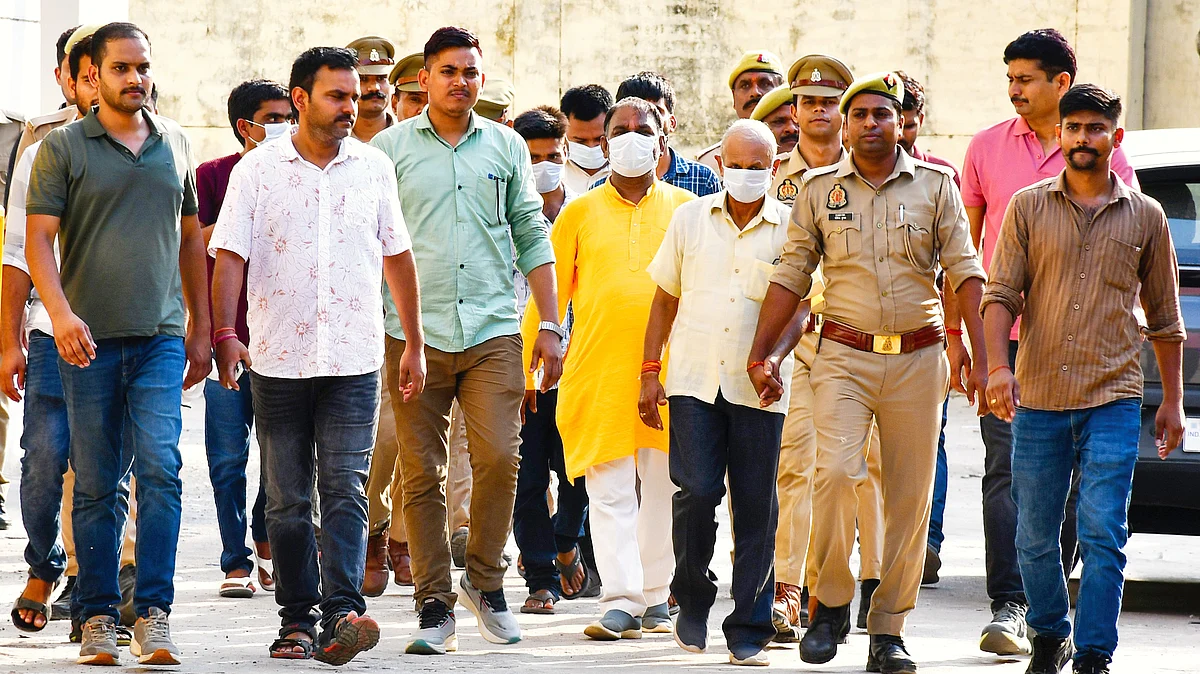
The trust now finds itself facing an uncomfortable situation. A Special Investigation Team has been given additional time to investigate the alleged theft of donations, including gold and silver offerings made by devotees. Two members of the trust — general-secretary Champat Rai and trustee Anil Mishra — have resigned, while eight employees have been arrested.
There are also reports that Rai had initially set out to file a police complaint but turned back after receiving a telephone call, and that for days the effort was to project that all was well. Investigative agencies such as the CBI and the Enforcement Directorate are now reportedly being considered to probe suspected violations of the FCRA.
If that happens, the implications will extend well beyond Ayodhya.
****
During the last Budget session of Parliament, the government introduced amendments to the FCRA that would empower designated authorities to attach and confiscate the properties of organisations found violating the Act. Significantly, the proposal does not prescribe any minimum threshold for the alleged violation.
Also Read: Curbing the church, hitting the people
More troubling is the process. A designated authority, who may be as junior as a district magistrate, could order confiscation and auction of a property, with the proceeds going to the consolidated fund of the Government of India. There is no requirement for prior judicial adjudication.
No one seriously believes that the Ram temple will ever be auctioned. Nor should anyone wish for such an outcome. The temple stands on the faith and contributions of millions of devotees, who had reportedly donated more than Rs 3,500 crore even before the trust received FCRA clearance.
Yet laws are drafted for all institutions, not merely for those against whom they are presently intended. A power conferred today upon the executive may be exercised tomorrow under very different political circumstances. For instance, FCRA was first enacted during the Emergency in 1976.
Recognising perhaps the political sensitivity of the issue, this time the government did not press the proposed amendments in Parliament after widespread criticism from Opposition parties.
Instead, it has achieved many of the same objectives through subordinate legislation. Fresh rules issued under earlier amendments have now come into force without parliamentary debate.
These rules considerably widen the net of liability. Earlier, responsibility for compliance rested primarily with the chief executive or principal office-bearer of an organisation. Now, chairpersons and every member of the governing board can also be held personally accountable. Serving on the board of a charitable institution has thus become a legally hazardous responsibility.
The consequences are already being felt.
The Church’s Auxiliary for Social Action (CASA), one of India’s oldest and most respected humanitarian organisations, maintained relief warehouses across the country for decades. Whether the emergency was a flood in Bihar, an earthquake in Gujarat or a cyclone on the eastern coast, its volunteers could move essential supplies within hours.
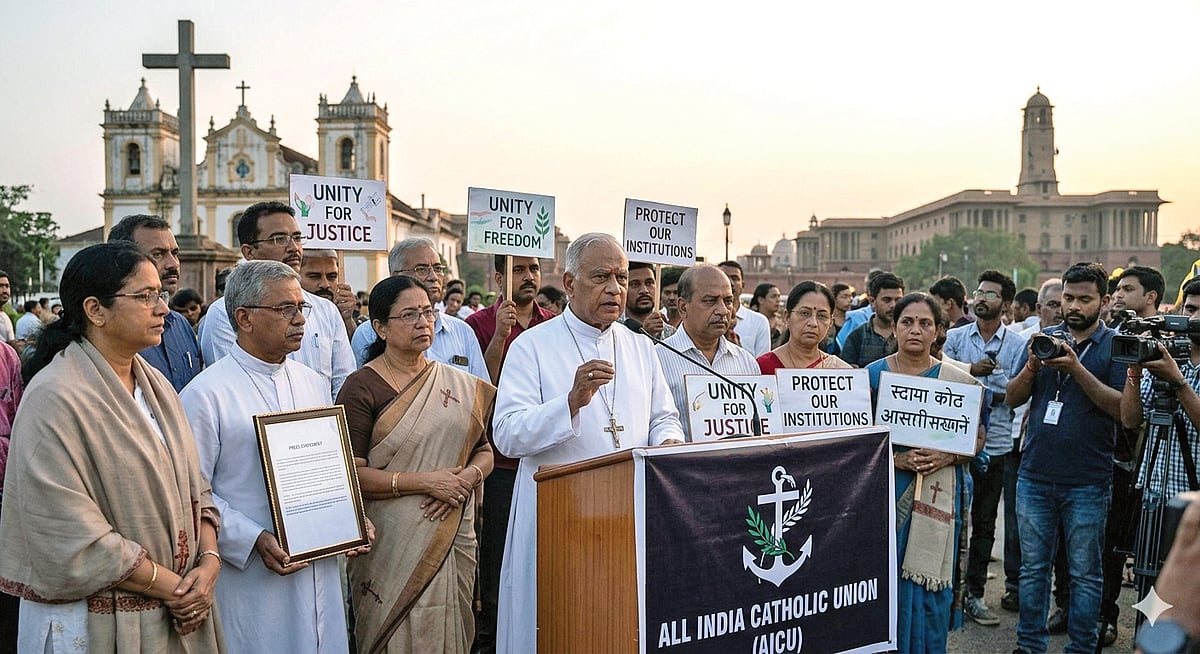
Today, even emergency humanitarian work risks delay due to procedural requirements. To undertake relief work in a state, the organisation may first have to complete regulatory formalities if prior approval has not been obtained. Imagine the consequences of such a dispensation in a natural disaster.
The cumulative impact of successive FCRA amendments has been severe. Thousands employed by voluntary organisations, not necessarily Christian or Muslim, have lost their jobs, while many institutions that supplemented the government’s welfare efforts now struggle to survive.
The purview of rules extends beyond financial accountability to the personal lives of those associated with such organisations. Even books or articles written by board members may have to be disclosed to the authorities. Financial regulation is one thing, monitoring intellectual activity quite another.
A familiar political narrative continues to suggest that Christian organisations receive vast sums from abroad for religious conversion. Yet the architecture of the FCRA itself contradicts that claim. Every foreign contribution passes through one designated bank branch, where the authorities can monitor receipts in real time. If illegal funding exists, it can be identified almost instantly.
Moreover, the allegation that Indians can be induced to change their faith merely through foreign money diminishes the dignity of Indian citizens.
The record of Christian voluntary organisations also deserves acknowledgement. For generations, they have established schools, hospitals, leprosariums, orphanages and community development programmes, often in regions where the State itself had little presence.
William Carey regarded education as central to social reform. St. Stephen pioneered modern healthcare in Delhi. Countless mission schools educated first-generation learners who might otherwise never have entered a classroom.
This writer has spent nearly 25 years with a Christian voluntary organisation, either as its head or chief functionary. Lakhs of disadvantaged students completed their education through schools and learning centres supported by this organisation. Many were the first in their families to become literate. None embraced Christianity because of the education they received.
Equally instructive is the case of the Missionaries of Charity founded by Saint Teresa of Kolkata, popularly known as Mother Teresa. In 2018, Sister Concilia and two associates in Jharkhand were arrested amid allegations of child trafficking. The arrests generated sensational headlines and prime time television debates. The congregation’s childcare work suffered irreparable damage.
Last month, after years of legal proceedings, the elderly nun was acquitted, barely registered in the national media.
Across several states, attacks on Christian prayer meetings and educational institutions have become common. Small groups of self-appointed vigilantes disrupt worship, intimidate congregations and level allegations of conversion with little apparent fear of legal consequences. Victims often complain that police attention is directed more towards them than towards the perpetrators.
The recent cancellation of the licence of St. Paul School in Patela in Rajasthan’s Dungarpur district, forcing students to seek admission elsewhere, adds to that sense of insecurity. Ironically, this comes at a time when several states have shut thousands of government schools, leaving poor children with fewer educational opportunities.
For Christians, worship is both personal and communal. Prayer in homes has always been an accepted expression of faith. Yet in some parts of India, even a small prayer gathering risks attracting allegations of unlawful conversion.
No democracy can flourish if ordinary acts of worship become objects of suspicion.
The State unquestionably has the authority to regulate foreign funding. Transparency is essential, and every institution — religious or secular — must comply. But laws must be even-handed, proportionate and accompanied with procedural safeguards that protect citizens against arbitrary executive action.
Our Constitution promises freedom of religion, association and expression. Those freedoms cannot survive simply because they are printed in the text. They survive only when citizens can educate, heal, serve and worship without constantly looking over their shoulders.
Join our official telegram channel (@nationalherald) and stay updated with the latest headlines