


Will a digital Census count everyone fairly?
Particularly given that the digital census push has unfolded amid recent government failures in other digital initiatives
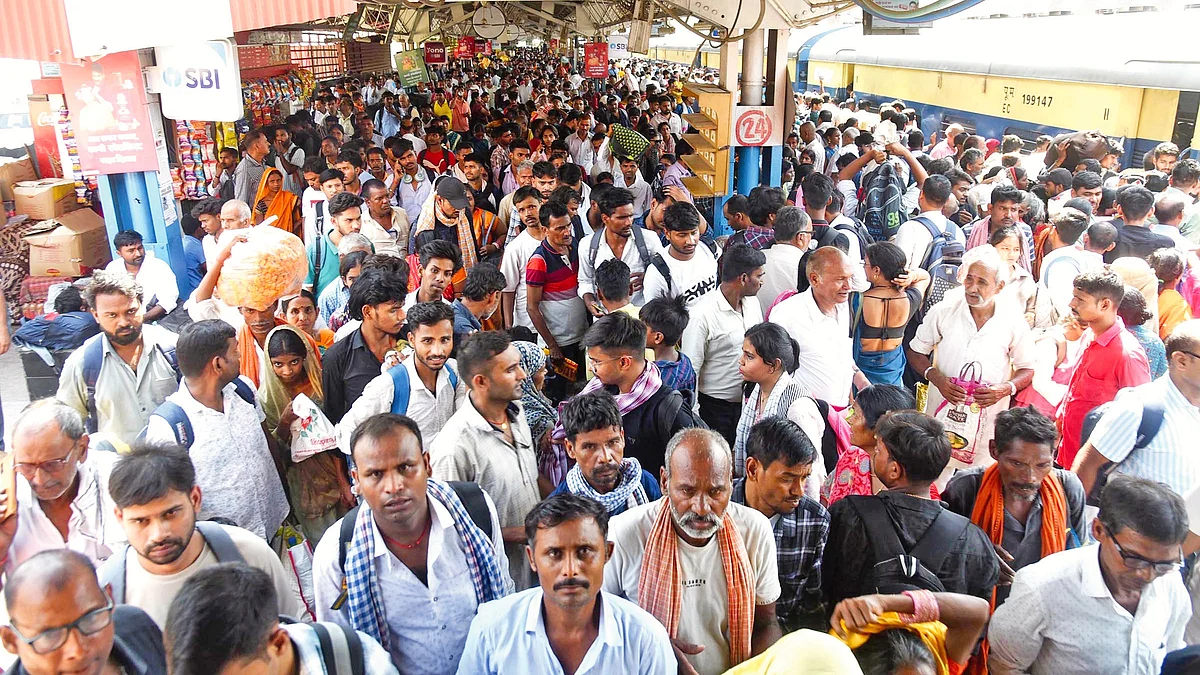


Census 2027 has got underway six years late and is shadowed by an unusual level of public unease. It is India’s first digital census, which the government frames as a leap of modernisation but it still involves nearly 33 lakh government schoolteachers and frontline workers fanning out across the nation in punishing summer heat, smartphones in hand, to complete a 33-question schedule, household by household. And this is still only Part 1 of the exercise.
The promises of a digital census are familiar: real-time data uploads, provisional results available in days, and final figures released in months rather than years. Built-in validation checks and geo-tagging are intended to reduce transcription errors and undercounting, while digital dashboards supposedly offer administrators better oversight of field staff. But we must still ask: can this digital census fairly count all Indians, given the horror stories we continue to hear about data-driven exclusion?
Lessons from the SIR
The push for a digital census has unfolded amid recent failures in other digital initiatives of the government. Most notable is the Special Intensive Revision (SIR) of electoral rolls, which in the first two phases has led to the deletion of more than 5.2 crore names across twelve states and Union territories.
Not only does the Census share the same exhausted pool of school teachers and the same fragile digital infrastructure as the SIR, it is being conducted amid suspicion that this counting exercise too will put citizens through eligibility tests, leading to exclusion.
The mistrust is not unfounded. In West Bengal, the SIR’s automated data-matching protocol introduced an all-new category of suspicion — named ‘logical discrepancy’ by the Election Commission of India, which red-flagged 91.46 lakh voters. The system was designed to cross-reference newer records with a digitised 2002 database to trace lineage, but because many historical records were in Bengali, automated translation frequently misread regional spellings and phonetics. Also, families were red-flagged over issues like a parent-child age gap of less than fifteen years, triggering mass automated alerts.
Also Read: Prove again that you belong
Even though the Calcutta High Court as well as the Supreme Court questioned the reliance on centra- lised algorithms over localised verification, and held that an algorithm cannot override document-backed reality, that an algorithmic flag should be viewed as an administrative prompt rather than a final verdict, the Supreme Court has validated the SIR exercise even before pending appeals against deletions could be heard and adjudicated.
Its tech-dependence makes Census 2027 similarly fraught, prone to errors at scale in ways that the older paper method was not. A manual census might fail at the margins with a smudged entry or a missed household, but a digital census might fail silently and at scale. An algorithmic flaw or error or a compromised server can distort or erase millions of records before the error is even noticed.
The fragility of centralised servers
The security of the data being collected is another big concern. India has a history of breaches in centralised government servers, which casts a long shadow over the 2027 plan. The CoWIN portal leak of June 2023, where a Telegram bot allowed unauthorised access to sensitive records including Aadhaar and phone numbers, revealed how easily data could be siphoned from a centralised database.
This was not an isolated incident. The Aadhaar ecosystem has seen repeated leaks since 2018; the 2022 AIIMS Delhi cyberattack crippled hospital servers for weeks. Even centralised exam systems like NEET and CUET have faced failures.
These episodes share a common vulnerability: centralised repositories of sensitive information act as single points of failure, often enabled by weak encryption, insider collusion or inadequate oversight. For a digital census covering over a billion citizens, a breach would be catastrophic, undermining the legitimacy of the count and public trust in governance.
The risk of exclusion
Perhaps the biggest risk of a digital census is the potential for statistical erasure. Analysts estimate that as many as 57.9 crore ‘offline citizens’ are at risk. The system relies on the Census Management and Monitoring System (CMMS), which assumes uniform connectivity for real-time syncing — an assumption that does not hold true across much of India.
In states like Bihar and Jharkhand, frequent power outages and network blackouts might disrupt syncing. If the app crashes or connectivity fails on an enumerator’s phone, marginalised groups — like nomadic tribes, undocumented labourers and lower-caste rural households — are the most likely to be missed.
Even beyond concerns of connecttvity, the design of the digital tools has a problematic rigidity. The self-enumeration portal and the enumerator app offer little to no room for correction. For instance, once a ‘head of household’ is designated, the choice is fixed. Similarly, language choices cannot be changed once selected.
Where household structures are fluid and many census questions require explanation and nuanced judgment, digital inflexibility carries real consequences. A wrong drop-down entry or a badly designed workflow can distort the entire dataset for a region.
The question of data integrity
There are allegations that enumerators are being pressured to alter findings to present a more flattering view of welfare schemes. Instances have been reported where households using firewood/cow-dung cakes were logged as LPG users, or untreated tap water marked as treated to align with government claims.
The stakes of an accurate count extend far beyond statistics. Census numbers feed directly into delimitation — the reallocation of Lok Sabha seats and the redrawing of constituency boundaries. It also determines which seats are reserved for Scheduled Castes, Scheduled Tribes and women. This has already stirred deep anxiety, particularly in southern states, regarding how a fresh redistribution of parliamentary seats will impact representation.
Compounding these anxieties is the new legal framework. While the Census Act of 1948 mandated strict confidentiality, the Digital Personal Data Protection (DPDP) Act of 2023 creates concerning overlaps. Section 17 of the DPDP Act grants broad exemptions to ‘state instrumentalities’, allowing the government to bypass standard consent requirements for ‘state functions’.
Furthermore, Section 39 channels all data breach and violation complaints to the Data Protection Board of India, barring individuals from approaching civil courts directly and barring courts from issuing injunctions against actions taken under the Act, thereby insulating the DPB from judicial intervention.
The case for a prudent fallback
Given these multifaceted risks, a conventional, paper-based enumeration — for all its perceived slowness — would have been the more prudent choice. Paper preserves what digital systems strip away: human judgment, local correction and an audit trail independent of servers. This is not an argument against technology per se, but against pressing ahead with technocratic solutions that rest on dodgy infrastructure or lack public trust.
For Census 2027 to be a credible database that informs and shapes enlightened government policy, several safeguards are necessary and non-negotiable:
1. Mandatory offline fallback protocols to ensure every citizen is counted regardless of connectivity
2. Independent audits of the CMMS and its exclusion algorithms
3. Whistleblower protections for enumerators to prevent the manipulation of data
4. A statutory confidentiality firewall, insulated from exemptions granted the state and its agencies under the DPDP Act
5. Restoration of civil court jurisdiction
India cannot afford to trade the reliability of the Census for the convenience of a digital dashboard. Even if this is about saving time and ‘efficiency’ — not to forget after a most egregious delay of six years — we mustn’t make a casualty of the country’s most vital dataset.
Dilip Ghosh is a retired IAS officer
Join our official telegram channel (@nationalherald) and stay updated with the latest headlines