


Anti-women, anti-caste census & anti-federal: Gogoi on women’s quota
Don’t link women’s quota to delimitation, Assam Congress MP argues while taking part in the debate
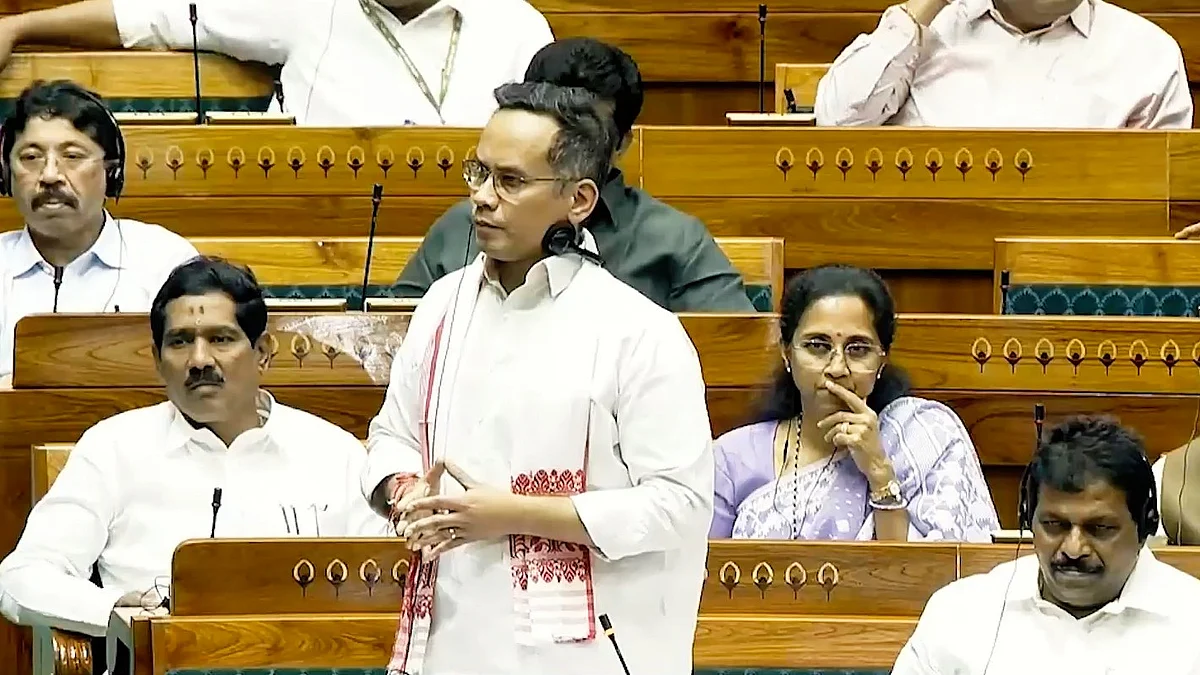


Assam Congress MP and the party's Lok Sabha deputy leader Gaurav Gogoi launched a scathing attack on the Modi government while opening the debate on three key Bills in the Lok Sabha on Thursday, describing them as “anti-women, anti-caste census, anti-Constitution and anti-federal structure”.
Framing the issue as one of intent versus design, Gogoi argued that the government’s commitment to women’s reservation would be tested not by rhetoric but by immediacy.
“If you are serious, implement it now on the existing strength of the House,” he said, opposing the decision to link the quota to a future delimitation exercise.
Gogoi alleged that this opens the door to gerrymandering, drawing parallels with past exercises in Jammu and Kashmir and Assam, which he claimed had already altered political balances. Extending a similar template nationwide under the banner of women’s empowerment, he said, was “shameful”.
Accusing the BJP of “politics of symbolism”, Gogoi contended that the legislative package prioritises structural changes over immediate representation.
Arguing, delimitation — not reservation — is the operative objective, being advanced “through the backdoor” he also flagged the absence of a caste census as a parallel concern, suggesting that the redesign of constituencies without updated social data could further skew representation.
Also Read: It’s not really about reservation for women…
Reiterating the Congress party’s support for women’s reservation, Gogoi said the reform must be simple, time-bound and delinked from delimitation. “It should be implemented on the current strength of 543 seats in the Lok Sabha,” he asserted.
Recalling the passage of the women’s reservation law in 2023, Gogoi said similar assurances had been made earlier by Prime Minister Narendra Modi and home minister Amit Shah, but without tangible follow-through.
The debate unfolded as the government introduced the Constitution (131st Amendment) Bill to modify the existing women’s quota framework, alongside the Delimitation Bill and the Union Territories Laws (Amendment) Bill, which seek to operationalise the revised provisions in regions including Delhi, Puducherry and Jammu and Kashmir.
After a heated 40-minute discussion, the Opposition pushed for a division of votes. The Constitution Amendment Bill was introduced with 251 members in favour and 185 against, reflecting a sharply polarised House.
Defending the proposals, Union minister Arjun Ram Meghwal said the new framework seeks to balance expansion with inclusion. He maintained that increasing the Lok Sabha’s strength to 815 seats would allow 33 per cent reservation — 272 seats — for women without reducing existing representation for men or states. Sub-quotas for women from Scheduled Castes and Scheduled Tribes, he added, would remain intact.
The broader political fault line, however, remains unresolved: whether women’s reservation should be fast-tracked within the current parliamentary structure, as the Opposition demands, or embedded within a larger redrawing of India’s electoral map — a process that carries both administrative complexity and significant political consequences.
Join our official telegram channel (@nationalherald) and stay updated with the latest headlines