


As LPG crisis deepens, Opposition attacks govt over black marketing
Govt insists there's no significant decline in supply. On ground, panic booking is on the rise and delivery delays routine
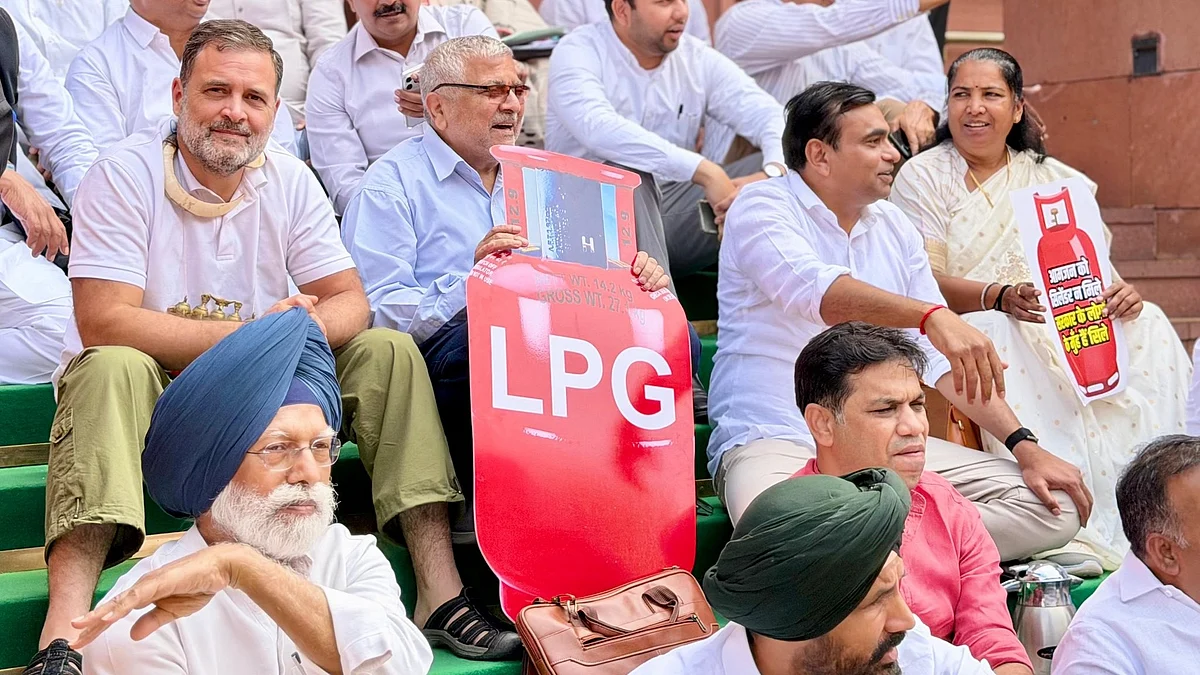


As the US-Israel–Iran conflict enters its fourth week, a deepening energy crisis is beginning to hit households across India, with shortages of cooking gas and rising complaints of black marketing triggering political confrontation and public distress.
Supply disruptions ranging from petrol to LPG cylinders have decreased. Even as the government maintains that there is no significant decline in supply. On the ground, however, panic booking is on the rise and delivery delays have become routine, particularly in urban and industrial clusters.
In Sahibabad, part of the Delhi-NCR region, several consumers told National Herald that despite booking LPG cylinders days in advance, deliveries have not been made. Some alleged their consumer numbers showed deliveries that never reached them.
“I have been coming here for the last seven days,” said Ramesh, a daily wage worker who went to lodge a complaint at Yadu gas agency. “My booking is confirmed, but the cylinder hasn’t been delivered.”
“The cylinders are going to the black market,” alleged a dhaba owner in Vaishali, who claimed he paid Rs 35,000 for seven cylinders nearly Rs 5,000 per cylinder, far above the earlier rate of around Rs 1,800.
The impact has been particularly severe on daily wage earners and industrial workers, who depend on timely access to cooking fuel. With supply constrained, many are being pushed toward black market.
Industry insiders point to structural loopholes as well. A gas vendor, speaking on condition of anonymity, said that many urban consumers who have shifted to piped natural gas (PNG) have not surrendered their LPG connections, allowing dealers to divert supply and profit from shortages.
Meanwhile, the government has moved to expand PNG networks and reduce dependence on LPG as the crisis deepens. A new policy has been rolled out on Wednesday which aims to halt LPG supply to households in areas where PNG infrastructure is available but not adopted.
Simultaneously, the government has claimed it is stepping up action against black marketing. Joint secretary Sujata Sharma said that around 12,000 raids have been conducted in recent days, resulting in the seizure of nearly 15,000 LPG cylinders.
The move comes amid global supply disruptions linked to the West Asia conflict. At the same time, rumours of extended waiting periods for LPG refills circulating widely on social media and messaging platforms have added to public anxiety.
These claims suggested revised gaps of up to 45 days between bookings for certain categories of consumers. The Ministry of Petroleum and Natural Gas has however categorically denied these reports, stating that no changes have been made to existing refill booking timelines and called the claims “false and misleading.”
However, the Opposition has intensified its attack, accusing the government of focusing on perception management rather than addressing the crisis.
“The government is worried about headlines, not solutions,” said Pawan Khera. “What is the country's priority today? That one doesn't have to stand in line for a gas cylinder; doesn't have to buy it in the black market but the government has nothing to do with all this. The government's priority is clear - to divert the country's attention from headline management,” he said.
Opposition MPs staged protests in Parliament on Tuesday, raising concerns over mounting fuel distress and alleged black marketing. As the crisis deepens, a pressing question is echoing among consumers: why did the government fail to anticipate the shortages and curb black marketing in time, and why were preventive measures not put in place earlier?
Join our official telegram channel (@nationalherald) and stay updated with the latest headlines