


Bengal mosque loudspeaker drive sparks political row, legal challenge
Govt says noise rules apply to all places of worship; Opposition and minority groups allege selective enforcement, lack of due process
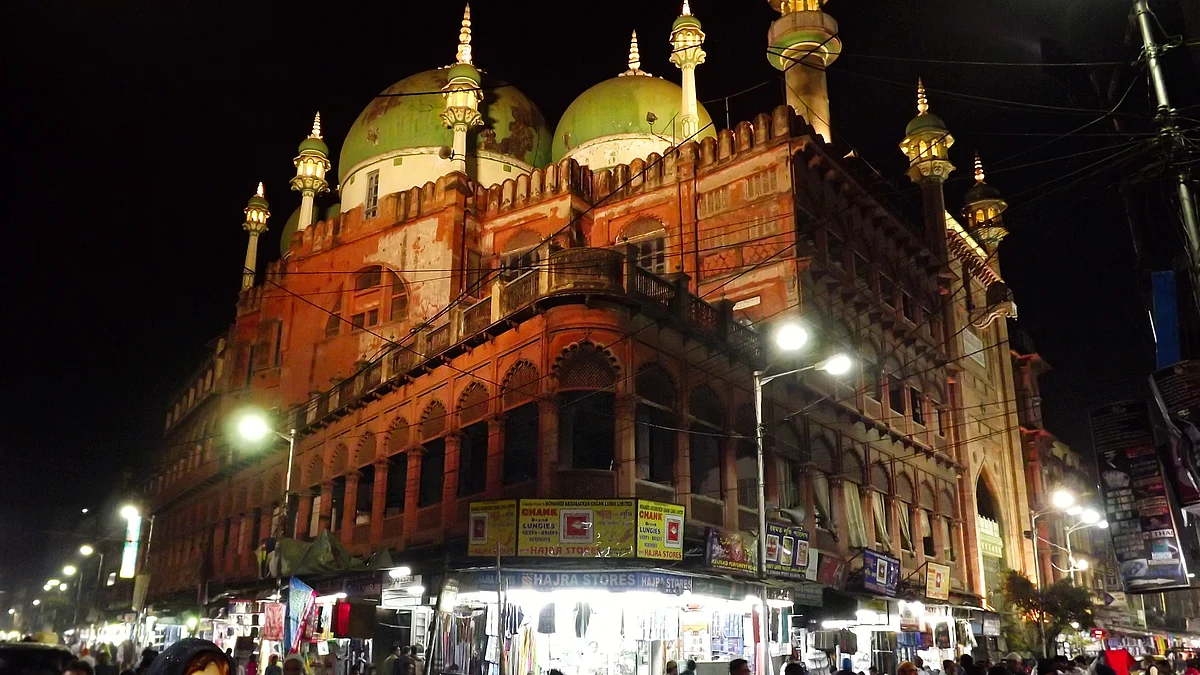


The West Bengal government's drive to enforce noise pollution norms at places of worship has triggered a political and legal controversy, with the Opposition and several minority organisations accusing the police of selectively targeting mosques and removing loudspeakers without written orders.
The government has rejected the allegations, saying the exercise is not directed against any particular community but aimed at ensuring that all religious institutions comply with the State Pollution Control Board's existing noise regulations.
The issue gathered momentum after the government, at its first cabinet meeting, directed officials to strictly enforce the PCB guidelines, which limit noise levels in residential areas to 55 decibels during the day and 45 decibels at night. Following the directive, police in several districts held meetings with mosque committees and asked them to replace high-powered loudspeakers with lower-capacity sound systems.
Defending the move, urban development minister Agnimitra Paul and industries minister Tapas Roy said the law would be applied equally to everyone. Chief minister Suvendu Adhikari also underlined that all forms of worship should remain within places of worship and warned that strict action would be taken if roads were blocked or public inconvenience was caused.
However, the government's explanation has drawn criticism from several Muslim organisations.
Nizamuddin Biswas, general-secretary of the All Bengal Imam and Muezzin Association, said while most mosque committees were cooperating with the administration, it was inappropriate to ask them to remove loudspeakers without first measuring whether the sound exceeded the prescribed limits.
Siddiqullah Chowdhury, state president of Jamiat Ulema-e-Hind, and NCPI leader and former TMC MP Abu Taher Khan also questioned the administration's approach. They argued that while the law requires authorities to regulate noise pollution, it does not authorise the blanket removal of loudspeakers from mosques.
The strongest objections have come from ISF MLA Naushad Siddique, who has written to West Bengal director-general of police S.N. Gupta seeking clarification over the alleged police action.
In his letter, Siddique claimed that mosque authorities in several districts were either being forced to remove loudspeakers or receiving only verbal instructions from the police. He argued that if complaints regarding noise pollution existed, the police should first conduct an inquiry, issue formal notices and give the affected parties an opportunity to respond before taking any action.
He also alleged that action based solely on verbal instructions violated fundamental rights guaranteed under Articles 14, 19, 21 and 25 to 28 of the Constitution. The ISF MLA has demanded that the DGP disclose whether any official order has been issued and if so, provide copies to him and affected mosque committees. He has also sought a clear standard operating procedure (SOP) governing police action and disciplinary proceedings against officers found to have acted arbitrarily.
According to Siddique, the absence of written guidelines has created "fear, anxiety and confusion" among members of the public. "We fully support pollution control. There are laws and guidelines for that. But we strongly object to the way the police are forcibly removing equipment and threatening people instead of following due process," he said.
"I suspect there is a deliberate attempt to create chaos, which will later be presented as development," he added, and announced that he would move Calcutta High Court against the police action.
In a social media post, Siddique wrote, 'The coercive measures adopted by the police regarding the removal of loudspeakers from mosques are not lawful. People from various parts of the state have expressed their anxiety and alarm over this issue.'
Confirming legal action, Siddique said, "The case we intend to file in the high court regarding this matter will proceed under the supervision of Bikash Ranjan Bhattacharya. I earnestly request the general public not to fall prey to any provocations or conspiracies."
Also Read: Being a Muslim in new Bengal
The latest dispute has also revived debate over earlier court rulings on the use of loudspeakers at places of worship. The administration has relied on judgments of the Calcutta High Court and Supreme Court, including decisions delivered in 1996, which held that the use of loudspeakers is not a fundamental right and that authorities may act if prescribed noise limits are exceeded.
However, Siddiqullah Chowdhury argued that the courts never directed the removal of microphones from mosques. "The courts asked people to comply with prescribed noise limits. They never ordered microphones to be removed altogether," he said, alleging that the administration was misinterpreting the judicial directions. He added that the Jamiat Ulema-e-Hind would also challenge the issue legally.
Backing the government's broader objective of restricting loudspeaker use, BJP state president Samik Bhattacharya said, "Offer prayers in mosques and chant mantras in temples. What is the need to use loudspeakers? Practise your religion at home; there is no objection to that."
The controversy has also taken a political turn after three former Trinamool Congress MPs now associated with the NCPI — Abu Taher Khan, Khalilur Rahman and Yusuf Pathan — met Union home minister Amit Shah. According to reports, they also raised concerns over the state's campaign to remove loudspeakers from mosques.
Questions have also been raised about the conduct of the police. Ajmil Ahmed, a member of the Minorities Welfare Society who attended a meeting with officers from Thakurpukur police station, alleged, "The police are saying they have orders from above but are neither naming the authority nor showing any written order."
He added, "We have told them that our community members will not be instigated by this move. Rather, we will videograph the actions of the police if they try to remove the loudspeakers illegally and submit the footage before the court."
Join our official telegram channel (@nationalherald) and stay updated with the latest headlines