


BJP–RSS centralising power, gutting grassroots democracy: Rahul Gandhi
At Kochi Mahapanchayat, LoP bats for decentralisation, MGNREGA and Kerala’s political culture
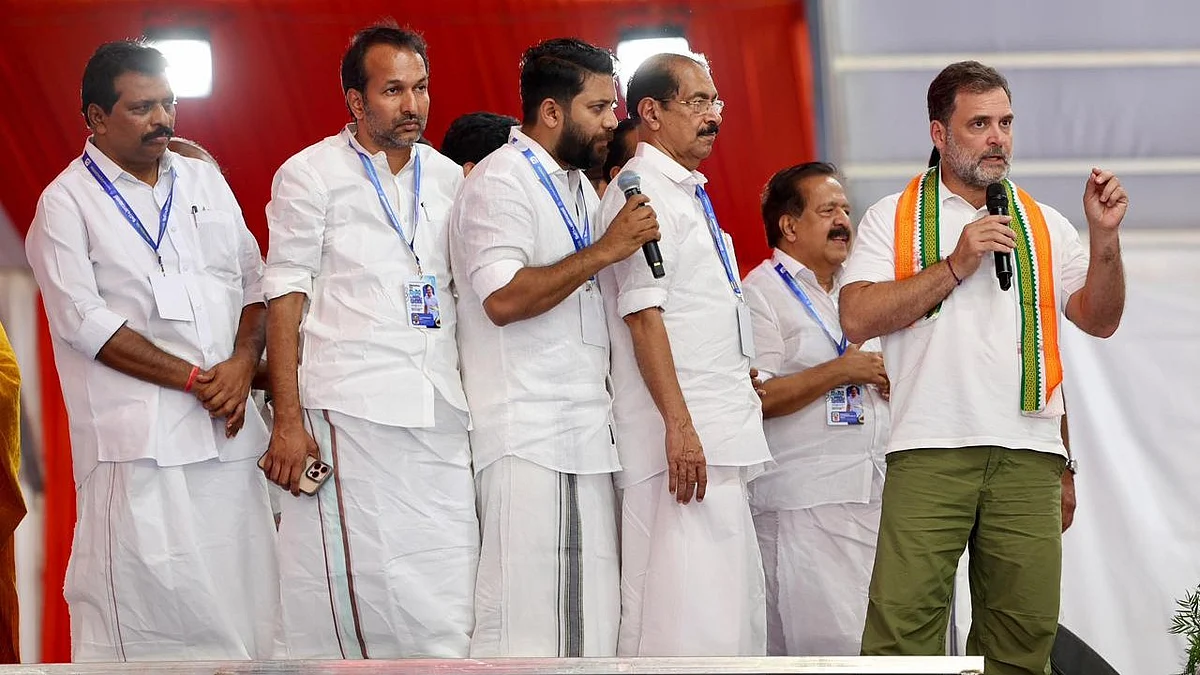


Congress MP and Lok Sabha Leader of Opposition Rahul Gandhi on Monday accused the RSS and BJP of trying to centralise authority, contending that his own party stands for devolving power and reinforcing grassroots democracy.
Addressing a Mahapanchayat of recently elected Congress local body representatives in Kochi, he recalled that the Congress had enacted the 73rd and 74th Constitutional amendments precisely to bolster the three-tier panchayati raj framework.
The Lok Sabha LoP also claimed the NDA government was “attacking” MGNREGA because it is implemented through local self-governing bodies, and argued that defending the Constitution also meant safeguarding decentralised decision-making at the village and ward levels.
Democracy, he said, rests on the principle that votes reflect the people’s voice and that this voice must be heard, not stifled. Drawing a sharp contrast, Gandhi said the BJP and RSS advocate centralisation while the Congress advocates decentralisation: “They want compliance from people for India, not the voice of the people of India.”
Recalling a conversation with acclaimed Malayalam author M. Leelavathy at a recent award ceremony, Gandhi said the 98-year-old spoke of a “culture of silence”. Accusing the BJP and RSS of fostering such an atmosphere, he alleged their ideological project seeks to impose quietude across society.
“They want India to be silent. They do not want India to express itself. They want to deliver the wealth of this country to a few business houses,” he said, adding that silencing citizens is a necessary precursor to concentrating national resources in the hands of a select few.
He stressed, however, that the people of Kerala could not be muted and would register their views at the ballot box. Gandhi also congratulated Congress workers and the Congress-led United Democratic Front (UDF) on what he called a robust showing in the state’s local body polls, particularly at the panchayat level, which he described as the third tier of Indian democracy. He said the Congress and UDF had posted “a superb performance” across levels of local self-governance and expressed satisfaction with the panchayat results.
Gandhi acknowledged that there had been disagreements among senior leaders during strategy sessions in Delhi, but maintained he had been confident the Congress would prevail in both the local body and Assembly elections. The larger challenge for the Congress-UDF alliance, he said, was how to govern after victory: “There is a huge unemployment problem in the state, and the UDF and Congress have to provide answers to it,” he said, expressing faith in the leadership’s ability to understand people’s concerns and respond effectively. For any administration to succeed, he added, it must remain close to ordinary citizens, “merge with them”, and stay humble and grounded.
Describing the present moment as an ideological and political struggle, Gandhi said it had been an honour to represent Kerala in the Lok Sabha. He said he had learnt from the state’s history, traditions, language and political sophistication, and above all from its capacity to hold together despite immense diversity.
He spoke of the pain of seeing thousands of young Keralites seek opportunities abroad due to a lack of jobs at home, even as he felt pride when encountering nurses and other professionals from the state working around the world. “We need to free people so that what they do abroad can also be done here,” he said.
Touching on his sister Priyanka Gandhi’s decision to contest from Wayanad, he said he had told her it was an emotional choice but noted she had since discovered new things from Kerala’s society and political culture. Praising the state’s natural beauty, cultural pluralism, religious harmony and vigorous democratic life, he said Kerala enjoys a “superb political culture” in which grassroots leaders rise through genuine contestation.
“I don’t think there is any panchayat president anywhere else like in Kerala,” he said, adding that the trust reposed in such leaders by the public is invaluable and must be protected.
Gandhi urged citizens to recognise the need to defend the Constitution, insisting that Kerala would resist any attempt to normalise silence. “You will not allow the culture of silence,” he said. Responding later to questions from selected attendees, he said MGNREGA had been designed by the previous UPA government to guarantee minimum wages to the country’s poorest.
“It transformed the lives of millions of people, and that programme is now being destroyed. The Central government does not want to pay a minimum wage to the labourers of India. That is why they are attacking MGNREGA,” he said.
According to Gandhi, the scheme is also targeted because it functions at the third tier of governance. “They do not want to give financial power and decision-making authority to the third tier of governance. They want to run the government from bureaucratic offices and from Delhi,” he alleged.
He argued that MGNREGA was created both to protect the vulnerable and to strengthen local self-government by empowering grassroots bodies. “This is why they are attacking MGNREGA. The prime minister himself ridiculed the scheme in the Lok Sabha. But when Covid happened, MGNREGA saved our people,” Gandhi said.
With PTI inputs
Join our official telegram channel (@nationalherald) and stay updated with the latest headlines