


Bengal civic polls: BJP’s plan to install party members triggers row
Suvendu's deadline for civic polls and promise to appoint government supporters as coordinators draw Opposition fire
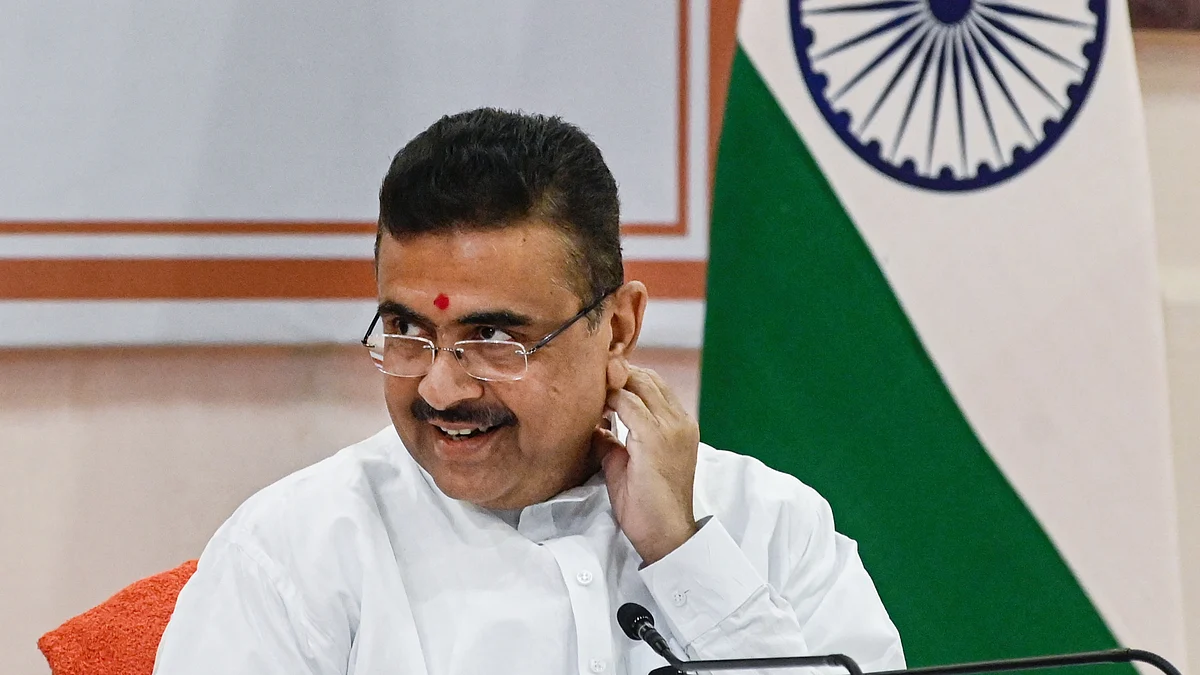


BJP proposes party-backed coordinators for Kolkata and Howrah wards if civic polls remain stalled.
Opposition questions the political neutrality of appointments based on government loyalty.
High court intervention follows a legal challenge to the government's disputed ward delimitation exercise.
The BJP’s proposal to appoint party-backed coordinators to municipal wards in Kolkata and Howrah has triggered a political controversy, with Opposition parties accusing the state government of attempting to control civic bodies without holding democratic elections.
Chief minister Suvendu Adhikari has made it clear that if municipal elections are not held by the 30 November deadline, coordinators will be appointed from 1 December. However, his assertion that only those who support the government will be considered for these positions has raised serious questions about political neutrality and accountability in local governance.
The Opposition has strongly criticised the proposal, accusing the BJP of seeking political loyalists rather than people capable of delivering civic services.
Mamata-AITC leader Baishwanar Chattopadhyay said the BJP was more interested in installing political loyalists than ensuring efficient civic administration. "For the BJP, the actual work is of little consequence; they are simply looking for 'yes-men'. Even if someone is qualified, they will not be allowed to become a coordinator if they speak against the government. Instead, the BJP will install its own strongmen," he said.
Another Mamata-AITC leader Krishanu Moitra accused the BJP of using administrative arrangements to consolidate its political control. "Soon after forcibly coming to power in Bengal, the BJP started so much intimidation that many councillors had to resign from their posts. Then they put an administrator in the KMC (Kolkata Municipal Corporation). And now they want to put a BJP administrator in each ward," he said.
CPI(M) leader Chayan Bhattacharya also opposed the proposal. Referring to the administrative arrangements introduced in 2020, he said ward councillors had been made administrators irrespective of their political affiliations.
"BJP wants to make its own party members administrators. We strongly object to this," he said, warning that civic services had already suffered under the present KMC administration. "It is easily understandable what will happen if they put their administrators in each ward," he added.
CPI(M) leader Sujan Chakraborty accused the BJP of attempting to run municipalities through handpicked individuals rather than seeking a democratic mandate.
Congress leader Ashutosh Chattopadhyay, meanwhile, alleged that the government was seeking to take control of civic bodies following an 'unscientific' delimitation exercise.
However, Adhikari's attempt to blame the Opposition for the delay in civic elections leaves out a crucial part of the story: the Calcutta High Court's intervention followed a legal challenge to the government's own ward delimitation exercise.
Speaking at a Chhath Puja event in Kazipara, Howrah, Adhikari alleged that residents had been deprived of proper civic services for nearly 12 years because municipal elections had not been held. He blamed the Opposition for approaching the high court over the ward delimitation process and obstructing the electoral exercise.
"Those who know they will lose are trying to stop the elections," he said. He also argued that government officials could not run a municipal corporation indefinitely because their administrative powers were limited.
However, the legal challenge was not an attempt to stop civic elections as such. It questioned the legality of the delimitation exercise through which the number of KMC wards was proposed to be increased from 144 to 209. The petition raised questions about the manner in which the wards were redrawn and the legal authority under which the exercise was undertaken.
On 6 November, a division bench of Calcutta High Court restrained the West Bengal State Election Commission from issuing an election notification on the basis of the revised ward structure until the pending legal challenge was decided. The court's intervention was therefore a consequence of the challenge to the delimitation process, not a blanket prohibition on holding municipal elections.
The chief minister has warned that he will approach the Supreme Court against the high court's order. However, if the legal deadlock persists, his government intends to proceed with appointing coordinators. "I will appoint only those as coordinators who support the government and do not oppose it," he declared. State BJP president Samik Bhattacharya endorsed the idea, saying, "If conditions for holding elections are not met, we must consider alternatives. We certainly cannot appoint someone from a Left party office, nor can we appoint individuals from the Trinamool Congress who are known to be corrupt. Our own party leaders will serve as coordinators."
At the heart of the controversy is a fundamental democratic question: can municipal corporations be effectively run by individuals selected on the basis of political loyalty rather than through an electoral mandate?
Join our official telegram channel (@nationalherald) and stay updated with the latest headlines