


Cong flags need for wider consultations on nuclear, education and MGNREGA Bills
Congress says three ‘far-reaching’ legislations must be sent to standing committees for detailed study
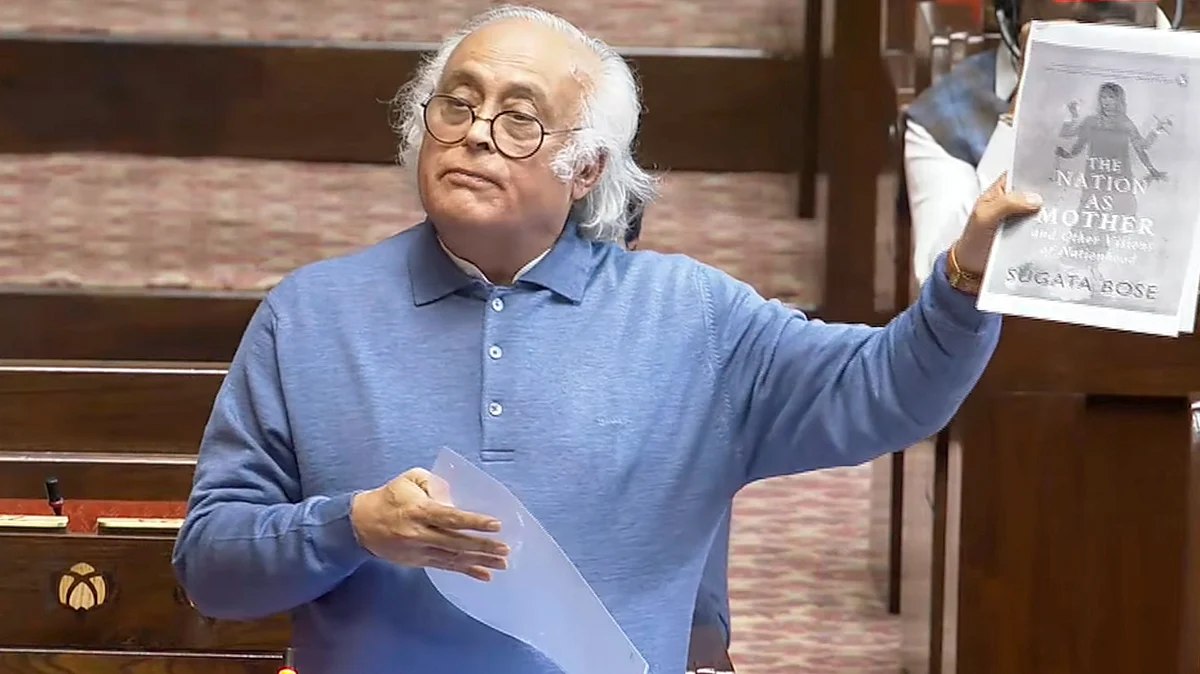


The Congress on Monday said the Opposition wants three far-reaching Bills — the Higher Education Commission Bill, the Atomic Energy Bill and the Viksit Bharat Guarantee for Rozgar and Ajeevika Mission (Gramin) or VB–G RAM G Bill — to be referred to parliamentary standing committees for detailed scrutiny and wider consultations.
In a post on X, Congress general secretary in-charge communications Jairam Ramesh said the Bills have significant implications and should not be rushed through Parliament. “The entire Opposition is demanding that the following three far-reaching Bills be referred to the Standing Committees concerned. We are hopeful that in keeping with the best of Parliamentary traditions and practices, this demand will be agreed to by the Government,” he said.
The demand came on a day when the government introduced legislation to open up the tightly controlled civil nuclear sector to private participation. The proposed law seeks to repeal the Atomic Energy Act, 1962 and the Civil Liability for Nuclear Damage Act, 2010, and put in place a revised liability framework, a move that the Opposition says requires careful examination given its implications for safety, liability and public accountability.
Alongside this, the government also introduced the Viksit Bharat Shiksha Adhishthan Bill, which seeks to overhaul the higher education regulatory framework by facilitating universities and other institutions to become independent and self-governing under a new accreditation and autonomy regime.
The third proposed law — the VB–G RAM G Bill, 2025 — has drawn particularly sharp criticism across Opposition parties. Listed in the Lok Sabha’s supplementary business, the Bill seeks to replace the Mahatma Gandhi National Rural Employment Guarantee Act (MGNREGA), a flagship rights-based welfare legislation enacted in 2005.
While the government has highlighted the proposed increase in guaranteed work days from 100 to 125, Opposition leaders argue that the changes fundamentally alter the nature of the scheme.
CPI(M) Rajya Sabha MP John Brittas, in a detailed critique, said the removal of Mahatma Gandhi’s name from the scheme was “only the trailer”, with the “real damage” lying in the restructuring of the employment guarantee itself. According to him, the Bill replaces a rights-based, demand-driven law with a conditional, centrally controlled scheme that shifts financial burdens to States and weakens workers’ entitlements.
Brittas pointed out that under MGNREGA, unskilled wages were fully funded by the Centre, whereas the new Bill introduces a 60:40 Centre-State funding ratio, forcing States to collectively bear an additional burden estimated at over Rs 50,000 crore. Kerala alone, he said, could face an extra annual liability of Rs 2,000–2,500 crore.
He also flagged what he described as a dilution of the legal guarantee of employment. Under MGNREGA, the Centre was obligated to provide work on demand; under the proposed framework, allocations would be capped through pre-fixed norms and ceilings. “When funds run out, rights run out,” Brittas said, warning that a statutory guarantee was being reduced to a centrally managed scheme dependent on budgetary discretion.
Another major concern raised by the CPI(M) MP relates to governance and decentralisation. While MGNREGA empowered Gram Sabhas and panchayats to plan works based on local needs, the new Bill mandates the use of centralised digital systems, GIS tools and national infrastructure stacks. Brittas argued that this shift risks excluding workers due to technological failures and sidelines local self-government institutions.
The Bill also proposes suspension of work for up to 60 days during agricultural seasons, a provision the Left leader described as “state-managed labour control”, alleging it would push workers into private agricultural labour markets at the cost of income security and dignity.
Taken together, Opposition parties argue, the three Bills mark a broader trend towards centralisation — whether in education governance, nuclear energy regulation or rural employment — and therefore require parliamentary scrutiny beyond floor debates.
“The Bills require deep study and wide consultations,” Ramesh reiterated, stressing that sending them to standing committees would allow expert inputs, stakeholder engagement and a more informed legislative process.
So far, the government has not publicly responded to the Opposition’s demand for referring the Bills to committees.
Join our official telegram channel (@nationalherald) and stay updated with the latest headlines