


EU orders probe into Epstein links; India deploys police over posters
Youth Congress leaders taken into 'preventive custody' ahead of PM Modi's Ajmer visit
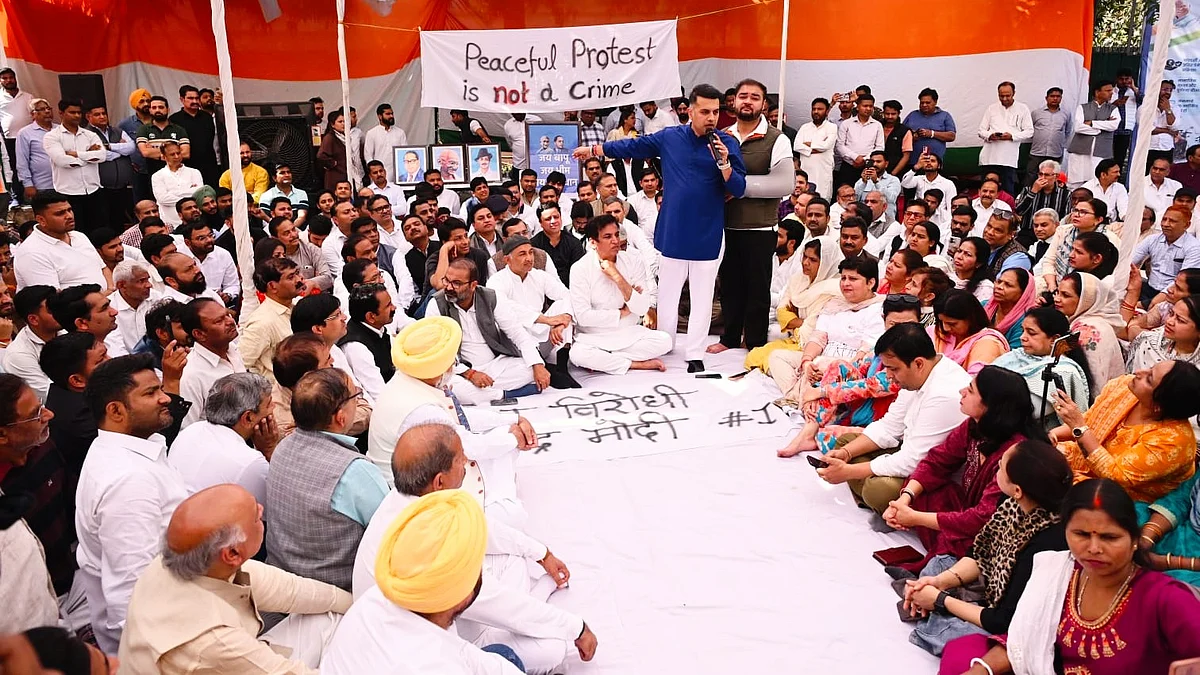


As European authorities move to scrutinise a prominent public figure over links to Jeffrey Epstein, Ajmer in Rajasthan has emerged as the latest site of a very different response — where raising similar questions has prompted detentions, heightened surveillance and a full security clampdown ahead of Prime Minister Narendra Modi’s visit on Saturday, 28 February.
On Friday, Youth Congress workers across Ajmer put up banners reading 'Modi Go Back', 'Answer on Epstein Files' and demanding employment opportunities for India’s youth. Within hours, district Youth Congress president Mohit Malhotra and another activist were detained by police as a “precautionary measure”.
The district administration moved swiftly to tighten security across the city. Additional forces were deployed, monitoring was intensified and arrangements were put in place to ensure “law and order” ahead of the prime minister’s public programme at Kayad near the Ajmer-Jaipur highway.
Malhotra framed the protest as a symbolic intervention meant to spotlight unemployment and force accountability. “The central government has failed to provide employment opportunities for young people. We held a protest to raise this concern,” he said.
Ajmer’s poster campaign follows the shirtless protest by Youth Congress activists at the AI Impact Summit in Delhi — a dramatic act which saw activists holding up T-shirts flagging a 'compromised PM' — which drew immediate police action. Since then, the issue has moved from a disruptive visual protest to more traditional forms of political messaging — and now, to detentions at the district level.
In between, the issue has even led to an unpleasant standoff between the police forces of Delhi and Himachal Pradesh, when the former attempted to leave Himachal with Youth Congress leaders in their custody.
In Ajmer, the state’s response has been unmistakable: visible policing rather than visible inquiry. Meanwhile, in Brussels, institutions are responding to Epstein-linked associations with investigation rather than enforcement.
The European Commission has asked its anti-fraud watchdog OLAF to examine former EU trade commissioner and ex-UK ambassador to the United States Peter Mandelson over his ties to Epstein.
“Given the circumstances, and the significant amount of documents made available publicly, the European Commission also asked OLAF on 18 February to look into the matter,” a Commission spokesperson said.
OLAF — the European Anti-Fraud Office — has a track record of probing lawmakers and public officials over ethical breaches and misconduct. Mandelson is now under scrutiny for alleged wrongdoing in public office connected to his relationship with Epstein.
Documents analysed by the Associated Press suggest Mandelson maintained contact with Epstein and Ghislaine Maxwell before, during and after his tenure as EU Trade Commissioner between 2004 and 2008.
The development carries political weight in the UK as well, given that Prime Minister Keir Starmer appointed Mandelson to a diplomatic role despite prior warnings regarding his association with Epstein.
Under EU governance rules, even suspected ethical violations can trigger formal scrutiny. In Ajmer, by contrast, even asking the question has triggered pre-emptive policing.
The divergence is telling. In Europe, troubling associations have activated oversight mechanisms. In Rajasthan, troubling slogans have activated security deployments.
One system responds to allegations by investigating proximity to power. The other responds to allegations by detaining those who articulate them — from shirtless protestors in Delhi to poster campaigns in Ajmer.
With agency inputs
Join our official telegram channel (@nationalherald) and stay updated with the latest headlines