


Fast and furious: the yo-yoing political career of Akash Anand
How will the public humiliation of Mayawati's nephew and his father-in-law help the BSP in the 2027 election?
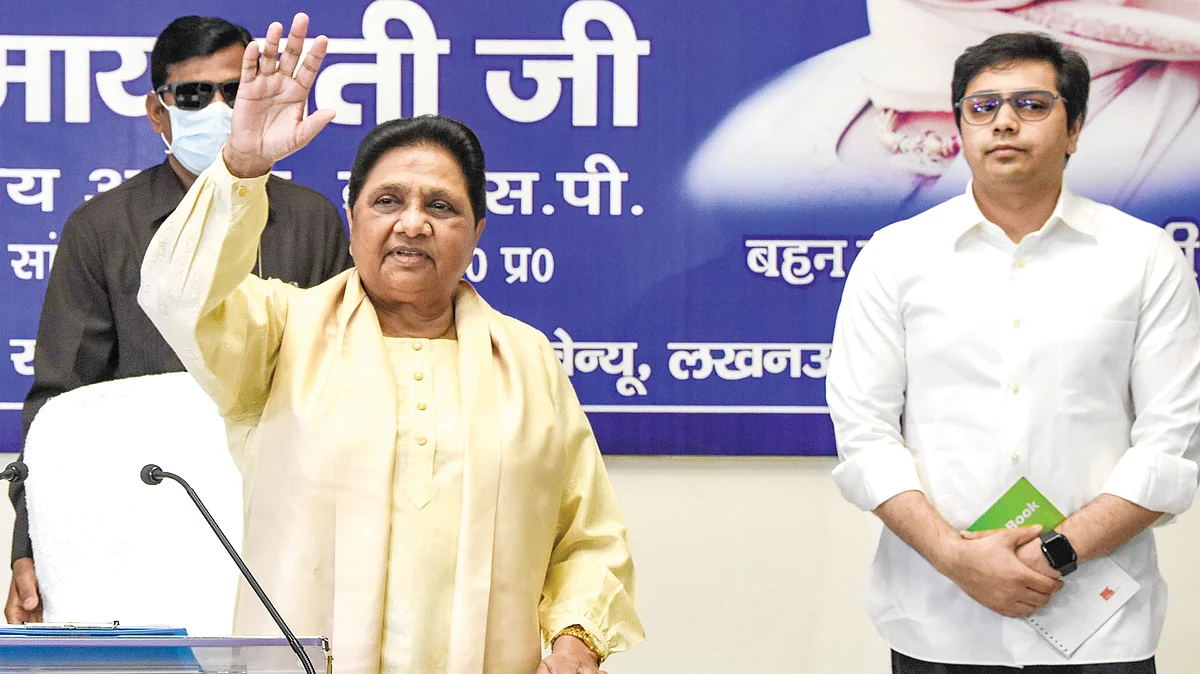


On 10 September, Bahujan Samaj Party (BSP) chief Mayawati cut her nephew Akash Anand ‘completely loose’. She announced the decision on X, arguing in a long and petulant post that Akash’s failure to repost a recent tweet of hers was conclusive proof of his disloyalty. The news was greeted with bemusement as people wondered if Mayawati was serious. She was.
The post in question had called for Anand’s father-in-law Ashok Siddharth to resign from the party, which he did, declaring on X that her word was his command. He also denied the allegation that his son-in-law had acted under his influence.
Mayawati is known to be imperious and rude, but how will the public humiliation of her nephew and his father-in-law help the BSP in the 2027 election? Her erratic behaviour and growing insecurity is making her own constituency, the Dalits, lose confidence in her.
The humiliation of Akash Anand began earlier this month when he was removed as the party’s national coordinator. The young man was just not mature enough, declared Mayawati on social media. Akash’s bio on X mutated from ‘chief national coordinator’ to ‘party worker’ to ‘party supporter BSP’. Since 15 August, he does not appear to have posted anything at all on X.
Ishan Anand, Akash’s younger brother, was appointed as a ‘sector-in-charge’ of the party. (The BSP has three sectors: the one covering Uttar Pradesh and Uttarakhand is looked after directly by Mayawati.) Both Akash and Ishan schooled in Noida before going to the UK for further studies. Akash, by all accounts, is a sharp public speaker. His rallies drew crowds and his social media presence was growing.
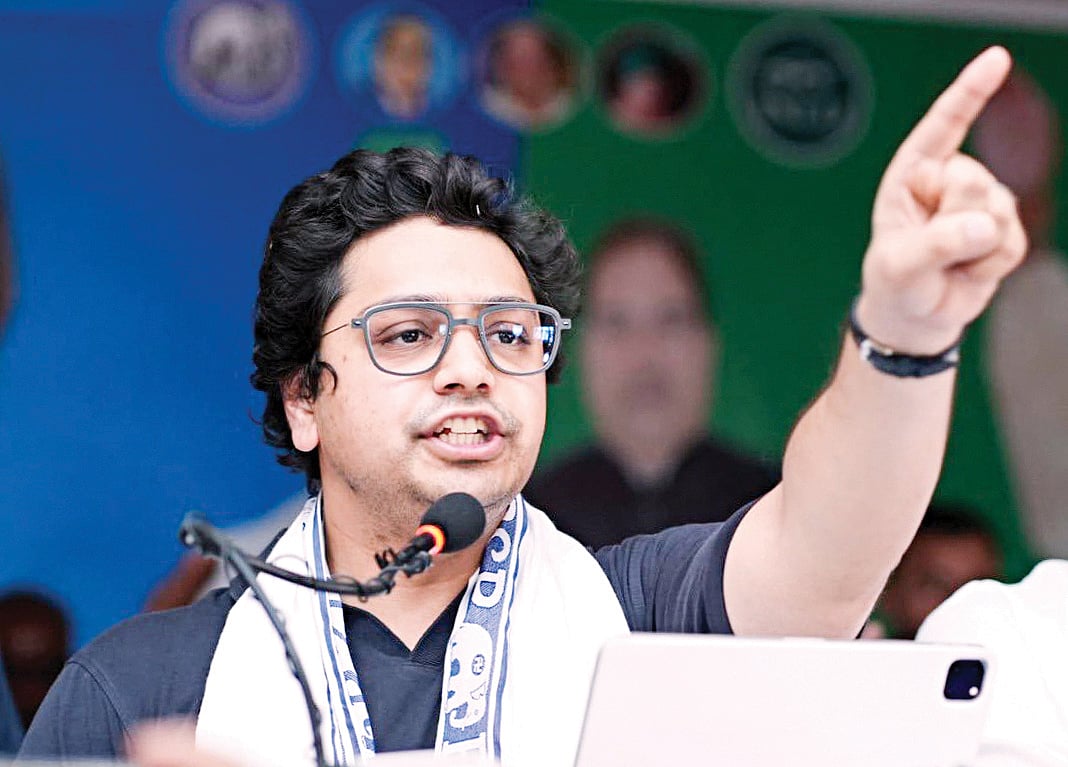
One explanation for his sudden fall from grace is that his belligerent speeches did not go down well with his aunt. He has attacked leaders by name, accused some of seeking an end to reservation, and was increasingly critical of the RSS. The last straw is said to have been a savage attack on both the BJP and the Union government. The second explanation doing the rounds is that BJP leadership did not want a younger, more popular Dalit leader to emerge in Uttar Pradesh from the BSP, and leaned on Mayawati.
“He was projected as the party’s future face and, at one stage, was formally declared Mayawati’s successor. His appeal among younger supporters and his attempts to assert himself within the organisation gave him a profile that went beyond that of a conventional office-bearer,” points out Kamal Jayant, a long-time observer of Dalit politics.
Akash, he recalls, had criticised inactive party office-bearers and sought greater accountability from those holding organisational posts. He risked upsetting established leaders who had worked with Mayawati for years.
On 10 December 2023, Akash was announced as Mayawati’s political heir and appointed national coordinator. Within months, he was stripped of all responsibilities and kept away from the Lok Sabha election campaign in April 2024.
On 23 June 2024, he was reinstated as national coordinator. In March 2025, he was expelled from the party, accused of arrogance and over-ambition under the influence of his father-in-law. On 13 April, he was forgiven. On 18 May, he was re-appointed national coordinator and on 29 August, given the newly minted post of chief national coordinator. What was that roller-coaster ride all about?
Mayawati herself has declared that community is more important to her than immediate family (recalling Kanshi Ram’s decision to devote his life to the Bahujan movement). While asserting that she did not believe in dynastic politics, her brother is party vice-president, and her other nephew has taken Akash’s place. Ashok Siddharth too was sent to the Rajya Sabha.
What’s next for Akash Anand? Will he split the BSP and chart his own course? Will he join another party or simply quit politics and go back to managing the family business? All eyes will be on him as Uttar Pradesh heads to one of the most consequential assembly elections in 2027.
****
The all-important colour blue
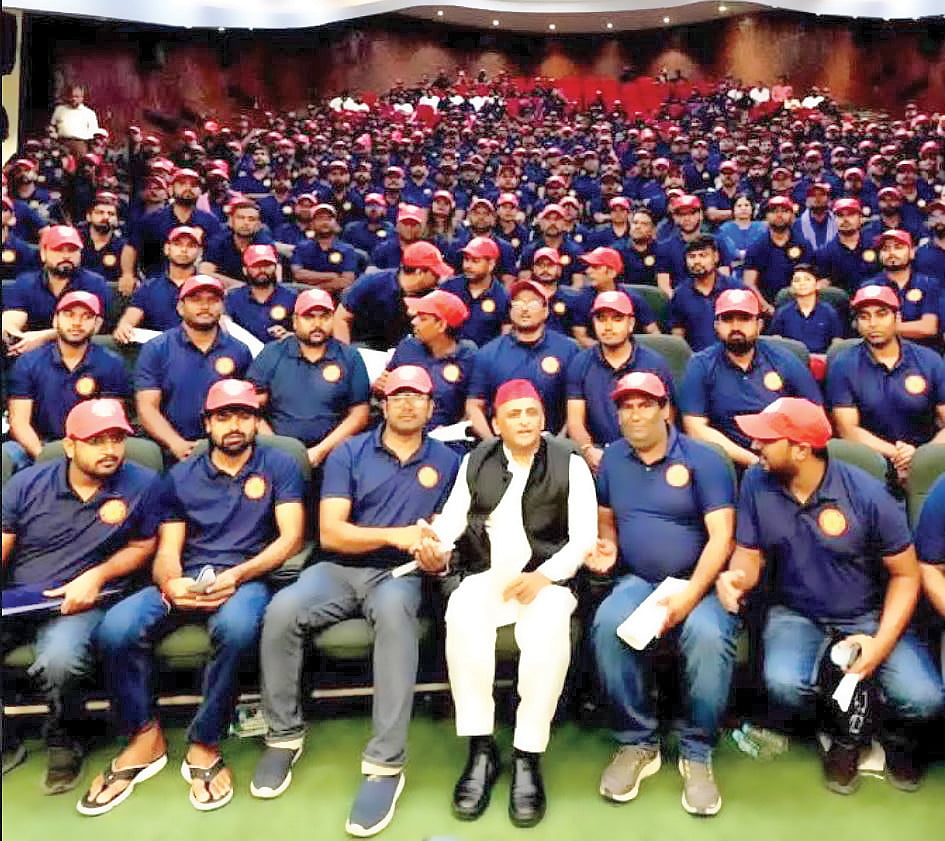
The Samajwadi Chhatra Sabha has a new dress code: blue T-shirt and blue jeans. Of the previous uniform, only the red cap remains. Blue, explained Samajwadi Party chief Akhilesh Yadav, stood for Babasaheb Ambedkar and the ‘bahujan samaj’ (the people, not the party).
Addressing a press conference with a group of Chhatra Sabha members around him, the SP chief laboured to explain the switch to critics who felt he was trying to appropriate a colour long synonymous with Dalits, Mayawati and the BSP.
BJP ally Om Prakash Rajbhar said changing a dress code would not fetch Dalit votes. Commentators agreed. Dalits in Uttar Pradesh who abandoned the BSP over the past few decades have tended to move towards the BJP. This has partly to do with the aggressive Hindutva promoted by the BJP — Dalits see a chance to identify with other caste Hindus and feel upwardly mobile — and partly to do with the lure of lucre (which the BJP has plenty to throw around).
Analysts say the BSP is not likely to lose out on the committed 12-13 per cent votes Mayawati secures. Sceptics say if Dalits decide to join the SP, they would have to be offered a far stronger incentive than a ‘blue uniform’.
Akhilesh Yadav, however, gets full marks for hard-selling the colour to party supporters — including blue artificial turf for hockey fields! Blue jeans, he added, have historically been associated with the working class in western countries. Claiming that blue was the colour of rebellion against injustice may not have convinced everyone, including the Chhatra Sabha. They agreed, though, that they looked smarter. And who are we to disagree?
Join our official telegram channel (@nationalherald) and stay updated with the latest headlines