


Fear and loathing in Uttar Pradesh
In Bareilly's Muslim-majority localities, the sense of foreboding is hard to miss in the haste and buzz around the dreaded SIR
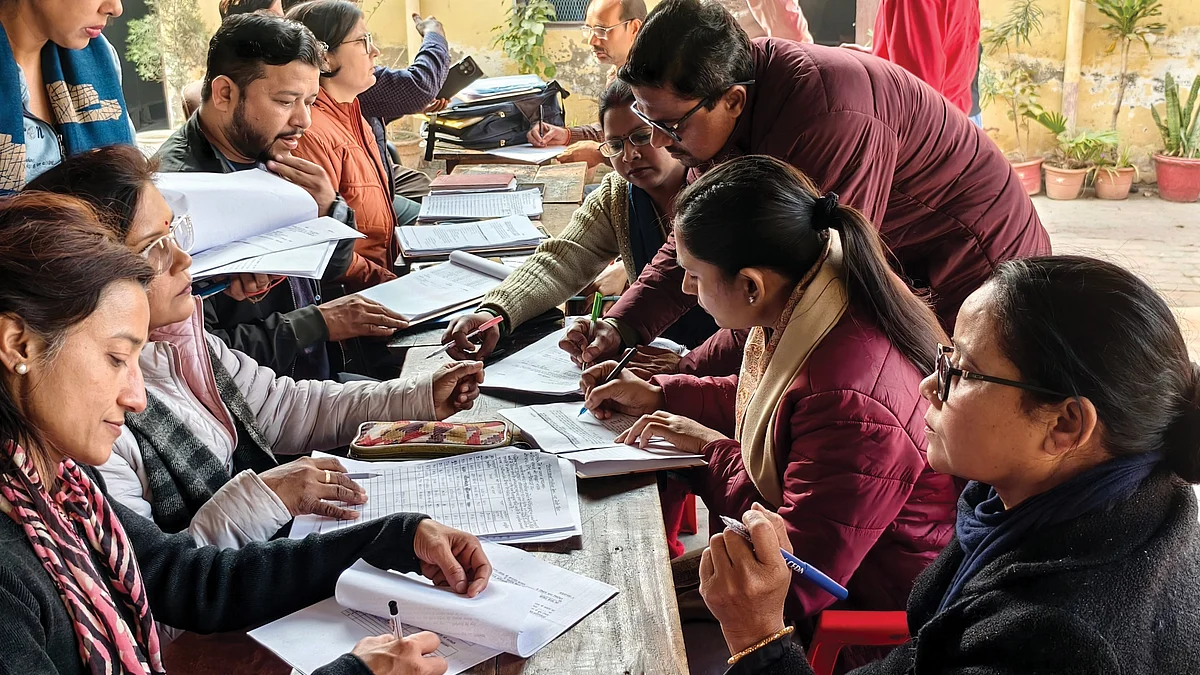


As I was walking back the other day from Bareilly's Gher Jafar Khan neighbourhood, I broke my stride at a street corner where it looked like something else was afoot. On asking around, I learnt that SIR forms were being handed out. I couldn’t really see the faces bent over the table, but their anxiety was palpable in their taut bodies, on the faces of others rushing about the place, clutching those papers, in search of someone who knew better.
It’s a familiar tableau these days. The Election Commission is putting voters through a wringer to establish citizenship before they can worry about whether they still have a right to vote. Hapless citizens are worried not simply about their right to vote, but what all this means for their future.
I went to Kanshiram Colony looking for poet Usman Arif — the man who spent years at the old Bareilly bus stand extolling the virtues of surma. I found that he had fractured his hip and been bedridden for months. Even as I asked about his health and treatment, he was fretting about how he could get hold of the old voter list for Futa Darwaza — because he used to live there twenty years ago.
When I went for a haircut, Mohammed Qamar picked up his scissors and comb and asked me helplessly, “They aren’t accepting Aadhaar. My father’s been gone for ages. I was born in a village in 1984 — back then, nobody even knew what a birth certificate was. Now tell me, what am I supposed to do?”
Wherever you go, whoever you meet, the conversation circles back to SIR. In the old city — or to put it plainly, in Muslim-majority localities — the sense of foreboding is hard to miss in the haste and all the buzz around this dreaded exercise.
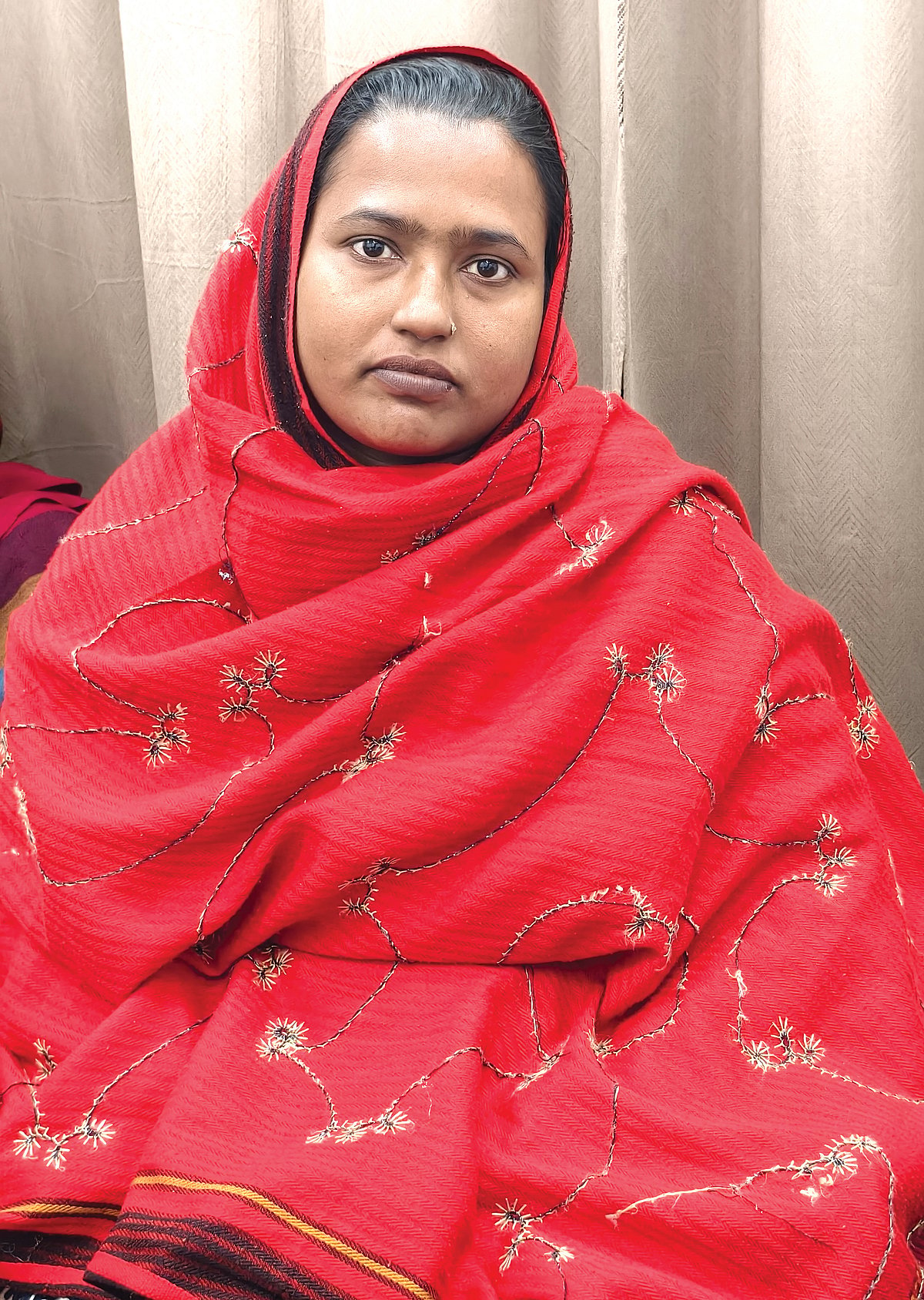
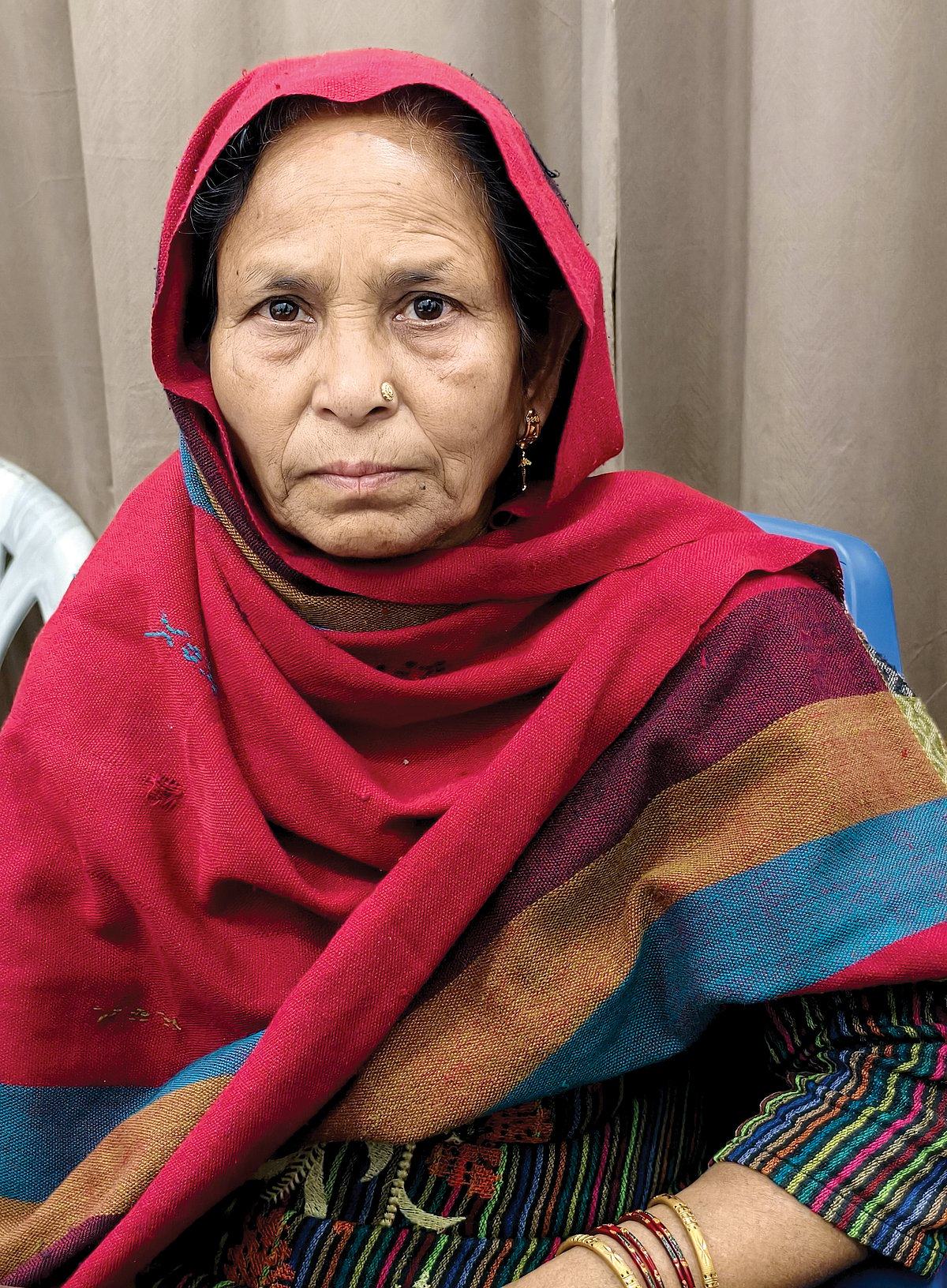
Samyun Khan, president of the Aam Aurat Seva Samiti — a group that has been helping people with the SIR from day one — has a whole trove of stories, of people for whom filling this form is nothing short of torment. She told me about Zulekha Bi from Jalpaiguri, who came to Bareilly about 35 years ago when she got married. Her husband was a labourer; he died long ago, and she started working in people’s homes to get by.
Neighbours from Zulekha’s natal village called to say forms were being filled and if she didn’t come, she’d be thrown out. She somehow scraped together the money to travel to Jalpaiguri — only to learn that she was supposed to fill the form back in Bareilly, where she’d lived all these years. Samyun spoke to the BLO there, got her ‘unmapped’, and then submitted her form in Bareilly.
Even so, Zulekha has lost her appetite and can’t sleep. She returns every few days, asking through tears, what has happened to her form; she is terrified that she might be expelled.
Najma’s native village is in Kokrajhar, Assam. She married Tasleem of Bareilly in 2003, and has lived here ever since. She has been a voter in the Bareilly Cantonment Assembly segment for years. She filled the SIR form, but since her name does not appear in the 2003 records, her form was returned.
She is struggling to get some old record from her birthplace, but there is nothing. She is now trying to find her parents’ details in the (discredited) Assam NRC in the hope that it will restore her right to vote — and the dignity of being recognised as a citizen of the only country she has ever known.
A long-time friend who had come to my office asked irritably, “Where will the poor and the working class get the papers they need?” My friend is an educated man. He is cheerful and has an open mind. I’d never seen him so angry. Talking of people who have worked in homes for decades, of daily-wage labourers, or those who sell ber, jamun, mehndi leaves on the pavement — people scraping a life — he said: “What will they do? Where will they go? They’ll be herded into camps — fifty people to a toilet and bathroom.”
This is what fear looks like. A large number of people see the ongoing SIR as not merely something linked to voting rights; they fear it may be a pretext to bring into existence a National Register of Citizens (NRC). And if they fall through the cracks, humiliation or worse is guaranteed. Based on experience and today’s political climate, they assume that Muslims and those living on the margins will inevitably be targeted.
The news daily reinforces their fears. The chief minister has already directed officers to build detention centres in every district. In Bareilly too, the disused district jail is being refitted as a detention centre. The Collector and SP (superintendent of police) have themselves been combing through slums searching for Bangladeshis and Rohingyas.
Even people whose families have lived here for generations are anxious. When I told my friend that two forms had been rejected even in my house because our names were misspelt in the documents, he shot back: “You don’t have to prove your nationality!”
In Bakarganj, Hajiyapur, Lichi Bagh, Swale Nagar, Qila and across most of the old city, there are countless people like Zulekha living in mortal fear — scrambling, seeking help from whoever they can trust, trying every way to find a document that might legitimise them once again. Not just in Bareilly — districts across the state are witnessing much the same.
A teacher working as a BLO (name withheld on request) in Mohanpur Thiriya told me that more than half the population in her area has no document except Aadhaar — and Aadhaar, which was shoved down every Indian’s throat not so long ago — is not a valid document for the SIR.
There are transgender persons who do not have even one of the dozen identity documents on the official list. Plenty of people earn decently but have neither a bank passbook nor an LIC policy. “A large chunk of the population is unlettered — they work as manual labourers — how can they produce certificates?” she asks.
If reports that voter names will be struck off by the thousands in every district are true, then it isn’t hard to guess who will be hit. Who knows if, by the time a notice arrives giving them ‘one more chance’, they’ll be able to prove they belong here. Perhaps these were the people Nida Fazli had in mind when he wrote: 'किसको मालूम कहाँ के किधर के हम हैं... (whoever knows where we’re from, where we belong…)'
Join our official telegram channel (@nationalherald) and stay updated with the latest headlines