


Form 7 controversy deepens strain on SIR 2.0
Bulk objections, court deadlines and political allegations put electoral roll revision under sharp scrutiny
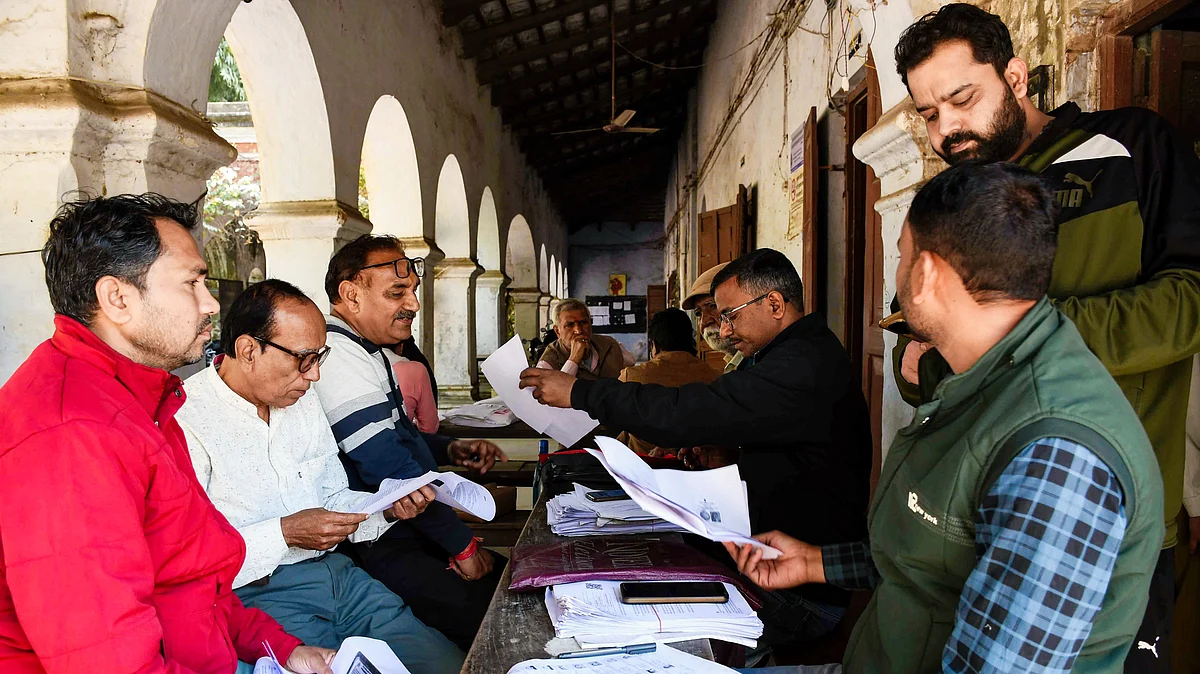


The Election Commission of India (ECI) on Monday directed West Bengal authorities to expedite the disposal of claims and objections filed under Form 7 as part of the ongoing Special Intensive Revision (SIR) of electoral rolls, signalling rising concern within the poll panel over mounting complaints and procedural delays.
In a communication to the state’s chief electoral officer (CEO), the ECI underscored that the revised SIR schedule had already been conveyed on 10 February and stressed strict adherence to timelines. It instructed that all objections received so far in the offices of the CEO and district election officers (DEOs) be forwarded to the concerned electoral registration officers (EROs) and assistant electoral registration officers (AEROs) by 16 February for processing.
The directive comes amid a widening controversy over the use — and alleged misuse — of Form 7, the provision that allows electors to object to entries in the rolls. Under the SIR framework, Form 7 applications may be filed for deletion of one’s own name due to change of residence or for removal of names of others on grounds such as death, shifting or ineligibility. In theory, it is a corrective instrument meant to keep rolls accurate. In practice, in several SIR Phase-2 states, it has become the flashpoint of political confrontation.
The ECI's latest communication also cited reports alleging the burning of records related to Form 7 objections in parts of West Bengal — an issue it said it had taken cognisance of. While neither the Commission nor the CEO’s office directly linked the directive to these allegations, the timing of the intervention makes clear that the poll body is keen to contain any perception of administrative laxity or political manipulation.
Also Read: Is Form 7 the new weapon of mass deletion?
The controversy has unfolded against a backdrop of already shifting timelines and mounting strain in SIR Phase-2. Initially rolled out across a dozen states and Union Territories in late October 2025, the exercise was scheduled to publish draft rolls in December and final rolls in early February.
Instead, extensions have followed one after another — in West Bengal, Uttar Pradesh, Kerala and Goa — sometimes after requests from state CEOs, and in some cases after nudges from the Supreme Court.
In West Bengal, lakhs of voters were served notices citing “logical discrepancies” in their records and asked to appear for hearings to establish eligibility. That process, already criticised for its scale and opacity, has now intersected with a reported surge in Form 7 applications ahead of final roll publication.
According to election officials, EROs and AEROs have now been instructed to dispose of all Form 7 objections — whether filed directly with them or routed through CEO and DEO offices — strictly in accordance with statutory procedures. The letter from ECI secretary Sujeet Kumar Mishra emphasised compliance not only with SIR guidelines issued on 27 October 2025, but also with the Supreme Court’s 9 February order.
On that date, the apex court permitted the extension of the objections window by a week from 14 February and directed the ECI to ensure expeditious resolution of claims and objections. The court’s intervention followed petitions raising concerns about compressed timelines and the burden on voters asked to respond to notices.
However, beyond questions of scheduling, the sharper political dispute centres on the scale and intent of Form 7 filings. Several political parties — including the Congress, Trinamool Congress and Samajwadi Party — have alleged that bulk Form 7 applications were being deployed to target genuine voters for deletion by uploading inaccurate or misleading data. The Opposition has argued that such mass objections, if not rigorously scrutinised, could distort rolls in tightly contested constituencies.
As per a report in the Economic Times, election officials privately acknowledge that the volume of Form 7 applications in certain SIR 2.0 states is unusual compared to previous revision cycles, where such objections were typically limited in number. At the same time, the Commission maintains that all relevant data has been placed in the public domain for transparency and that each objection must pass statutory scrutiny before any deletion is finalised.
Complicating matters further are disputes over the number of “unmapped” voters — electors who could not be seamlessly matched with earlier intensive revision rolls — an issue raised in representations by parties to both the state CEO’s office and the ECI in Delhi. Critics argue that ambiguity over such figures feeds suspicion about the scope of deletions.
SIR 2.0 was projected as a more streamlined and voter-friendly exercise compared to earlier revisions, with initial enumeration not requiring documentary proof unless mapping inconsistencies emerged. Yet the second stage — involving claims, objections and verification of “unmapped” entries — has proven to be the pressure point, particularly when combined with tight deadlines and heightened political stakes in poll-bound states.
The ECI's latest direction to West Bengal authorities appears aimed at restoring procedural discipline and signalling that objections must be handled within a clearly defined legal framework. Whether that reassurance will calm political tempers is another matter. With final roll publication approaching and multiple extensions already granted, the handling of Form 7 applications has become not merely an administrative task but the central test of credibility for SIR Phase-2.
With PTI inputs
Join our official telegram channel (@nationalherald) and stay updated with the latest headlines