


Is Form 7 the new weapon of mass deletion?
Earlier, only neighbours or voters registered at the same polling station were eligible to submit Form 7. This rule was changed in 2023
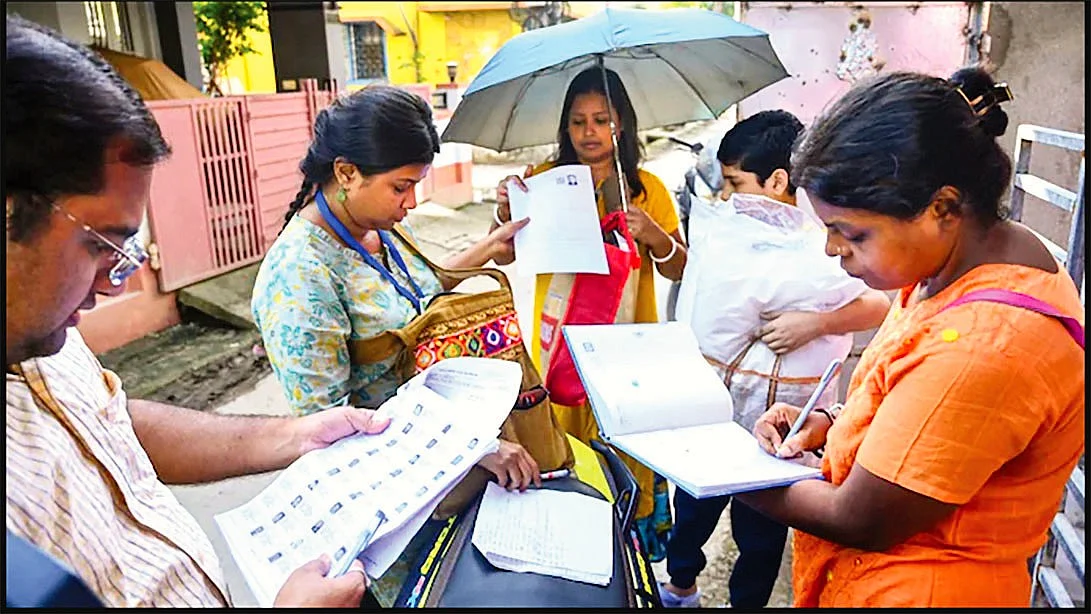


When the Election Commission of India (ECI) quietly altered the rules governing Form 7 in 2023, nobody seemed to notice. Form 7 allows a voter to challenge the inclusion of another individual in the electoral rolls and request their removal.
Earlier, only neighbours or voters registered at the same polling station were eligible to submit Form 7. This rule was changed in 2023. The new rule allowed any voter registered in any booth of the assembly constituency to submit Form 7. Another big change was to allow an unlimited number of submissions per applicant. Neither change was challenged, and both have been in effect since late 2023.
As has become evident in the ongoing Special Revision (SR) in Assam and the Special Intensive Revision (SIR) in 12 states/Union territories, almost all objections have been raised against Muslim, Dalit or tribal voters, and many filed using the name and EPIC (Elector’s Photo Identity Card) numbers of unsuspecting Muslim voters.
On 29 January, Congress general-secretary (organisation) K.C. Venugopal drew the Election Commission’s attention to the “massive misuse of Form 7 by the BJP” to eliminate voters suspected of supporting the Opposition. In his letter, Venugopal calls the misuse elaborate, systematic and extensive, and alleges that the BJP appears to have asked its workers to submit objections in bulk, particularly in poll-bound states. A key element of the centralised fraud, he points out, is to ensure that notices informing legitimate voters of the objections never reach them.
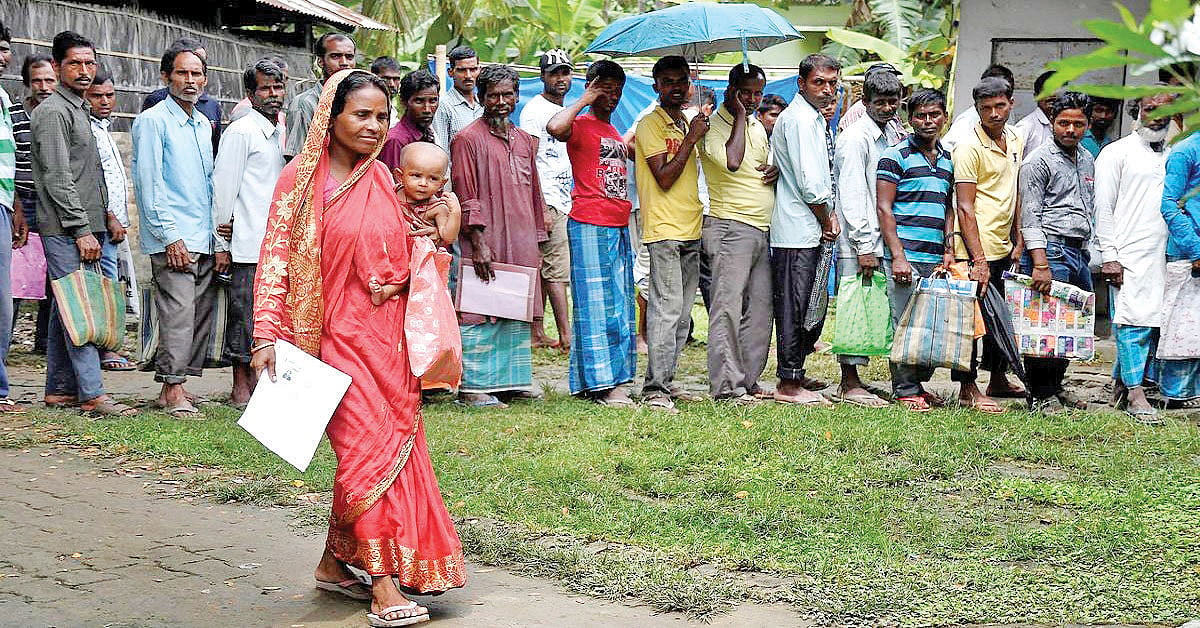
The fraud, Venugopal points out, is neither localised nor isolated. Reports from Kerala, Gujarat, Rajasthan, Uttar Pradesh, West Bengal, Chhattisgarh and Assam indicate a similar pattern. A common feature is the mass printing of Form 7, using illegible names and signatures, random or invalid phone numbers and EPIC numbers belonging to other legitimate voters.
****
In Gujarat, Haji Ramkadu, a folk artiste from Junagadh, who was awarded a Padma Shri on Republic Day, accidentally found that an objection had been filed against him. Born in Junagadh, he has lived in the same house for 70 years, is well known in the state and is credited with having performed for free at 25,000 fund-raising programmes for gaushalas. That didn’t stop BJP corporator Sanjay Manwar from submitting a Form 7 objection against Ramkadu.
As the news spread and outrage grew, Manwar sheepishly said the artiste’s Aadhaar card bore the name Mir Haji Kasam, while his EPIC identified him as Haji Rathod. These very common inconsistencies in official documents are being weaponised. Married women are particularly hard put to explain the changes in their given names. In West Bengal, when Salma Sardar and Saeeda Molla become Salma and Saeeda Naskar, objections were raised.
In Rajasthan, allegations that BJP functionaries were pressuring Booth Level Officers to delete Muslim voters surfaced from Hawa Mahal, a Muslim-majority constituency the BJP had won in 2023 by a narrow margin of 974 votes. A video circulating on social media showed BLO Kirti Kumar alleging pressure from senior officials to process objections against 470 voters—nearly 40 per cent of the electorate in his booth. “I’d rather kill myself than do this,” Kumar was heard saying in the video.
In Madhya Pradesh, the Congress alleged that several hundred objections were being submitted for each booth by BJP workers in Bhind, Singrauli and Sehore. In West Bengal, the Trinamool Congress reported — and recorded — a vehicle intercepted with several thousand copies of Form 7 being carried by BJP workers. Clashes erupted in Murshidabad after BJP supporters tried to submit a large number of Form 7 applications.
The ECI has argued that submission of Form 7 does not automatically lead to deletions, that filing Form 7 objections on false grounds is punishable and voters whose names are removed on false grounds can seek legal redress.
Assam’s chief minister Himanta Biswa Sarma seems to have declared a ‘jihad’ against ‘miyas’, a pejorative term used for Muslims allegedly of Bangladeshi origin.
Sarma had no compunction declaring in public, “Yes, we are trying to steal miya votes… we’ve made arrangements so they can’t vote in Assam… when the SIR comes to Assam, four to five lakh miya votes will have to be cut.”
Sumona Rahman Choudhury, a BLO in Sribhumi (formerly Karimgunj) district, and 14 other BLOs were called for a training session on 19 January. When Choudhury turned up, officials handed her a bunch of objection forms (Form 7), challenging the inclusion of 133 voters in her booth. Some of the details were already printed while others were handwritten.
All 133 objections were filed by one person, who claimed that 133 voters in Choudhury’s booth in Srimanta Kanishail village, Karimganj North assembly constituency — all Muslims — were either dead, had permanently shifted or been enrolled more than once. Choudhury, a teacher at the government school, personally knows the voters.
Speaking to National Herald over the phone, she said, “When I visited them during enumeration, they were at home. I got them to fill up the forms and collected their signatures… The deletion list included the name of my headmaster, whom I report to everyday. There were also names of parents of my students, who I know personally. How could I ask them to come for a hearing? And on what grounds? What if they filed an FIR against me?”
Choudhury and four other BLOs — who faced a similar predicament at the same training session — told officials that they did not think it necessary to send notices and summon the voters for a hearing, leave alone delete their names. They rejected the objections raised because they knew them to be false.
Their refusal to follow ‘procedure’ did not go down well with the officials. As their narrative on the bulk submission of fake Form 7s went viral on social media, all five BLOs received show cause notices (dated 22 January) from the electoral officer of 123-Karimgunj North constituency.
They stand accused of unauthorised interactions with media personnel and making public statements on objections and deletions. The notice also claims that their social media video did not ‘correctly and fully reflect the actual legal and procedural position… that claims and objections are processed strictly as per law and no voter entry is deleted or modified without due verification and completion of the prescribed statutory procedure’.
All 133 forms were submitted using the name and EPIC number of one Selim Ahmed, who denied any knowledge of the objections attributed to him. “I’m unemployed and know nothing of the incident,” Ahmed told National Herald, adding with a hint of dark humour, “I myself have been listed as a dead voter among these 133 names.”
Ahmed has filed an affidavit with the deputy commissioner of Sribhumi district, objecting to the misuse of his name for en masse deletions.
****
“If Himanta Biswa Sarma is so confident of winning the election, why delete Muslim voters through fake objections?” asked Sushmita Dev, Rajya Sabha member and national spokesperson of Trinamool Congress. “He has already carried out delimitation and eviction of Muslims and herded Muslim voters into 22 constituencies. He knows he cannot win these seats, but all he cares about is polarising the state on communal lines!”
Is the BJP in Assam — reeling under allegations of corruption and poor performance — banking on ‘tailormade’ electoral rolls to win the upcoming assembly elections? The draft electoral rolls were published on 27 December, and then came the spate of objections, via Form 7.
What reinforces the widespread suspicion of foul play is another plea submitted by 22 inhabitants of the Borkhola constituency — all Muslims — seeking the registration of an FIR against one Mohan Lal Das. The petition accuses Das of fraudulently filing objections and falsely claiming they had requested that their names be dropped from the electoral roll.
Writing to the chief election commissioner on 23 January, Sushmita Dev drew attention to the unusually high number of objections filed across several constituencies: approximately 15,304 in 118-Silchar LAC, 9,671 in 116-Katigorah, 8,602 in 50-Mangaldoi, 10,151 in 30-Zhajo-Sualkuchi and 10,249 in 38-Barkhetri.
‘To serve each and every such voter a notice and conduct a hearing within 11 days is an impossible task, which is bound to deprive genuine voters of an effective hearing, leading to the loss of their democratic right to vote,’ Dev noted.
Sourabh Sen is a Kolkata-based independent writer and commentator on politics, human rights and foreign affairs. More of his writing may be read here
Join our official telegram channel (@nationalherald) and stay updated with the latest headlines