


‘Have a spine, stand up’: Rahul says Modi ‘prostrating’ before Trump over UPI fee
Congress alleges new MDR regime reflects US pressure to end India’s zero-MDR model; government says consumers will continue to pay nothing
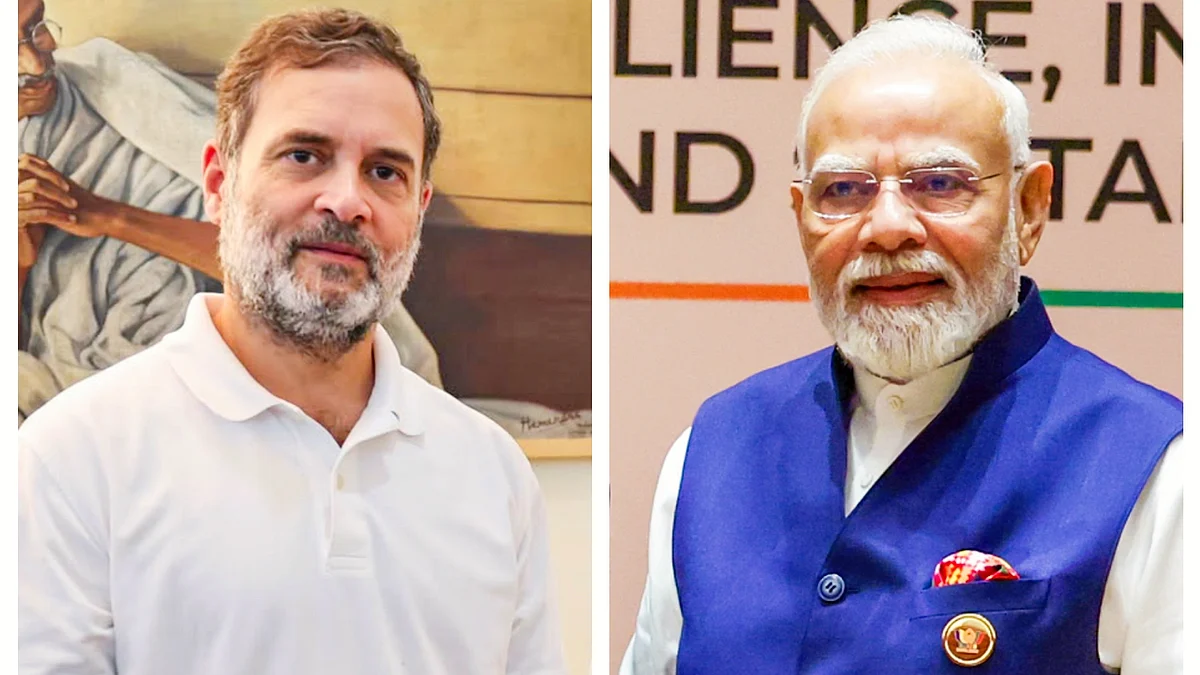


Lok Sabha Leader of Opposition Rahul Gandhi on Wednesday, 16 September accused Prime Minister Narendra Modi of ‘prostrating’ himself before US President Donald Trump and alleged that the government’s decision to introduce a Merchant Discount Rate (MDR) on certain UPI transactions amounted to giving ‘a huge amount of money’ to the United States.
In a video posted on X, Gandhi urged Modi to ‘stop lying down in front of the US, have a spine, stand up’ and roll back what he called the ‘UPI tax’.
The attack came a day after the government introduced a 0.4 per cent MDR on specified person-to-merchant UPI transactions above Rs 2,000, with the new framework coming into effect from 15 October.
The charge, however, will not be levied on consumers. The government has said all person-to-person UPI transactions will remain free, while merchant payments of up to Rs 2,000 and transactions covered by the zero-MDR framework for small merchants will also remain free. It estimates that around 96 per cent of merchant transactions will remain unaffected.
Gandhi nevertheless linked the decision directly to US pressure on India's digital payments ecosystem.
‘Indiraji was once asked whether she leans left or right and her response was, “I don't lean left, I don't lean right, I stand straight”. Modiji has a completely different concept, he is neither left nor right, he has decided to lie down straight and prostrate himself in front of Donald Trump,’ Gandhi said.
‘He has put a tax on every single Indian person by taxing UPI and giving a huge amount of money to the United States,’ he alleged. ‘Modi ji, rollback the UPI tax. Now,’ he said in a post accompanying the video.
The Congress has for some time alleged that the government is yielding to a US demand to end India's zero-MDR regime for UPI. It has also accused Modi of being ‘compromised’ and of ‘once again surrendering’ to American pressure.
The party has sought to connect the UPI decision with US concerns over India's digital payments ecosystem, including complaints that India's zero-MDR regime disadvantaged American payment companies.
Congress has dubbed the prime minister's alleged approach ‘NOTA — Narendra's Ongoing Trump Appeasement’.
The BJP, however, rejected the allegations, accusing the Congress of spreading ‘fake news’ and stressing that MDR is a charge within the merchant-payment ecosystem, not a tax imposed on consumers. The government has also said the money will be distributed among participants in the payments ecosystem, including banks and payment service providers, rather than collected by the government or NPCI.
What has changed
The new framework marks a significant departure from the zero-MDR regime that has been central to the rapid expansion of UPI.
Under the rules announced on 14 September, a 0.4 per cent MDR will apply to specified merchant transactions above Rs 2,000, with the charge capped at Rs 300 for transactions of Rs 75,000 and above. Certain essential sectors will instead attract a flat Rs 5 MDR, while specified capital-market transactions will attract a lower 0.02 per cent rate.
The government has stressed that MDR is not a charge on the customer. Banks have been directed to ensure that merchants do not pass the charge on to consumers, while UPI apps have been prohibited from imposing platform fees or hidden charges.
That distinction is at the heart of the political battle.
For the Congress, the introduction of MDR represents a retreat from a model in which UPI payments have been promoted as a virtually cost-free public digital infrastructure. For the government, it is a mechanism to make the payments ecosystem financially sustainable without imposing a direct cost on ordinary users.
The political argument, however, is increasingly being framed around who influenced the change.
The Congress has pointed to longstanding US concerns over India's digital payments system and alleged that Washington has been seeking an end to zero MDR. It has therefore presented the new framework not merely as an economic or regulatory decision but as evidence of the Modi government's willingness to accommodate American interests.
The government has rejected the charge of foreign influence.
The issue is likely to remain politically contentious as the new MDR regime comes into force on 15 October, particularly because UPI has become one of the most visible symbols of India's digital transformation — and because any change to its cost structure inevitably raises questions about who ultimately bears the cost of keeping the world's largest real-time payments system running.