


How Kerala resists Hindu political consolidation
Witness the collapse of Vellappally Natesan’s bid to forge an alliance between the state’s Ezhavas and Nairs
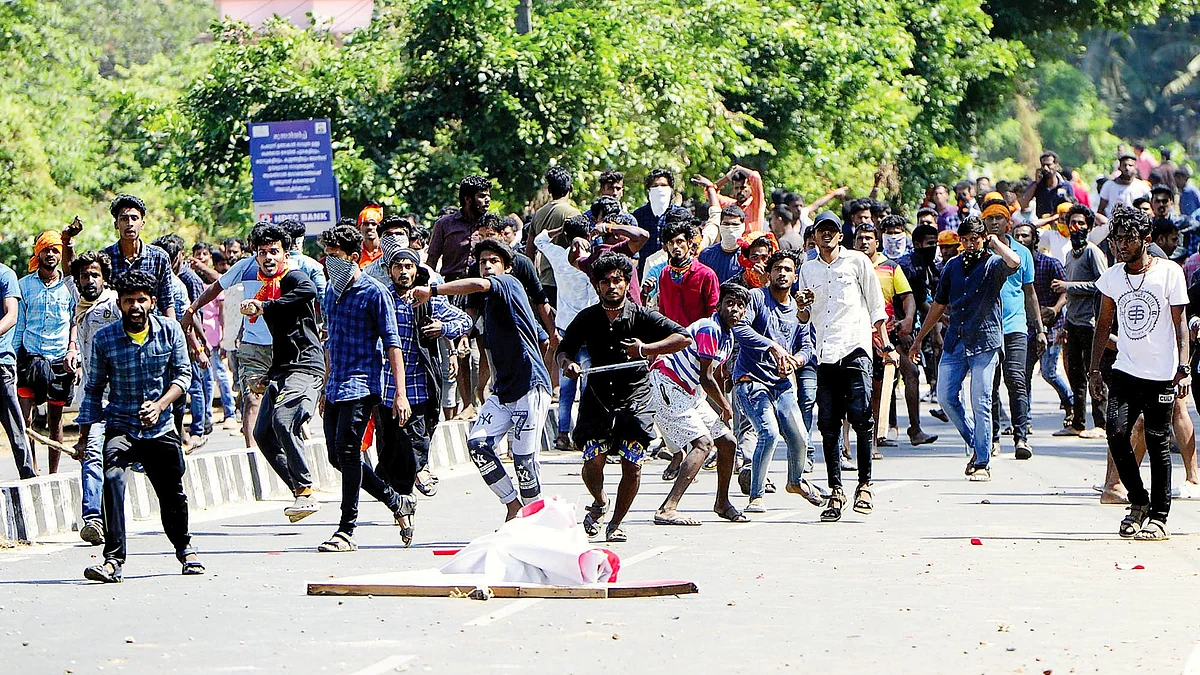


On Republic Day, the Union government conferred the Padma Bhushan on 89-year-old Vellappally Natesan for ‘social service’. The timing, just months before the Assembly election in Kerala, raised eyebrows.
Congress leaders and civil society groups questioned the award, pointing out that Vellappally had earlier dismissed them as political instruments, and that he had been named in over a hundred criminal cases, several involving allegations of corruption in cooperative banks and the misappropriation of Sree Narayana Dharma Paripalana Yogam (SNDP) funds.
While the BJP celebrated the decision unabashedly, chief minister Pinarayi Vijayan, along with cabinet colleagues V. Sivankutty, Saji Cheriyan and party leaders like Chinta Jerome, publicly congratulated him. BJP-affiliated social media crowed ‘Ezhava pride’ and the award was projected as evidence that the BJP had finally acquired a credible social base in Kerala.
Almost on cue, Vellappally returned with a volley of statements targeting Muslims and the Indian Union Muslim League (IUML). He accused the League of “running the state by proxy”, claimed that “Muslim appeasement” had reached dangerous levels, and warned that Kerala was becoming “another West Bengal”.
Civil society groups condemned the remarks as communal and dangerous, but there wasn’t a peep from those in power. Even as Vellappally intensified his attacks on Muslims, Vijayan and other CPI(M) leaders kept mum. The BJP defended his right to speak, framing the controversy as an assault on Hindu voices. It was an odd spectacle: a rabble-rousing Hindu community leader was not just being backed by the Hindu Right but also receiving tacit support from the Marxist Left.
To understand this, one must trace Vellappally’s personal trajectory. Born into a wealthy Ezhava family in central Kerala, he built his fortune primarily in the alcohol business, emerging as one of the most influential liquor barons in the state. His ascent in the SNDP combined economic power with organisational control, allowing him to dominate the Yogam for decades.
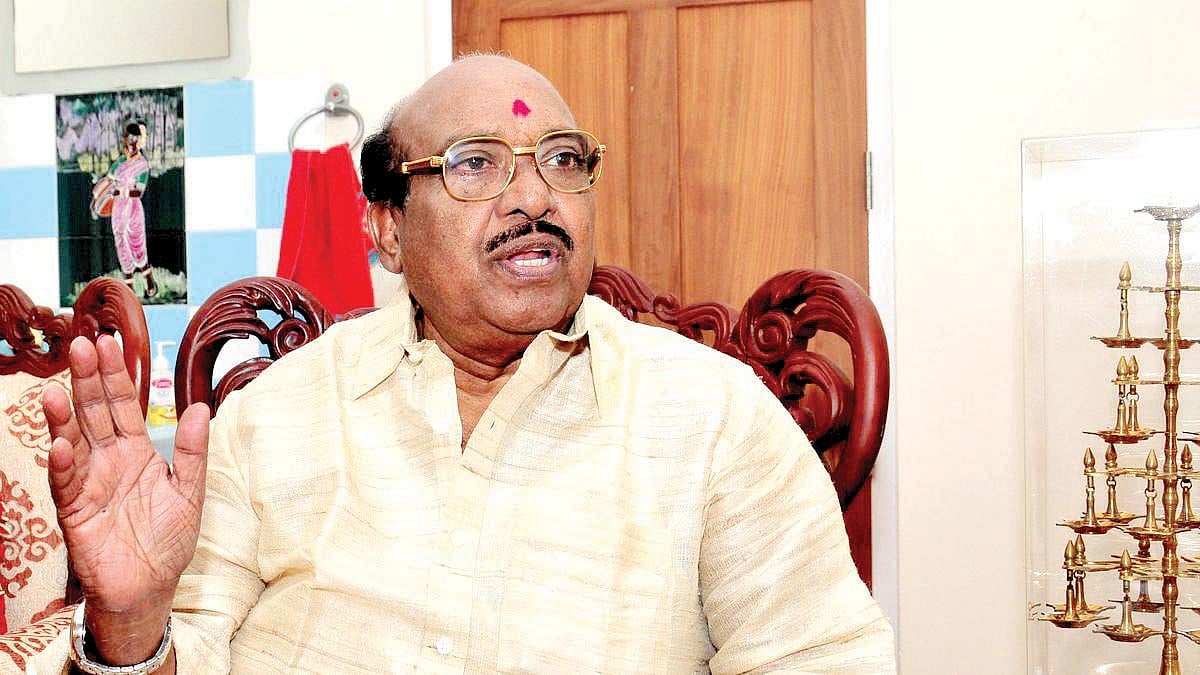
“This background embodies an irony,” observes Sunny Kapikkad, scholar and social activist. “Sree Narayana Guru explicitly warned Ezhavas against engaging in the production and sale of liquor, seeing it as a social evil that trapped the community in economic dependence and moral decline. Yet today, the custodian of the Guru’s legacy is a man whose wealth and power are rooted in precisely the industry the Guru opposed.”
****
When Vellappally Natesan announced a grand alliance between the OBC Ezhavas and upper caste Nairs, he chose his words carefully. Speaking as long-serving general secretary of the SNDP — one of the most powerful socio-religious outfits in the state that claims to carry forward the reformist legacy of 19th century leader Sree Narayana Guru — Vellappally projected the idea as a civilisational necessity. Kerala’s Hindus, he argued, must overcome internal divisions and consolidate in the face of demographic change and minority assertion.
The numbers lent his claim a seductive plausibility. Ezhavas, widely regarded as the largest Hindu community in Kerala, are estimated to constitute 22–25 per cent of the population. Nairs, a forward caste, make up 12–15 per cent. Together, they account for well over a third of the state’s people, a potentially decisive bloc in a polity where elections are often settled by wafer-thin margins.
The political impact was immediate — with Assembly elections approaching, parties started recalibrating strategies. An SNDP–Nair Service Society (NSS) alliance would redraw Kerala’s political map.
Vellappally’s ambiguous political location makes him harder to pin. In recent years, he has positioned himself as a man who belongs everywhere yet nowhere. His family-run political party, the Bharath Dharma Jana Sena (BDJS), led by wife Preethi Natesan and son Thushar Vellappally, is a constituent of the BJP-led NDA (National Democratic Alliance) at the Centre.
Yet, Vellappally has also openly described Vijayan as a close confidant and projected himself as a fellow-traveller. At the same time, he has intensified his attacks on the Congress, particularly V.D. Satheesan, leader of the Opposition in the state for the past four years.
Vellappally’s unity declaration was immediately echoed by G. Sukumaran Nair, the combative general secretary of the NSS. Both leaders are united in their hostility to the Congress and share a common discomfort with the party’s renewed emphasis on secularism and minority rights.
Yet the grand alliance collapsed almost as soon as it was announced. Within days, the NSS board publicly distanced itself from the proposal, exposing not just the social fragility of Vellappally’s project but also the institutional resistance within the NSS to overt political mobilisation that could be read as an extension of the BJP–RSS agenda.
Vellappally lashed out at the NSS leaders, accusing them of “betraying Hindu interests”. The NSS retreated into neutrality. The BJP and CPI(M), both hopeful of extracting electoral dividends from Vellappally’s manoeuvres, were left looking like awkward bystanders.
****
Kerala’s demography explains why leaders like Vellappally matter so much to political parties. The populous Ezhavas have historically been the backbone of the Communist movement. They dominated trade unions, peasant struggles and cooperative institutions for decades.
The Nairs have historically held a privileged position in Kerala’s caste hierarchy, with disproportionate representation in land ownership, education and the bureaucracy. They have had a strong presence in the Congress and, more recently, in the BJP.
“Together, these two communities represent an enormous reservoir of political influence,” notes academic J. Prabhash. “Even partial shifts in Ezhava or Nair voting patterns can change outcomes in dozens of constituencies.”
This wasn’t Vellappally’s first attempt at Hindu consolidation. What was different this time was the speed with which it unravelled. “The breakdown was telling,” observes political analyst M.N. Karassery. “If even Sukumaran Nair, no champion of pluralism, wouldn’t endorse Vellappally’s plan, it shows how politically radioactive overt religious consolidation is in Kerala.”
Vellappally’s political evolution is riddled with contradictions. In the past, he aligned closely with the Muslim League, led joint movements for enhanced reservations and spoke the language of minority rights. During the Sabarimala controversy, when the Supreme Court allowed women of all ages to enter the temple, he stood firmly with the state government, welcomed the verdict, and even became an office bearer of the government-backed Kerala renaissance movement.
Later, he declared that the verdict had “hurt Hindu sentiments” and accused activists supporting women’s entry of being part of an “anti-Hindu conspiracy”. He publicly endorsed the BJP-led agitation against the judgment, sending contradictory signals to both leftist allies and rightist patrons.
“Vellappally’s politics is not anchored in any stable ideological commitment,” Karassery argues. “It moves opportunistically across fronts, aligning with the BJP at one moment, embracing the CPI(M) at another, while attacking the Congress relentlessly. His support for Pinarayi is transactional. His proximity to the BJP is strategic.”
Kerala’s political culture is deeply sceptical of such incoherence. “You cannot lead a Hindu civilisational front while aligning with a Marxist chief minister,” Karassery warns.
“The deeper danger lies not in whether Vellappally wins elections,” says academic and social thinker T.S. Shyam Kumar, “but in what his politics is doing to Kerala’s moral language. By appropriating the legacy of Sree Narayana Guru, he is hollowing it out from within.”
Sree Narayana Guru was for a society beyond caste, beyond religious fear, beyond inherited domination. To invoke his name while practising exclusion is a betrayal of the ethical foundation of Kerala’s modern consciousness.
Join our official telegram channel (@nationalherald) and stay updated with the latest headlines